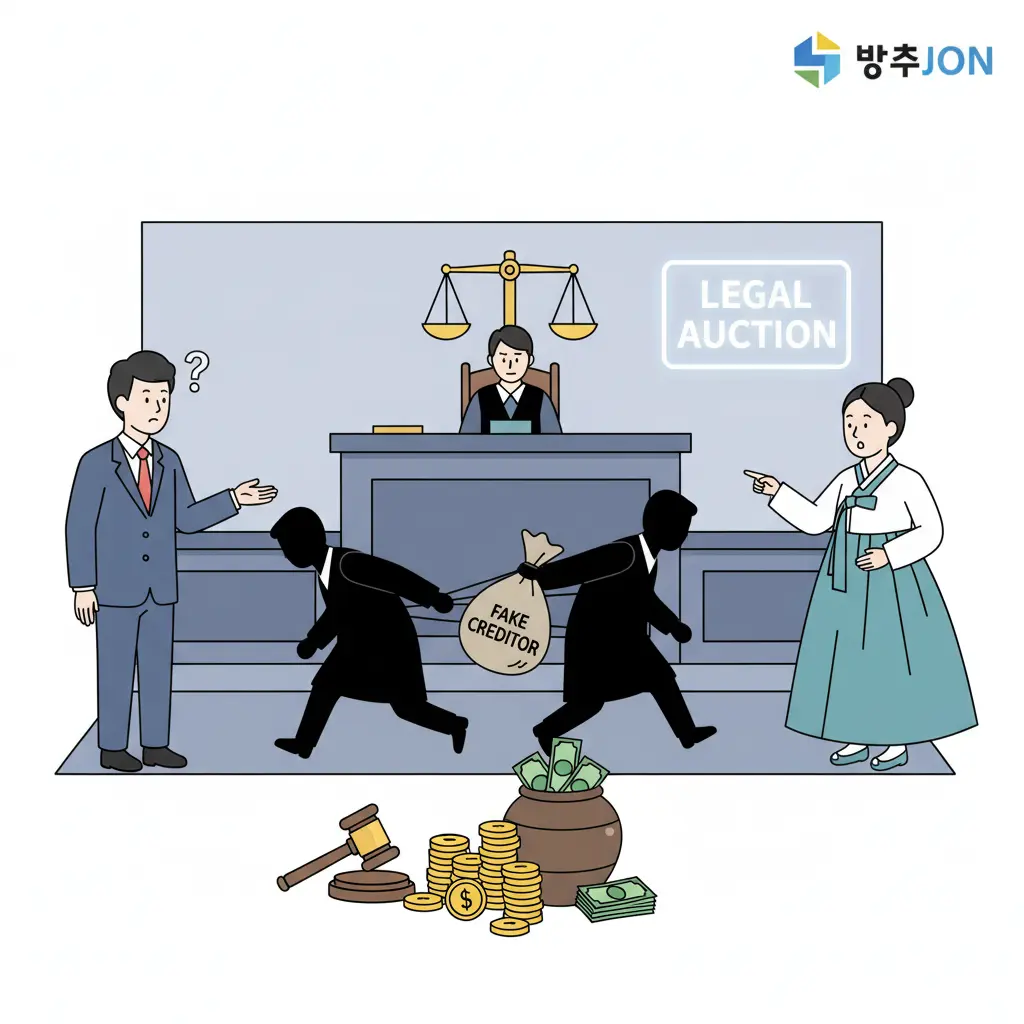
The Case of the Mysterious 'Unpaid Wages'
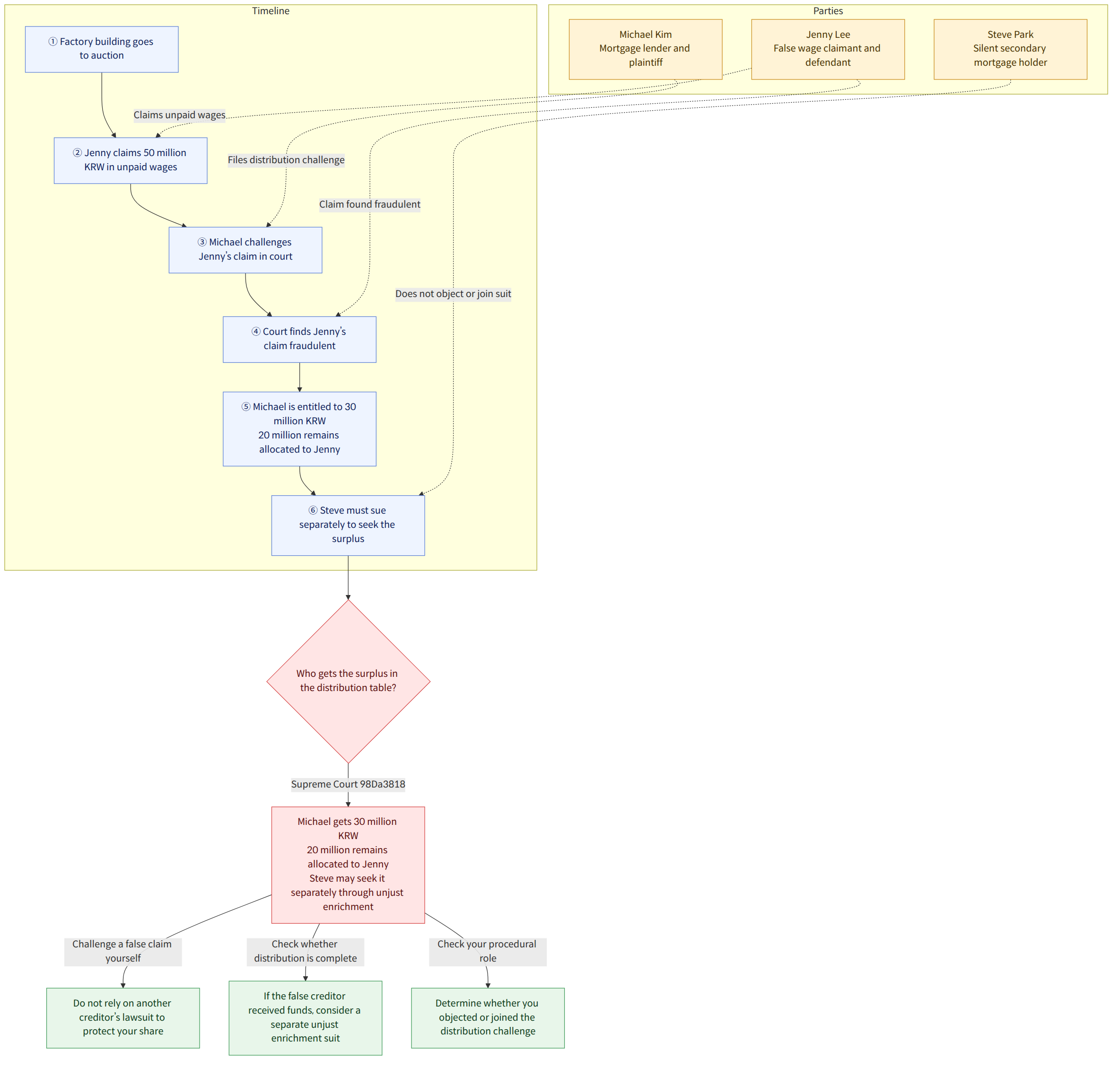
Michael Kim, a private lender who had secured a mortgage on a factory building, was outraged when the factory went up for auction. Just as the court was preparing the distribution table, a woman named Jenny Lee appeared out of nowhere. She claimed she was a former manager at the factory and demanded 50 million KRW in unpaid wages. In Korea, valid wage claims often take priority over mortgages, meaning Jenny would get paid before Michael.
Michael suspected foul play. After some digging, he discovered that Jenny was actually the factory owner's cousin and had never worked a day at the plant. He filed a 'Lawsuit Challenging Distribution' (Dividend Objection) against her. The court eventually ruled in Michael's favor, finding Jenny's claim to be fraudulent. However, a legal puzzle emerged. Michael’s debt was only 30 million KRW, while Jenny’s fake claim was for 50 million KRW.
There was another legitimate mortgage holder, Steve Park, who held a secondary mortgage but had remained silent throughout the litigation. Does the remaining 20 million KRW go to Steve, or does it stay with the fraudulent Jenny? To Michael's surprise, the answer wasn't as straightforward as he thought.
The Legal Question: The Fate of the Surplus
When a plaintiff wins a lawsuit challenging a distribution and proves the defendant's claim is void, what happens to the money that exceeds the plaintiff's own claim? Does it automatically flow to other silent creditors, or does it stay with the losing defendant?
What Korean Law Says: The Relative Effect
The Korean Civil Execution Act governs how disputes over auction proceeds are handled.
Civil Execution Act Article 157 (Judgment on Lawsuit Challenging Distribution)In a judgment on a lawsuit challenging distribution, the court shall determine the creditor who is to receive the distribution and the amount thereof in respect of the part for which the amount of distribution is disputed.
However, the core principle applied by the courts is "Relative Effect." This means:
- Party-Specific Resolution: The lawsuit is a private dispute between the plaintiff and the defendant. The judgment only changes the distribution of funds between those two parties.
- Exclusion of Third Parties: Creditors who did not file an objection or join the lawsuit cannot, in principle, benefit directly from the judgment's outcome within that specific distribution table.
How Korean Courts Approach This
The Supreme Court of Korea has consistently held that because these lawsuits are a relative resolution of disputes, the court does not consider the claims of creditors who did not sue when recalculating the distribution.
According to precedents (e.g., Supreme Court 98Da3818), if the defendant's claim is found non-existent, the contested amount is first allocated to the plaintiff to the extent of their claim. Crucially, the court states:
"It is appropriate to maintain the remainder as the defendant's distribution amount, without considering the claims of other creditors who did not file an objection."
Even if the defendant is a fraud, the court will not "fix" the distribution for silent third parties like Steve.
Applying the Law to Michael’s Case
Walking through the legal reasoning for Michael and Jenny:
- Michael's Victory: Michael successfully argued that Jenny’s 50 million KRW claim was fake. He is entitled to his 30 million KRW. The court will amend the distribution table to give Michael his money.
- The 20 Million KRW Surplus: Since Steve Park did not file his own objection or join Michael's suit, the court will not award him the remaining 20 million KRW. On paper, within the context of this specific auction distribution, that 20 million KRW remains allocated to Jenny Lee.
- The Twist: Does Jenny get to keep the 20 million KRW? Not necessarily. While she keeps it in the distribution phase, she is now holding money that she has no legal right to.
Conclusion: What Happened, and What Should You Do?
In the end, Michael got his 30 million KRW back. Jenny's fraud was exposed, but because Steve stayed on the sidelines, the court left the remaining 20 million KRW in her name. To get that money, Steve will now have to file a separate lawsuit for "Return of Unjust Enrichment" (부당이득반환) against Jenny, arguing that she received funds that should have gone to him.
If you find yourself in a similar situation in the Korean legal system, keep these tips in mind:
- Don't Be a Silent Observer: If you see a fraudulent claim stealing your priority in an auction, file your own objection. You cannot rely on another creditor's lawsuit to automatically fix your portion of the distribution.
- Act Fast with Unjust Enrichment: If the distribution has already concluded and a fake creditor walked away with the money, you can still sue them for unjust enrichment. The fact that you didn't object during the auction doesn't strip you of your right to reclaim money from someone who had no legal basis to receive it.
- Check the Distribution Table Thoroughly: Always audit the list of creditors. "Ghost workers" or "fake leases" are common tactics used by debtors to siphon money away from legitimate lenders.
In Korean law, the court helps those who actively assert their rights. Michael was proactive and won; Steve was passive and now faces a second, uphill legal battle.