The Eyesore Called 'Green Building's Tower'
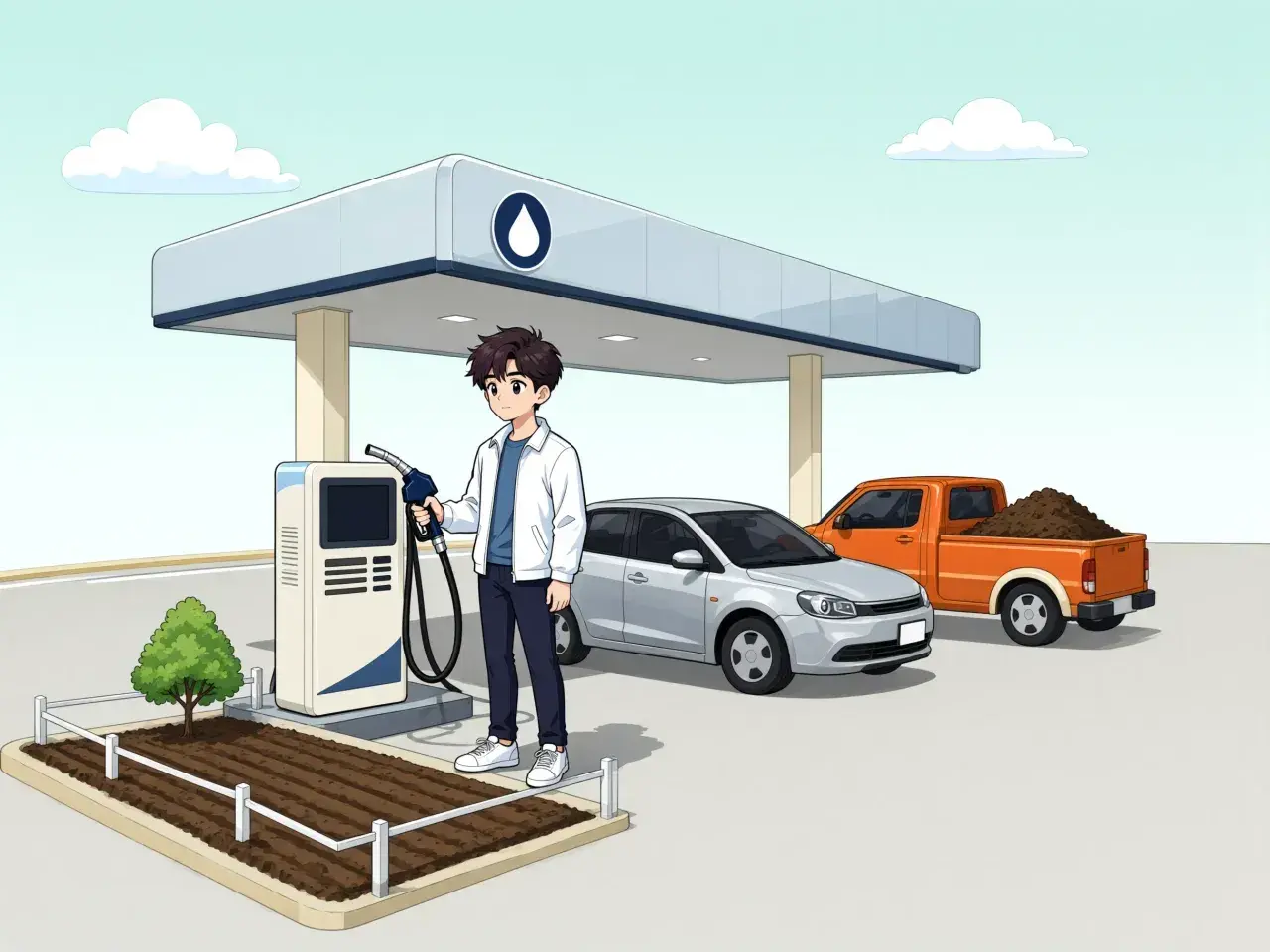
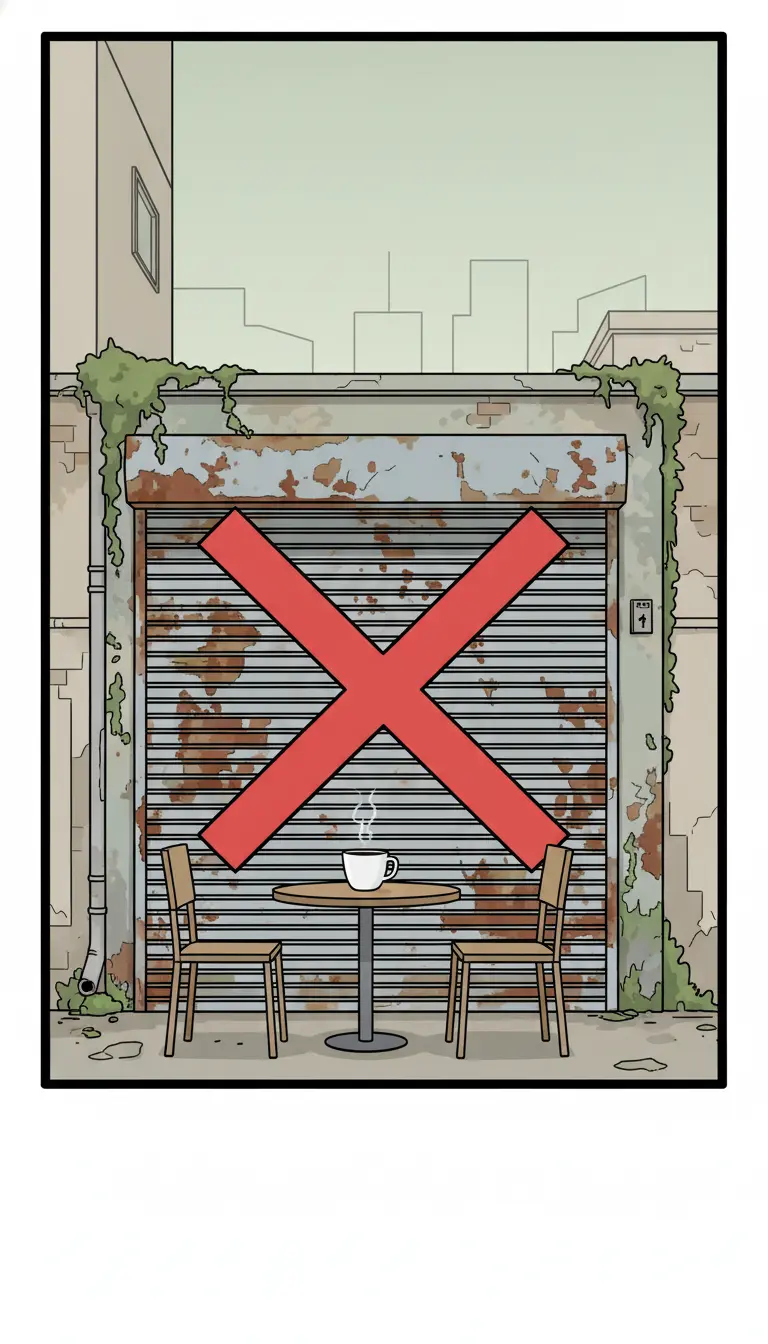
Sang-hoon Park, an owner of a five-story commercial building, stares at the rusting steel parking tower behind his property every morning. Built 15 years ago to satisfy strict municipal codes, the mechanical tower has become a ghost structure. Since there is a large, convenient dirt lot right behind the building that can fit 15 cars, no tenant or visitor has ever bothered to use the cumbersome steel lift.
Rain and snow have turned the structure into a brown, flaky mess. To Sang-hoon, it seems like a brilliant idea to tear it down and use the prime real estate for a trendy outdoor terrace cafe or extra storage units for his tenants. "I have plenty of parking space in the lot," Sang-hoon reasons. "Keeping this rusty hazard serves no one."
The Legal Question: Purpose vs. Reality
The central legal question in Sang-hoon’s case is clear: Can a building owner unilaterally repurpose or dismantle an unused, dilapidated parking facility if they believe there is sufficient alternative parking space nearby?
What Korean Law Says: The Parking Lot Act
In South Korea, parking isn't just a convenience; it’s a legal mandate tied to the building's existence. The Parking Lot Act is designed to prevent urban congestion by forcing building owners to manage their own parking demand.
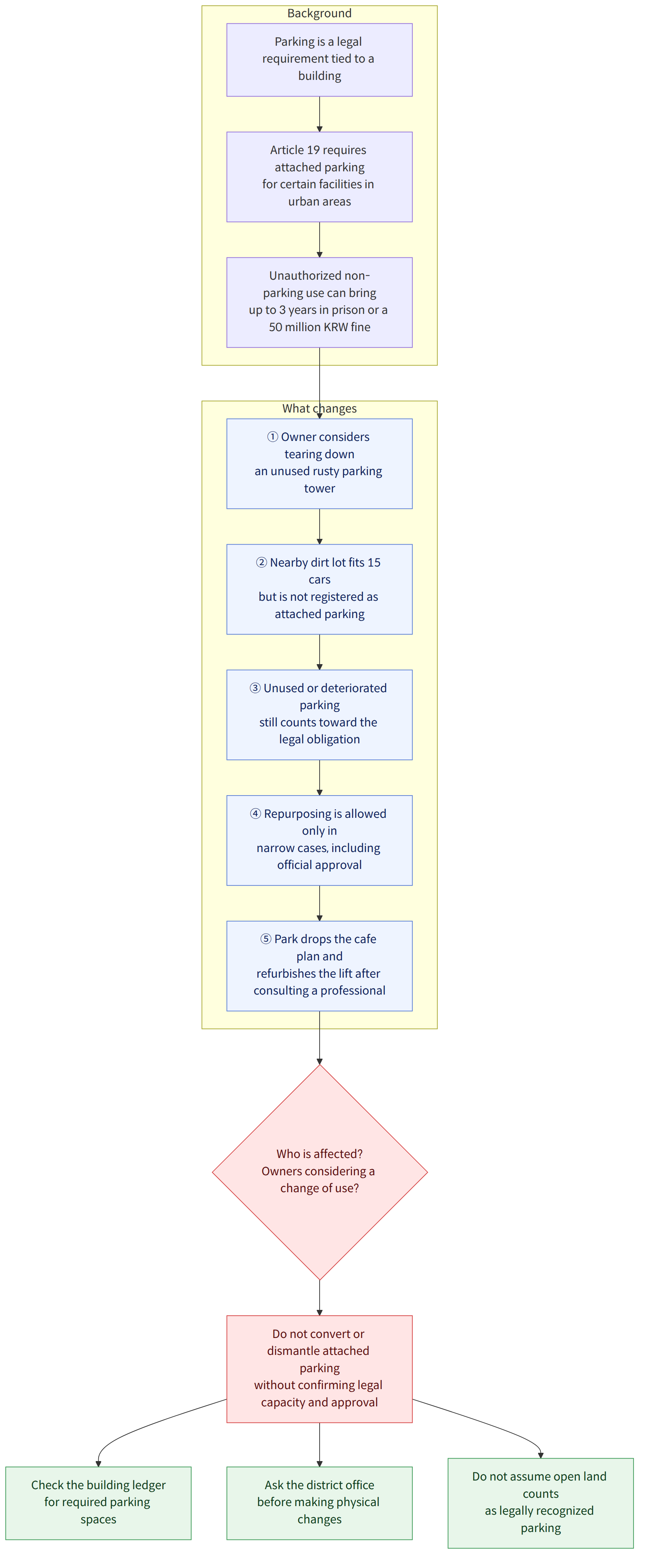
Parking Lot Act, Article 19, Paragraph 1Anyone constructing a facility that induces parking demand in urban areas or district unit planning zones must install an attached parking lot within the facility or on its site.
More importantly, the law views the unauthorized change of use as a serious offense:
- Prohibition of Repurposing: Under Article 29 of the same Act, any person who uses an attached parking lot for purposes other than parking faces up to 3 years in imprisonment or a fine of up to 50 million KRW.
- Strict Exceptions: The Enforcement Decree (Article 12) allows repurposing only in rare scenarios, such as:
- When the Mayor or District Head recognizes that usage is impossible due to road closures or surrounding land conditions.
- Temporary use for local economic events (like farmers' markets) with official approval.
- When the number of parking spaces exceeds the current legal requirements due to changes in laws or building use.
How Korean Courts Approach This
Korean courts and administrative agencies take a formalistic approach to parking regulations. The law is not concerned with whether a specific tower is "useful" or "rusty." It is concerned with whether the building is meeting its statutory parking quota.
Judges generally rule that the duty to maintain a parking lot is a public obligation. Even if Sang-hoon has a 15-car lot behind his building, if that lot is not officially registered as the "designated attached parking" in the building ledger, it does not count. Personal convenience or the physical deterioration of the structure does not waive the legal requirement to maintain the facility as a parking space.
Applying the Law to Sang-hoon’s Situation
If Sang-hoon proceeds to turn the tower into a cafe without official approval, he is essentially committing a crime. He would likely face administrative enforcement fines (Ihaeng-gangjegum) and potential criminal prosecution.
For Sang-hoon to legally change the use, he must first check if his building's current legal requirement (based on floor area and usage) is lower than the total parking capacity he currently provides. If the 15-car lot is sufficient to meet 100% of the legal requirement, he might be able to apply for a "confirmation of excess parking" and then repurpose the tower. However, if the tower was built to satisfy the minimum requirement, he is legally obligated to repair and maintain it—even if no one uses it.
Conclusion: What Happened, and What Should You Do?
Ultimately, Sang-hoon Park learned that his "common sense" was at odds with the law. After consulting with a professional, he decided to scrap the cafe idea and instead invested in refurbishing the lift system to avoid a surprise inspection and heavy fines.
If you find yourself with an unused parking facility, follow these practical steps:
- Check the Building Ledger (Gonchuk-mul Daechang): Verify the exact number of parking spaces you are legally required to maintain.
- Consult the District Office: Before making any physical changes, visit the parking management department at your local Gu-cheong (District Office). They can tell you if your situation meets any of the rare exceptions for repurposing.
- Do Not Assume Open Space is Legal Parking: Just because cars can park on a piece of land doesn't mean it is a legally recognized parking spot that can replace a structured facility.
In the eyes of Korean law, a rusty parking tower is still a parking tower until the government says otherwise.
This column provides general legal information and does not constitute formal legal advice. Legal outcomes may vary based on specific circumstances.