Graffiti was sprayed overnight on a major administrative building at Cornell University. One glass door was broken. Student groups planned protests calling for changes to the university’s procedures for handling sexual assault reports, in protest of the university’s response to an alleged group sexual assault said to have occurred at a fraternity house in 2024. Other reports said students had already gathered and protested in a campus plaza. It is not known who damaged the building or what the university’s investigation found.
Background and context
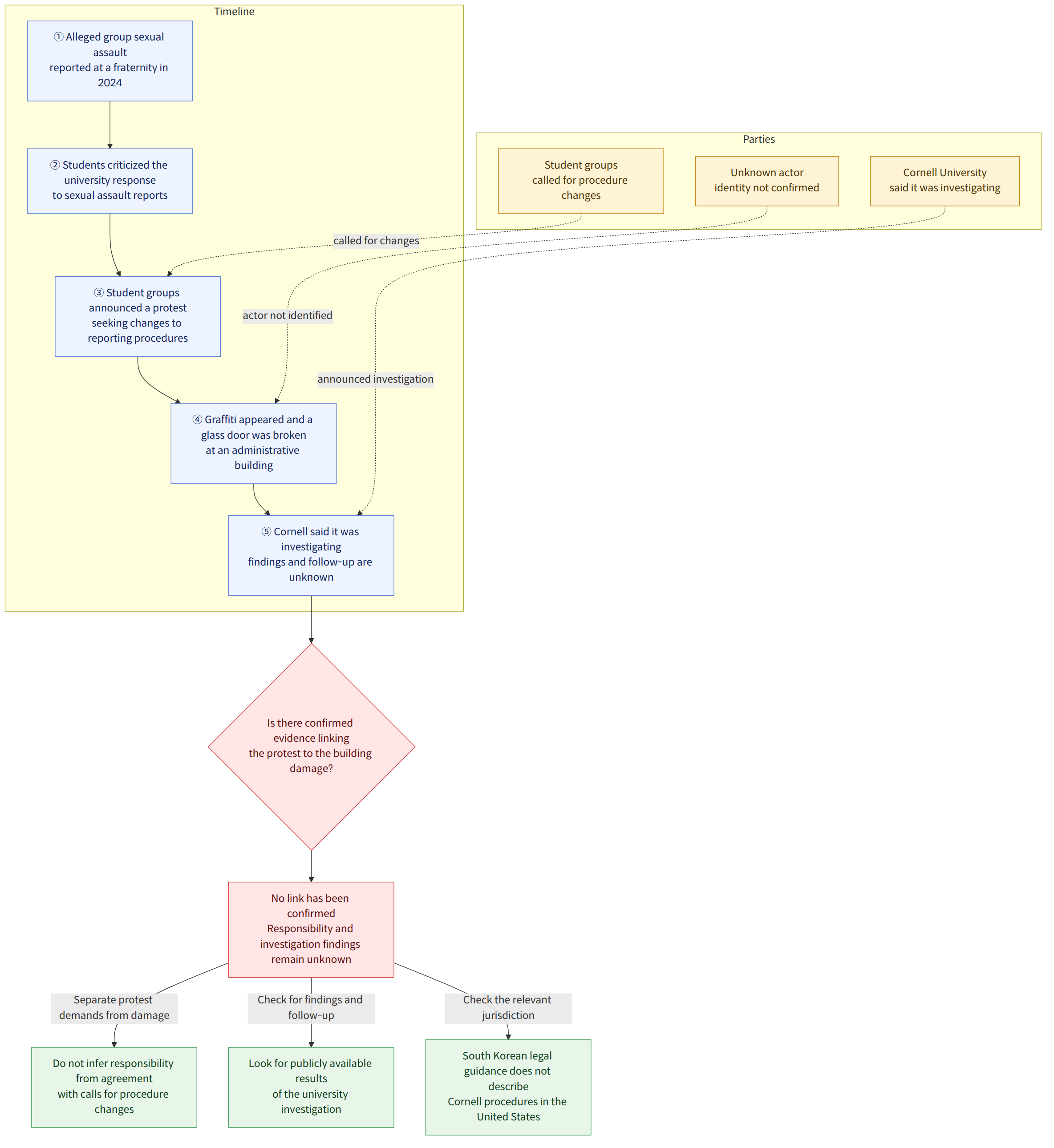
According to reports, a hole was made in one glass door of the administrative building, and red writing criticizing patriarchy and the university’s handling of sexual assault cases appeared on the adjacent wall. The graffiti and damage occurred around the same time as student protests over the university’s response to sexual assault reports, but no connection between the two incidents has been confirmed, nor has the identity of the person who damaged the building.
Cornell University spokesperson Kyle Kimball said the university was investigating the incident. He said damaging property was not an answer to expressing community members’ frustration and strong emotions. Campus police referred questions about the incident to the spokesperson’s office.
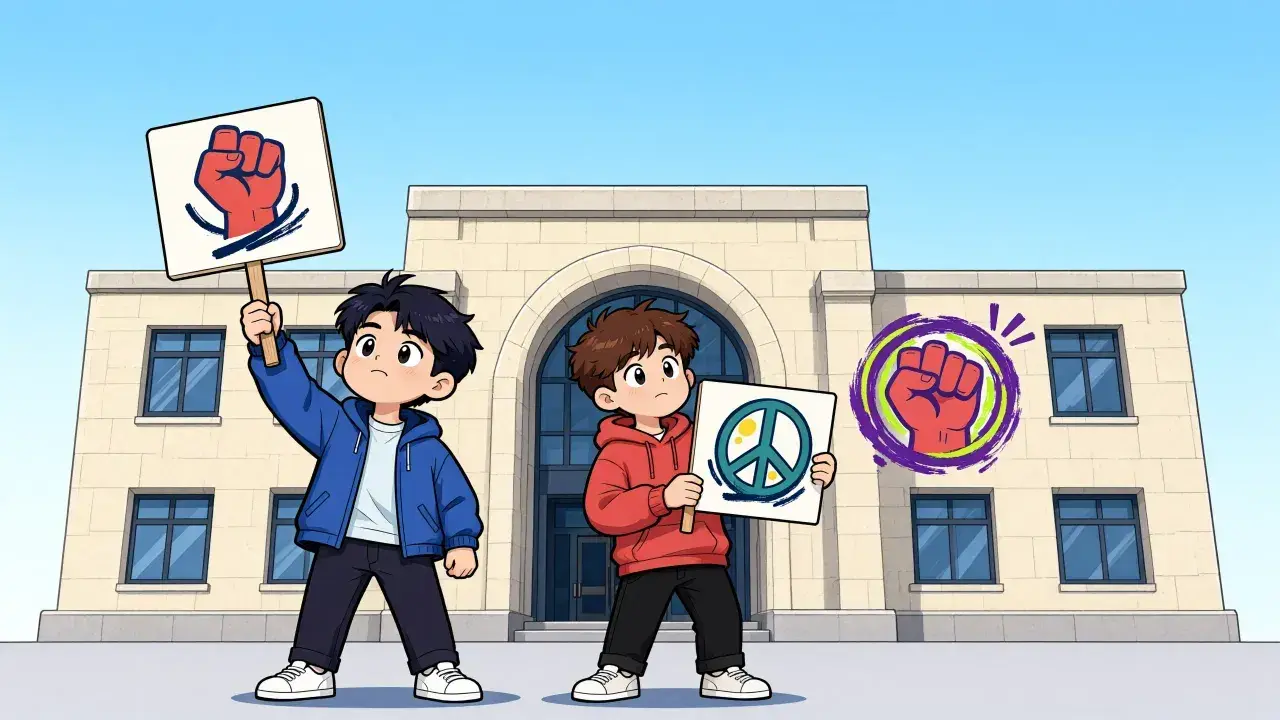
The protest was announced as a “Justice for Survivors” event, and student groups called for changes to the university’s procedures for handling sexual assault reports. A separate report said protesters wore purple ribbons and carried signs bearing messages including “Support survivors and expel rapists.” That report explained that the name “Jane Doe” was used in court documents to refer to the person who made the report.
What this news means
This case involves both protests over the university’s handling of reports and damage to an administrative building. However, there is no basis for linking the damage to the actions of protest participants. Failing to distinguish between the two incidents could lead to unsubstantiated blame being directed at particular students or groups.
It is confirmed that the university said it was investigating, but there is no publicly available evidence about the findings or any follow-up action. The key points that can currently be confirmed are that the university is investigating and that students called for changes to its procedures. It is not yet known what procedures were at issue or whether the university will meet the demands.
For example, even if a student agrees with calls to change reporting procedures, that alone does not establish who was responsible for damaging the building. Conversely, an investigation into property damage does not mean that students’ concerns about the handling of sexual assault reports have been resolved. Each issue must be established through its own investigation and procedures.
Related procedures and support information
In-house legal guide L1 explains that in South Korea, a criminal complaint (형사 고소)—a procedure through which a victim or another person notifies an investigative authority of a crime and seeks punishment—can be made in writing or orally to a prosecutor or judicial police officer, and that a written record must be made when a complaint is filed orally. A complaint may also be filed through a representative, but the representative’s authority must be verified. This information concerns South Korean law; it does not describe Cornell University’s internal reporting procedures in the United States or apply directly to this case.
L1 explains that the effect of withdrawing a complaint may vary depending on the type of crime and when the withdrawal takes place, and that simply drawing up a settlement agreement is not considered an indication to investigative authorities or a court that the complainant intends to withdraw the complaint. Therefore, readers in South Korea facing a similar situation should check the nature of the crime and the specific procedures before deciding to settle or withdraw a complaint. The guide itself also cautions that the laws in force at the relevant time and the specific facts of the case must be checked in an actual case.
L2 explains that whether an offense such as rape or indecent assault has been committed depends on the specific circumstances, including how the act was carried out, the relationship between the parties, the victim’s condition, and the surrounding circumstances. This may help readers understand why the existence of a crime or responsibility in this case cannot be determined based only on the claims reported. However, this material is also guidance on South Korean law and does not replace a legal assessment of a U.S. case or Cornell University’s internal procedures.
Points reported differently across coverage
Reports differed on whether the protest had taken place. One report said student groups planned to hold a protest late Monday afternoon, while another said students had gathered and protested in a campus plaza. With no information available to confirm the timing of the reports or whether they were updated, it is difficult to determine which account reflects the final situation.
Reports also differed in how specifically they described the protesters’ demands. One report said they called for changes to reporting procedures, while another mentioned, in part of a sentence, an additional demand for related punishment, but the original text does not continue to the end. It is therefore not possible to confirm what punishment was being sought.
What is confirmed and what remains unknown
Confirmed facts
- Graffiti was sprayed on a major administrative building at Cornell University, and one glass door was broken.
- The graffiti criticized patriarchy and the university’s handling of sexual assault cases.
- Student groups criticized the university’s response to an incident alleged to have occurred at a fraternity house in 2024.
- A Cornell University spokesperson said the university was investigating and that damaging property was not an answer to expressing emotions.
What remains unknown
- Who sprayed graffiti on the building and broke the glass door?
- What facts did the university’s investigation establish, and what action resulted?
- What specific punishments, if any, did the student groups seek in addition to changes to reporting procedures?
What readers should check
- Check whether the protest described in reports as planned actually took place, and whether the university or student groups have since released any follow-up information about calls for procedural changes.
- If you are looking into procedures in South Korea for reporting sexual assault or filing a criminal complaint, distinguish between a criminal complaint and an internal university report, and consult legal guidance that fits the type of offense and the date the law applies.
- If you are considering signing a settlement agreement or withdrawing a complaint, its effect may differ from case to case, so check the specific facts and procedures with a professional before making a decision.