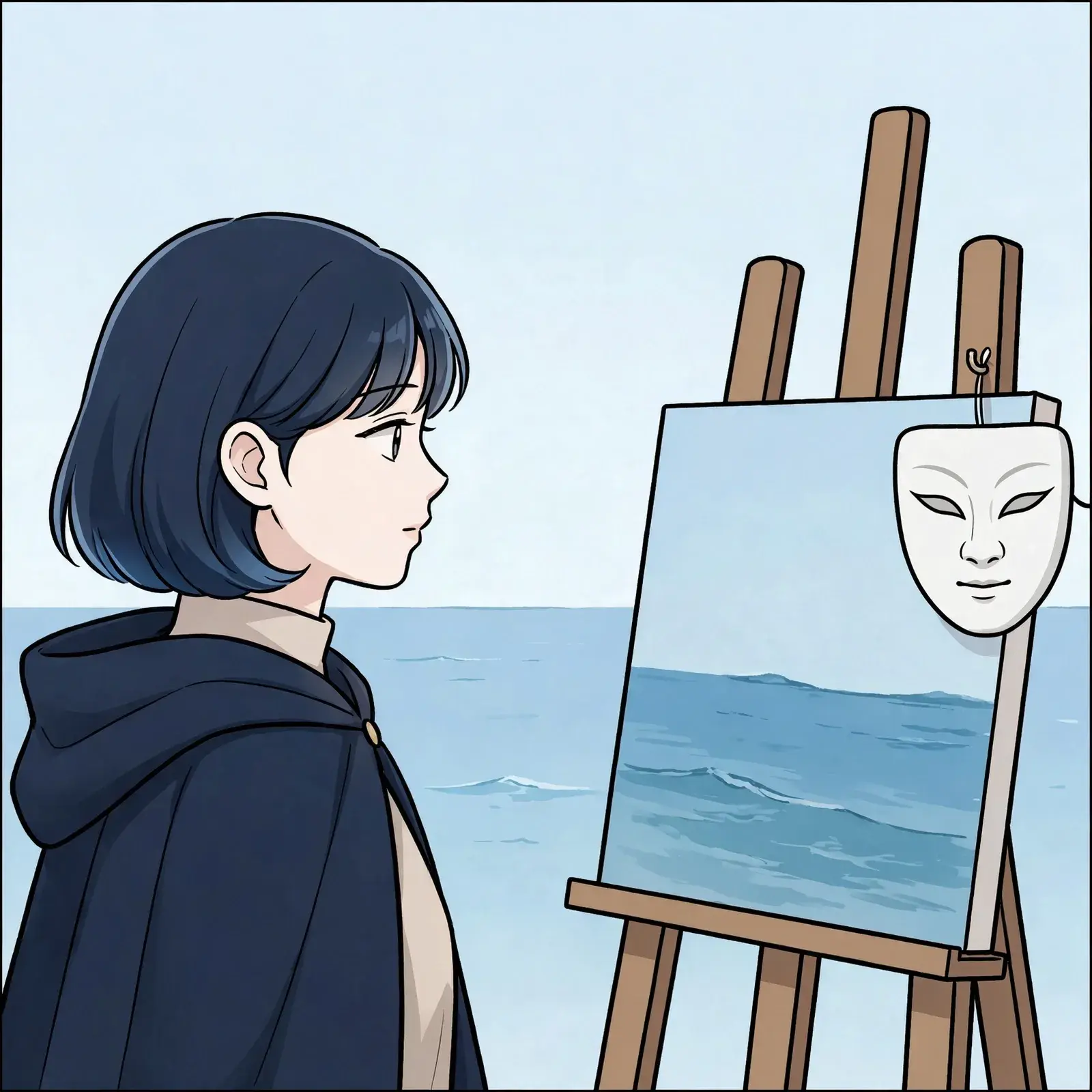
A familiar sea, seen with fresh eyes
On a trip to South Korea’s southern coastal region, I was waiting for a bus in Jinju when a bakery caught my attention. Later, as the bus travelled toward Namhae, the view outside the window opened onto a broad, blue sea. I reached for my phone to record it, but the bus moved quickly, and the glittering water kept slipping out of frame.
A woman sitting behind me laughed gently. “You’re filming this, too? We see it every day,” she said. Her remark made me laugh as well. For a visitor, the sea was a rare and beautiful sight; for her, it was part of the landscape of ordinary life.
Another passenger suggested that I film Namhae Bridge, but advised that it looked best from the opposite direction. Their comments turned the bus ride into a conversation about how people see the same place differently. One person passes through and notices a view; another lives beside it and knows when, and from where, it looks its best.
The sea was not less beautiful because the local women saw it every day. It had simply become part of their everyday lives, while I was encountering it anew.
What we notice—and what we learn to see
Sunlight scattered across the water like grains of jewel dust. The surface seemed to flash silver, almost as if a school of anchovies were leaping beneath it. That brief view stayed with me long after the bus had moved on.
One of the women told me that Namhae was especially beautiful around April 5, when cherry blossoms filled the landscape. She spoke with the affection of someone who knew the place through seasons, not just through a passing glimpse. Her phone case carried an image of Vincent van Gogh’s Starry Night Over the Rhône, painted in 1888 and now held by the Musée d’Orsay in France.
It made me wonder whether van Gogh could have imagined that someone in Namhae might see his night sky on a phone every day. The painting had travelled far from the river in Arles where he observed the night, entering another person’s routine thousands of miles away. Art can move across time and distance, but its meaning is renewed each time somebody looks at it.
The journey from Jinju to Namhae took hours by train and bus. It may not have been as fast as flying, but the conversations along the way offered something that speed could not provide: a chance to meet people, hear how they understood their home, and share a little of their everyday warmth.
A place can become part of someone’s future
In Namhae, I gave talks at two libraries and met people whose lives had brought them there from elsewhere. Among them were a young woman from Indonesia and a pianist who had studied in Russia. I also remember a mother and daughter who had recently moved from the Seoul area and sat in the front row.
The student told me she hoped to write songs. The landscapes around her new home—the sea, the changing light and the spring blossoms—might one day become part of her music. A place is not only scenery. For someone growing up or beginning again there, it can provide experiences that no classroom can quite reproduce.
Looking can be the beginning of desire
The power of looking appears in literature as well as in daily life. In Oscar Wilde’s play Salome, the princess desires the prophet Jokanaan, also known as John the Baptist. He rejects her, and Salome later dances before King Herod, asking for Jokanaan’s head as her reward.
Addressing the severed head, Salome says, “If you had looked at me, you would have loved me. I looked at you, and I loved you.” Her words make the act of seeing feel intimate and unequal: she has looked at Jokanaan and fallen in love, but believes that he never truly looked back.
The play is filled with people watching one another. Herodias watches Herod, Herod and the captain of the guard watch Salome, and Salome fixes her attention on Jokanaan. Each gaze carries a different desire, fear or fascination, and those feelings intensify as the characters keep looking.
Wilde’s play is often associated with the aestheticism and decadence of the late nineteenth century—artistic movements that placed great emphasis on beauty, sensation and unconventional subjects. Its uneasy focus on watching also touches on a basic human impulse: the wish to see someone, to be seen in return, and to imagine what another person’s attention might mean.
Sometimes familiarity itself changes what we see. A performer who first seems like a stranger can begin to feel familiar after repeated appearances on television or online. The more we watch, the more readily we may notice their expressions and personality—and the more attached we can become.
Everyday language makes seeing a form of connection
The idea of looking is woven into ordinary expressions. Korean phrases such as “Look here” and “Please, give me a chance” carry the hope of catching another person’s attention. The familiar English expression “I see” works similarly: it can mean not only that the eyes have registered something, but that the mind understands it.
Seeing is one of the ways we begin to recognize and interpret the world. A face, a gesture or a landscape gives us information, but understanding also depends on attention: we notice details, connect them with what we already know, and decide what they mean. In that sense, to look closely can be the first step toward understanding.
The Korean word for spring, bom, also sounds like the verb “to see” in some everyday wordplay. The association is poetic rather than a literal explanation of the word’s history, but it captures the season’s invitation to pay attention: new leaves, blossoms and brighter light draw the eye back to the world.
A glance can open the door to recognition, but it is the attention that follows—looking again, listening and responding—that allows people to connect.
Music gives a glance a life of its own
Classical music has found many ways to make looking audible. French composer Olivier Messiaen’s piano cycle Twenty Contemplations on the Infant Jesus makes the idea of contemplation—deep, sustained attention—central to its very title. In music, a listener cannot literally see what a character sees, but a melody can encourage us to imagine a scene or return to a particular feeling.
Richard Wagner’s opera Tristan and Isolde builds its tragedy around such a moment. Isolde raises a sword against Tristan, the man who killed her intended husband. Then their eyes meet. In the story as described here, Tristan’s penetrating gaze disarms Isolde, and she lets the sword fall.
That exchange lasts only an instant, yet it changes the course of their lives. The opera then gives the fleeting look a musical presence through a recurring idea associated with the lovers’ encounter—a motif, or short musical phrase, that returns and changes as the drama unfolds. Each return can remind the audience of the moment when hostility turned into desire.
The music is not simply a soundtrack to the action. By bringing back and reshaping musical ideas, Wagner lets listeners feel how a moment can persist in memory. A glance may be over in seconds, but its emotional consequences can continue to echo through an entire relationship—and, in this case, through an opera that can last around four hours.
The tension of the Tristan chord
The opera is also famous for the “Tristan chord,” a distinctive, unsettled harmony associated with longing and tension. A chord is a group of notes played together; when the notes do not seem to settle comfortably, listeners may feel that the music is still reaching for an answer.
The article draws attention to a poignant harmonic moment around the 17th measure, where Wagner gives musical shape to the pain and longing surrounding the lovers’ first encounter. The effect is not a simple musical translation of “love at first sight.” Instead, the harmony holds several feelings at once: attraction, uncertainty and sorrow.
Wagner takes a moment that could pass in a second and gives it lasting force: a musical idea returns across the opera, keeping the lovers’ first look in the audience’s memory.
The view changes when we look back
After the talks, I travelled back toward Jinju and saw Namhae Bridge again. This time, I was coming from the direction the women had recommended. Its lights shimmered on the water, making the evening sea seem to answer the old call, “Look at me.” Their advice had changed how I approached the view, and the bridge appeared newly vivid.
The scene brought van Gogh’s starry river back to mind. His painting and the southern sea were different places, separated by geography and history, yet both held light reflected on water. Looking can connect experiences that seem unrelated, just as a picture on a phone can bring a French night sky into someone’s daily life in Namhae.
The stories of Salome, Tristan and Isolde, and the women on the bus are very different in scale and consequence. But each asks what happens when one person looks at another—and whether that attention is returned. A glance can begin attraction, expose a desire or simply invite conversation.
Not every look leads to love, and not every act of looking brings understanding. Yet many beginnings share a small first step: someone notices, someone else responds, and the world becomes a little less distant. Sometimes a single moment of mutual attention can leave enough of an impression to fill a four-hour opera.