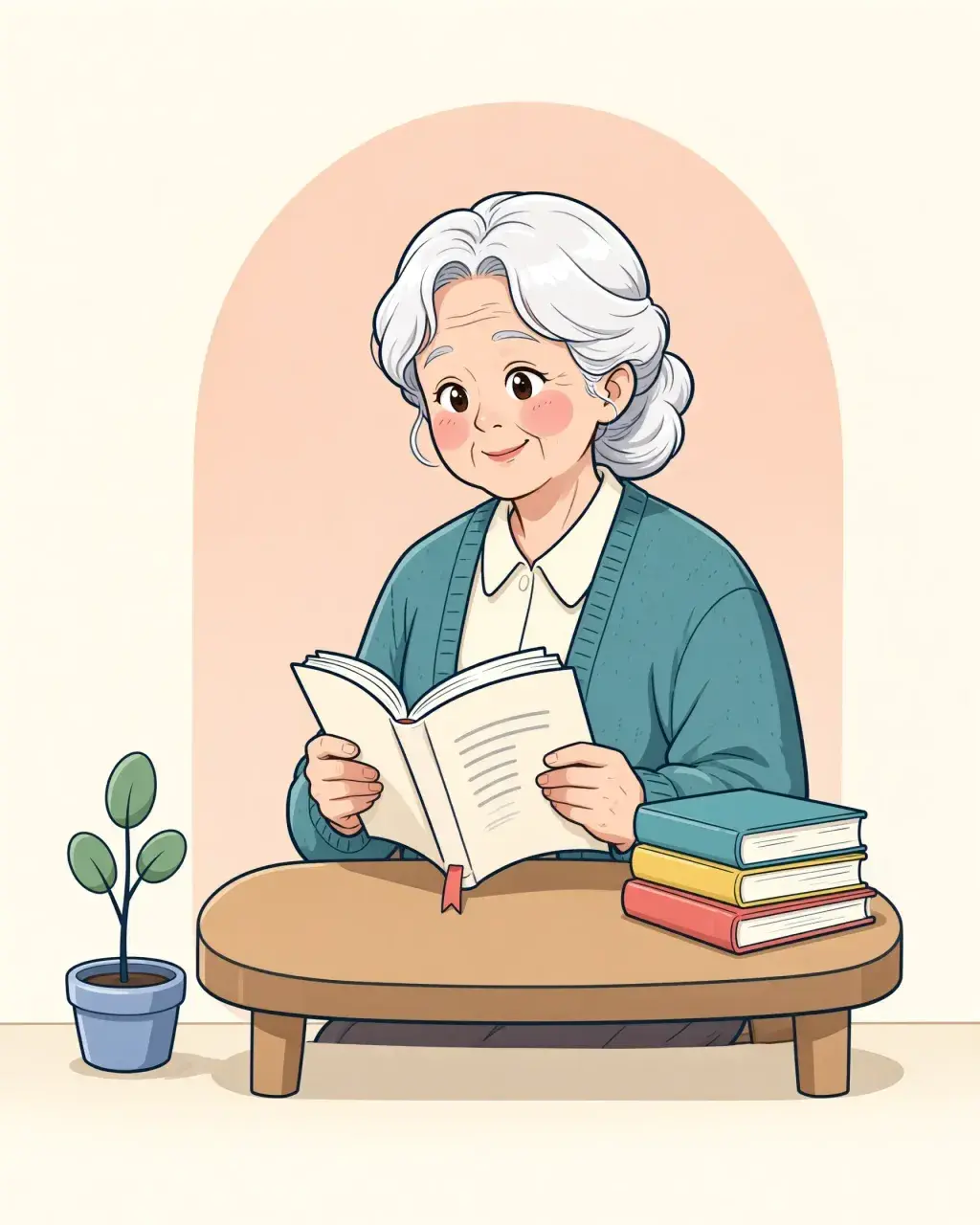
In an article published on October 10, 2026, writer Kim Hee-kyung wrote that her mother, who is well into her eighties, is losing her sight to macular degeneration and has pain in her shoulders and back, yet remains absorbed in sketching everyday scenes. She places this image alongside the story of Aliya, the protagonist of An Unnecessary Woman, a novel by Lebanese-American writer Rabih Alameddine. The question raised by these two cases is what continuing to do something can leave in a person’s life, even when the outcome is not visible.
Background and context
In her mother’s sketching, Kim Hee-kyung sees an attitude of becoming deeply absorbed in something, rather than a concern with how polished the result is. Reflecting that she has little patience for the awkwardness of a beginner and tends to focus on outcomes rather than process, she describes her mother’s absorption as admirable and precious. What she emphasizes is not the benefits of any particular hobby, but an approach that gives weight to the present process by paying attention to a person or thing.
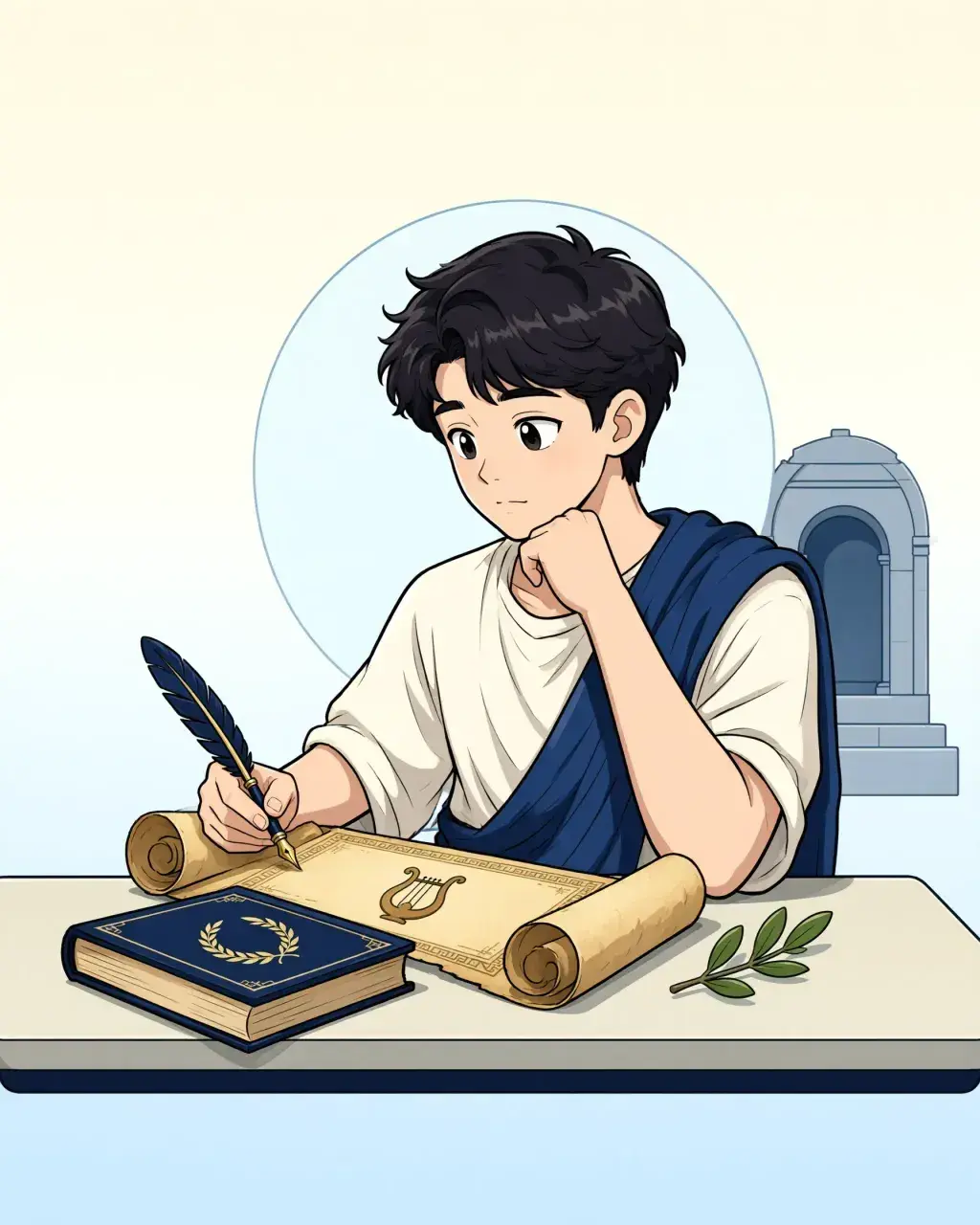
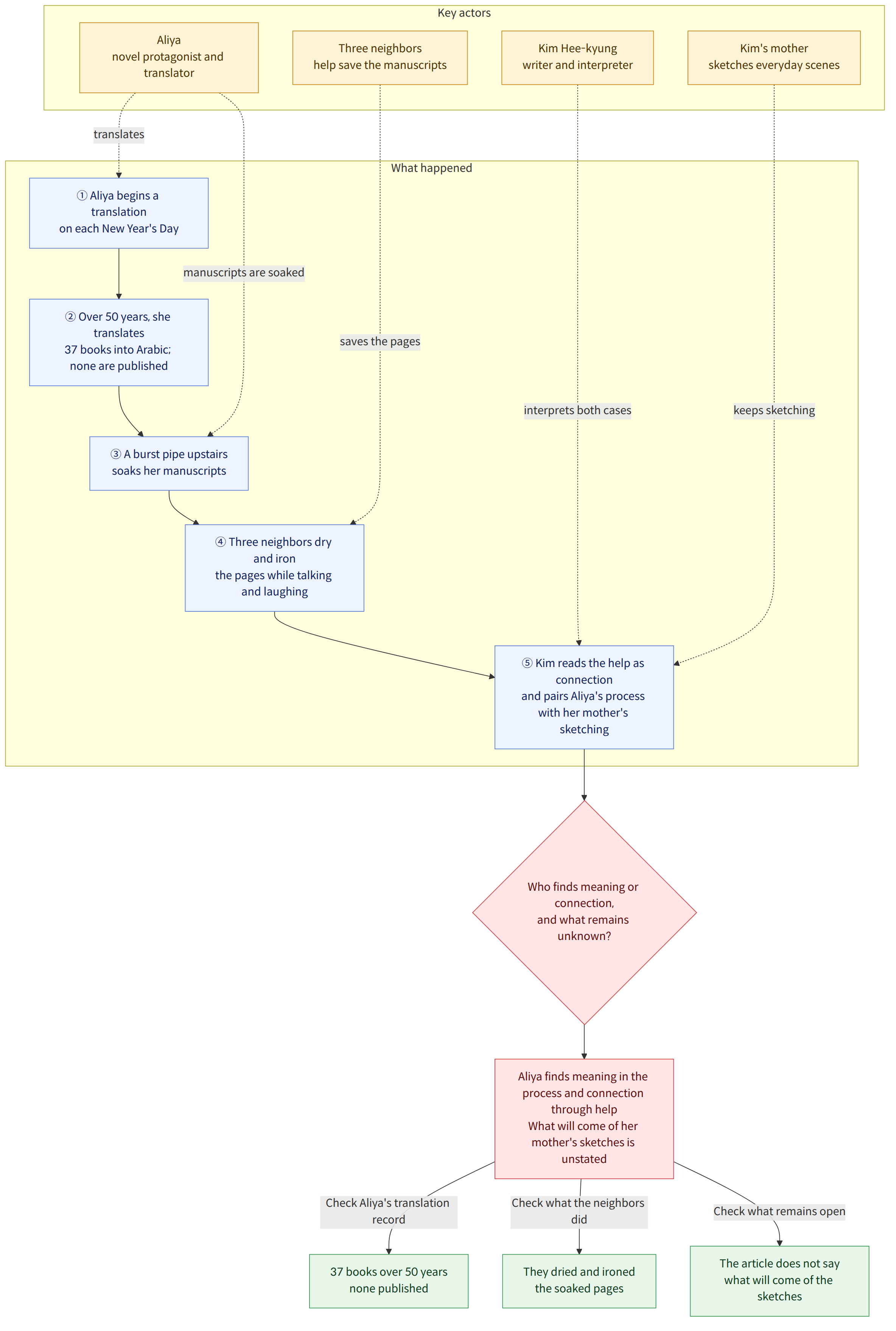
Aliya, the novel’s protagonist, is a 72-year-old woman living in Beirut, Lebanon. After being forced into marriage at 16 and then divorced, she worked for many years in a bookstore. According to the article, she lives alone, without friends, and relies on reading and writing. On the first day of each new year, she begins a translation. Over 50 years, she translated 37 books into Arabic but published not a single one.
By conventional standards, translations that have never been published may seem like work without results. But the article says Aliya is devoted not to the final product but to the process of translating, which she sees as a source of meaning in life and a support that helps her endure difficult years. For Aliya, translation is not only about producing something to show others; it is also a way of moving through time.
In the novel, a pipe bursts upstairs and water soaks Aliya’s translation manuscripts. Three women who live in the same building help her by drying and ironing the pages flat. They are neighbors Aliya keeps at a distance, calling them “the three witches.” As they work to save the manuscripts, they chat and laugh about the characters in the books. Kim Hee-kyung reads this as a scene in which conversations Aliya had with fictional characters spread among people.
What this means
The value of process presented in this article is different from the promise that “if you work hard, you will definitely achieve results.” Aliya’s translations were never published, and the article does not say what will come of her mother’s sketches. Even so, both activities can create meaning and absorption in their own right; in Aliya’s case, help from her neighbors also leads to an experience of connection with others.
Being absorbed in a process does not mean that pain or loneliness disappears. What the article highlights is the possibility that, even amid hardship, an activity can create meaning in life and relationships.
Through her encounters with the people who help care for the manuscripts, Aliya experiences how the empathy she has built through books can reach other people in real life. Kim Hee-kyung interprets this event as a turning point that allows Aliya to renew herself.
For example, if someone keeps drawing even though they have not produced results, the absorption they find in the process may itself be meaningful, even if the activity does not immediately lead to a finished work or recognition. The scene in the novel also shows that even when people around them do not understand the meaning of the activity, offering the help they need can create a relationship. This is a possibility Kim Hee-kyung finds in the two cases, rather than a claim that the activity helps everyone in the same way.
What is confirmed and what remains unknown
Confirmed facts
- On October 10, 2026, Kim Hee-kyung published an article about her mother’s sketching and her commitment to the process.
- Her mother is over 80. She is losing her sight to macular degeneration and has pain in her shoulders and back, but is absorbed in sketching everyday scenes.
- Aliya, a character in the novel, is a 72-year-old woman living in Beirut who translated 37 books into Arabic over 50 years but published not a single one.
- When a pipe burst upstairs and soaked the manuscripts, three women who lived nearby helped by drying and ironing the pages flat.
- The book information given in the article is: written by Rabih Alameddine, translated by Lee Da-hee, published by Muzintrie, 2026.
What remains unknown
- The article does not give the original publication year or original title of the novel.
- The article does not establish when Kim Hee-kyung’s mother began sketching or what prompted her to start.
- The article does not specify what led Aliya to begin translating or which books make up the 37 she translated.
What readers can check
- To find out the novel’s original publication year and title, readers can consult its copyright page or book information materials. The article lists Lee Da-hee as the translator, Muzintrie as the publisher, and 2026 as the publication year.
- If an older person nearby is absorbed in an activity, you can ask what they enjoy about it and what help they might need, rather than first asking what results they have achieved. In the novel, the neighbors’ work to care for the manuscripts together becomes the starting point for a relationship.
- You can reflect on whether you judge your own work only by its outcomes. Kim Hee-kyung’s article offers the interpretation that the process itself can be meaningful, but does not present it as an answer that applies to everyone.