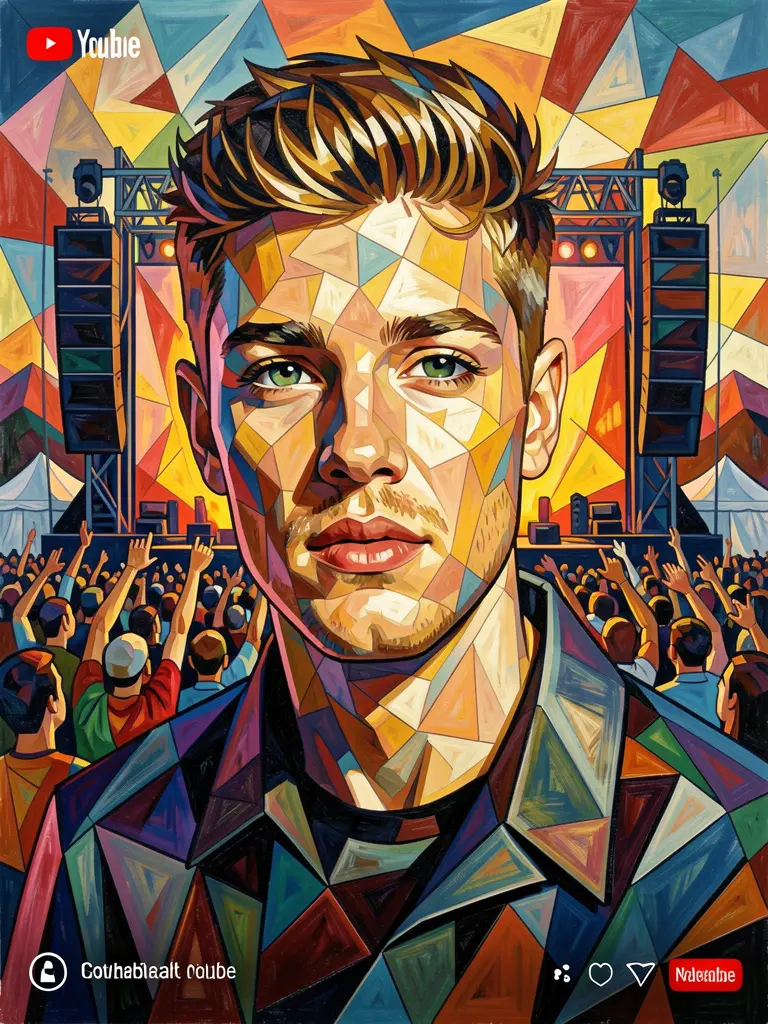
The Coachella Controversy: A Performance Divided
After a four-year hiatus from the touring circuit, Justin Bieber returned to the spotlight as a headliner for the world-renowned Coachella Valley Music and Arts Festival. While the event is a pinnacle of the music industry, attracting up to 125,000 attendees per weekend and millions of global viewers via livestream, Bieber's set left the audience deeply divided.
During a specific 20-minute segment of his 90-minute show, Bieber did something unprecedented for a pop superstar: he sat at a laptop and began searching for his own songs on YouTube. Instead of performing a traditional live set, he sang along to these clips, sometimes omitting lyrics or merely mouthing the words.
This sparked an immediate firestorm on social media, with critics labeling the performance as "lazy" and a sign of disrespect toward the paying audience. However, viewed through a historical and technical lens, the performance was not a failure of effort, but a calculated artistic statement.
Deconstructing the "YouTube Set"
To understand why this wasn't simply a lack of preparation, one must look at the sequence of events. Bieber began by acknowledging his "living room" audience, projecting the real-time livestream chat onto the massive festival screens. This bridged the gap between the physical crowd and the digital one, turning the concert into a hybrid experience.
The "Duet" with the Past
When Bieber searched for his 2010 hit "Baby," he created a sonic contrast. The high-pitched voice of his teenage self played from the speakers, while the mature, adult voice of the current Bieber sang over it.
- The Contrast: This functioned as a literal duet between the past and the present.
- The Pacing: He moved rapidly through hits like "Favorite Girl" and "Confident," treating them as snippets (short, extracted pieces of a larger work) rather than full songs.
- The Meta-Commentary: By feigning a Wi-Fi dropout and playing a blooper reel of himself falling through stage floors, Bieber leaned into the unfiltered nature of the internet.
The Illusion of Spontaneity
It is crucial to realize that in a production of this scale, nothing is left to chance. The "typing" on the screen and the timing of the clips were almost certainly pre-programmed. The perceived "laziness" was actually a highly rehearsed piece of performance art designed to mimic the way we consume music today: skipping through tracks and browsing archives.
The Philosophy of "Liveness": A 50-Year History
What does it actually mean for a performance to be "live"? The idea that a musician must play every note in real-time is a relatively narrow definition. Throughout music history, artists have used technology to challenge the audience's perception of reality.
Historical Precedents of Digital Interaction
- The Doors (1967): They brought a television on stage to watch their own pre-taped performance, blurring the line between the live event and the recorded image.
- Kraftwerk: The pioneers of electronic music often presented themselves as robots (mechanical beings), removing the "human" element to emphasize the machine-made nature of their sound.
- Deadmau5: In the EDM (Electronic Dance Music) world, he famously exposed the industry secret that many festival sets are pre-recorded, questioning why audiences value the "illusion" of live playing over the actual sound.
The "Ghost" in the Machine
Bieber's interaction with his younger self follows a tradition of posthumous or archival duets. For example, Natalie Cole performed with a recording of her deceased father, and Coachella has previously featured a hologram (a 3D image formed by light diffraction) of Tupac Shakur.
While those examples use technology to bring back the dead, Bieber used it to bring back a "dead" version of himself—the teen idol—creating a dialogue between who he was and who he has become.
The "Boiler Room" Effect and Future Trends
The way we watch music has fundamentally changed because of platforms like YouTube. A prime example is Boiler Room, a channel where DJs perform surrounded by a crowd rather than on a distant, elevated stage. This shifted the aesthetic of clubbing from "performer vs. audience" to an immersive, shared space.
Bieber's Coachella set is an extension of this evolution. By bringing the YouTube interface—the very tool the world uses to consume his music—onto the main stage, he acknowledged that the digital footprint of an artist is now as important as their physical presence.
Looking Forward: The New Standard of Performance
As we move further into the digital age, the definition of a "good show" is shifting. We are moving away from the requirement of technical perfection toward a demand for conceptual authenticity.
- Integration: Future shows will likely integrate real-time social media feeds and AI-generated content more deeply.
- Nostalgia: The use of archival footage will become a standard tool for storytelling in pop concerts.
- Interactivity: The boundary between the livestream viewer and the physical attendee will continue to dissolve.
In conclusion, Justin Bieber did not provide a lazy concert; he provided a meta-performance. He mirrored the fragmented, nostalgic, and digitally-mediated way we experience art in the 21st century, proving that the most "live" thing about a modern star is their relationship with their own digital ghost.