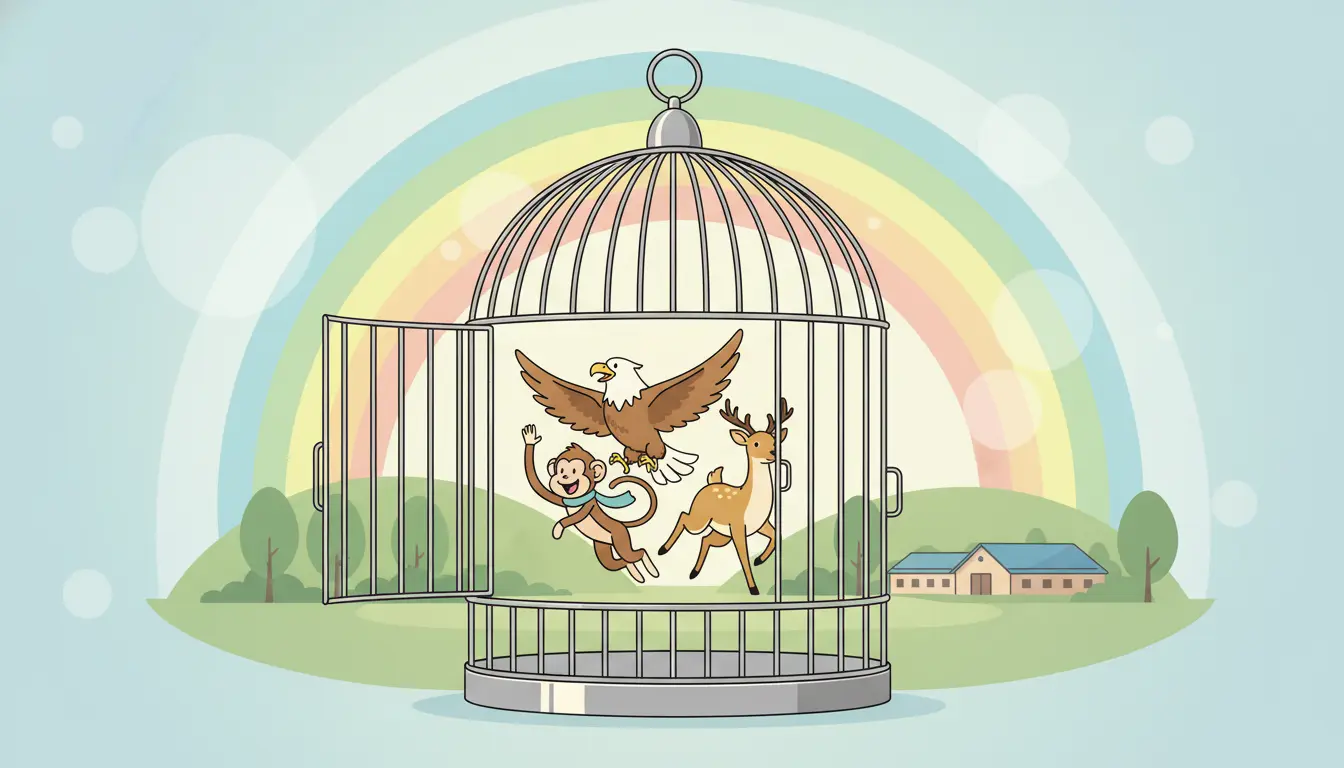
Sanctuaries: Where Animals Live for Themselves
As the world becomes more conscious of animal rights, the concept of an 'Animal Sanctuary' has emerged as a symbol of hope. A sanctuary is a permanent home for animals rescued from slaughterhouses, laboratory testing, or abusive environments, providing them with a lifetime of care and safety.
In these spaces, animals are no longer treated as 'resources' for human consumption. They are freed from the obligation to provide meat, milk, or eggs, and are instead given the right to live according to their own natural instincts until their final days.
How Do Sanctuaries Differ from Zoos?
While they might look similar from the outside, the mission of a sanctuary is the polar opposite of a zoo. While zoos focus on public exhibition and education, sanctuaries exist solely for the well-being of the residents.
Core Principles of a True Sanctuary
- No Exhibition: Animals are not kept in cages for public entertainment. If visitors are allowed, it is strictly on the animals' terms.
- Controlled Breeding: Sanctuaries do not breed animals for profit or to maintain a collection; they focus on caring for those already in need.
- Lifelong Commitment: Once an animal enters a sanctuary, they are guaranteed a home and medical care for the rest of their natural life.
"A sanctuary is a place where animals can finally stop being 'something' and start being 'someone.'"
The Daily Life of Rescued Residents
For example, consider 'Meggie,' a cow in a Korean sanctuary who was once destined for the meat market. Today, instead of a cramped feedlot, she spends her days grazing on green grass and napping in the sun. For a farm animal, this is nothing short of a miracle.
Pigs are allowed to root in the dirt, and chickens can enjoy dust baths to relieve stress. These are natural behaviors that are impossible to perform in factory farming (a method of raising large numbers of livestock in confined spaces) but are essential for an animal's happiness.
Shifting Society’s View on Life
Animal sanctuaries do more than just save individual lives; they serve as a mirror reflecting our society's ethical standards. They challenge us to consider the hidden cost of the products we consume and the lives sacrificed for human convenience.
Despite challenges like high operational costs and lack of legal recognition, the growth of sanctuaries indicates a shift toward a more compassionate culture. Supporting these havens means moving toward a future where every living being is treated with dignity and respect.