U.S. President Donald Trump said Wednesday at the White House that the death of an employee at a Russian plague research institute did not appear to be related to biological weapons. Asked whether there was a bioweapons connection, he replied, “I don’t think so,” and said they would know soon. With a second suspected case reported, the United States and the United Nations called on Russia to disclose information more transparently.
Background and context
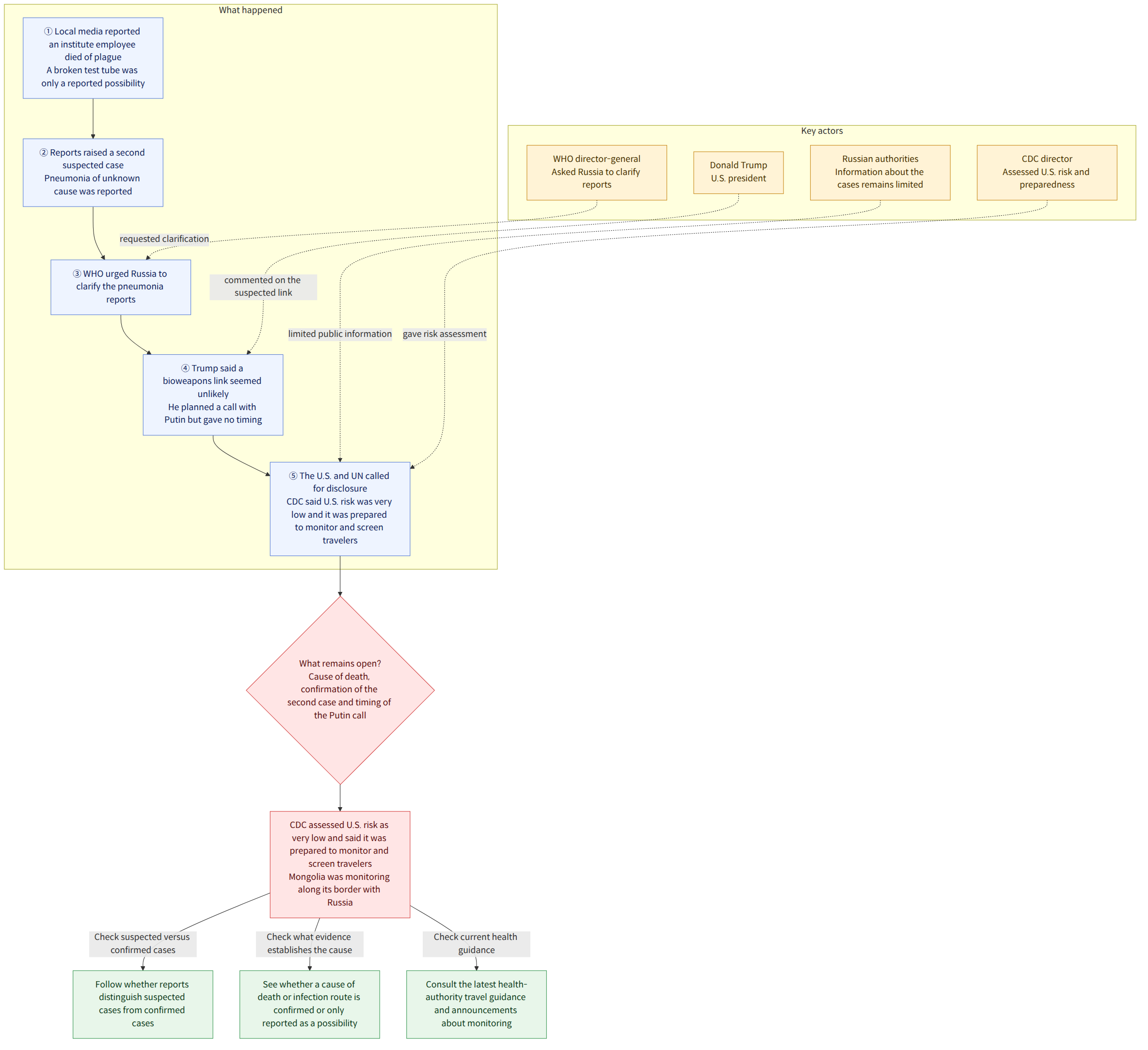
The institute in question is in Russia’s Irkutsk region in Siberia. Local media reported that a 28-year-old woman who worked at the institute had died of plague, raising the possibility that she was infected through a broken test tube. This was a reported possibility, not a cause of death established in the source material.
There were also suspicions that a second employee had fallen ill. The director-general of the World Health Organization (세계보건기구, WHO) called on Russia to clarify media reports that an employee at the Irkutsk institute had developed pneumonia of unknown cause. Russia had previously warned about “false” information, but Trump said there was little information being made public, despite Russia’s claims that it was in control of the situation.
Referring to China’s response early in the COVID-19 pandemic, Trump said Russia, too, was claiming to have the situation under control while not providing much information. He said he planned to speak by phone with Russian President Vladimir Putin about the matter, but did not disclose when the call would take place. During his remarks, he also said, “Today is Vladimir Putin’s birthday.”
What this news means
The key point at present is that Trump’s assessment of a possible bioweapons connection and confirmation of the infection situation itself are two separate issues. Trump said he did not believe the case was related to biological weapons, but that statement does not establish the cause of death or the status of the second suspected case. Russia’s account remains an issue because limited public information can make it difficult to distinguish speculation from confirmed facts.
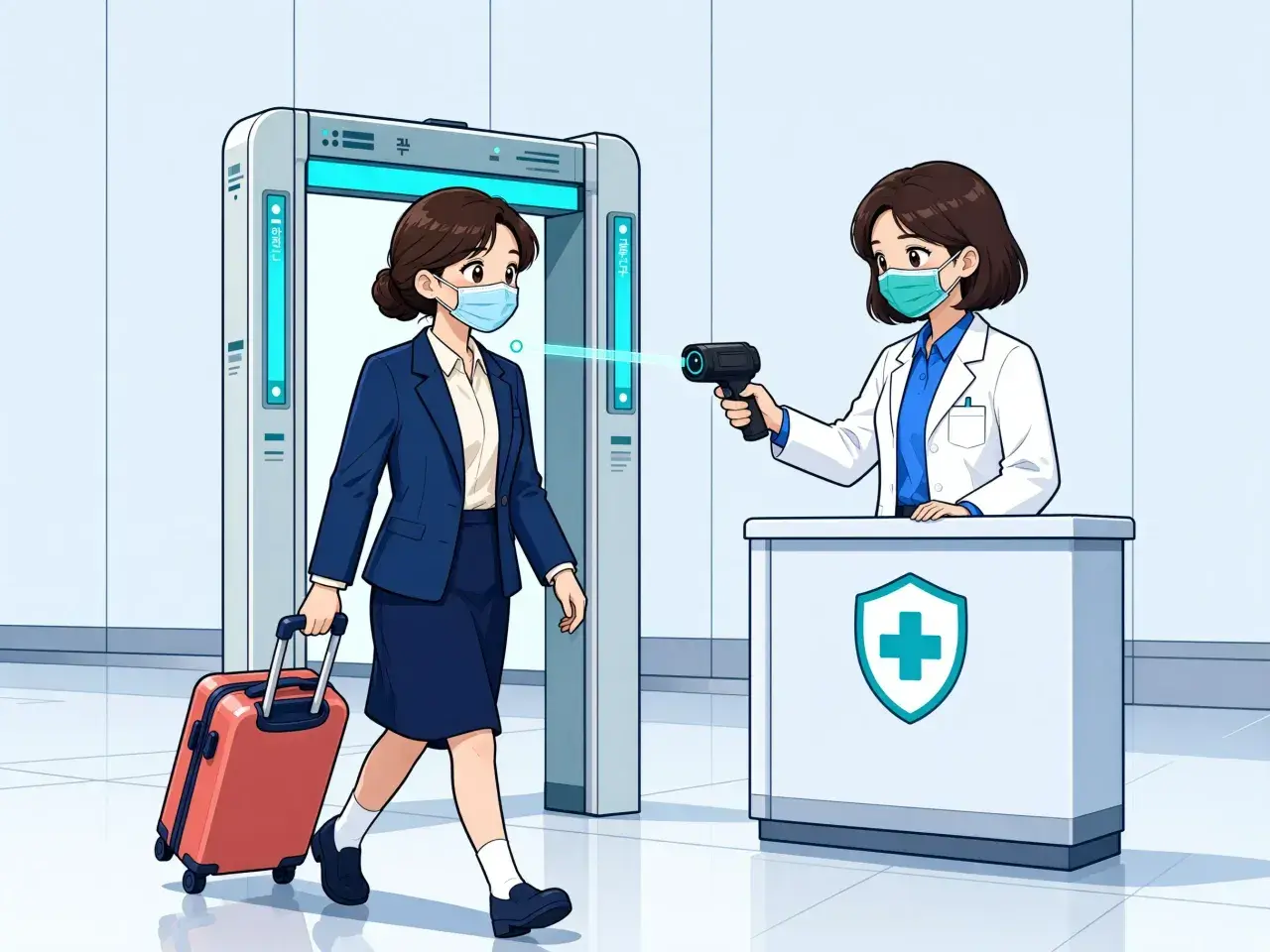
The effects are not limited to the situation inside Russia. Source 2 reported that the Mongolian government was implementing health surveillance and monitoring measures along its border with Russia. Meanwhile, the director of the U.S. Centers for Disease Control and Prevention (미국 질병통제예방센터, CDC) said the risk to the United States from an unconfirmed pneumonic plague case in Siberia was very low, while also saying the agency was prepared to monitor and screen travelers.
For example, even if more reports emerge about travelers arriving from Siberia, that alone would not mean an infection had been confirmed. What is established by the available evidence is that the CDC assessed the risk as low and said it was prepared to respond; the specific risk to individuals and whether any actual infections have occurred must be verified separately.
Points reported differently across outlets
Reports differed in how they described the parties calling for transparency. One cited the United States and the United Nations, while another mentioned the United States, the European Union (유럽연합, EU) and the WHO. A third report gave details about Mongolia’s border monitoring measures and the WHO’s request for clarification about the pneumonia of unknown cause.
What is confirmed and what remains unknown
Confirmed facts
- Trump said the employee’s death did not appear to be related to biological weapons.
- Reports said a second suspected case had been reported in Russia.
- The United States, the United Nations and others called on Russia to disclose information more transparently.
- Trump said he planned to speak with Putin but did not say when.
- The CDC director said the risk to the United States was very low and mentioned preparations to monitor and screen travelers.
What remains unknown
- What was the actual cause of death of the research institute employee?
- Was the second suspected case confirmed?
- When will Trump and Putin speak?
- What additional information will Russian authorities disclose about the suspected case and the situation at the institute?
What readers should check
- In follow-up reports, check whether suspected cases are distinguished from confirmed cases.
- Consider whether infection routes or causes of death have been established as facts or are only possibilities reported by local media.
- If you are planning travel to Siberia or need to check related travel guidance, consult the latest information from health authorities such as the CDC and announcements about monitoring.
References
- Other coverage consulted: koreatimes.co.kr
- Other coverage consulted: koreatimes.co.kr