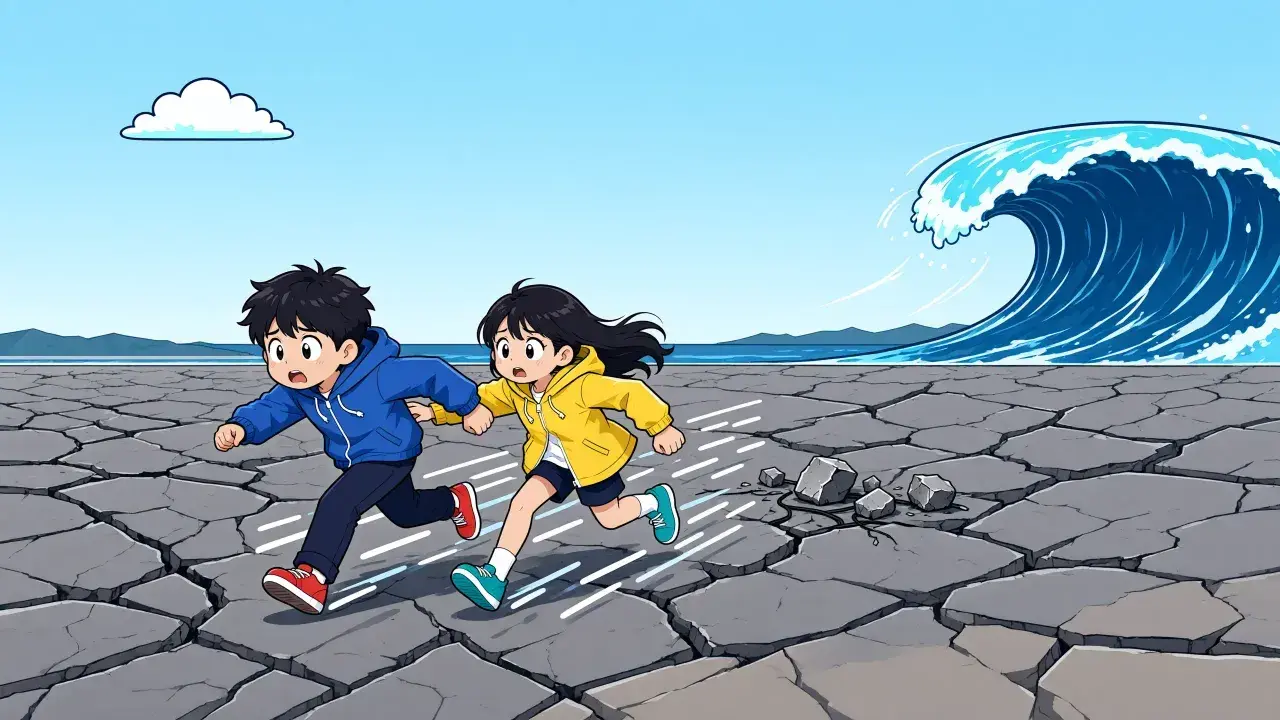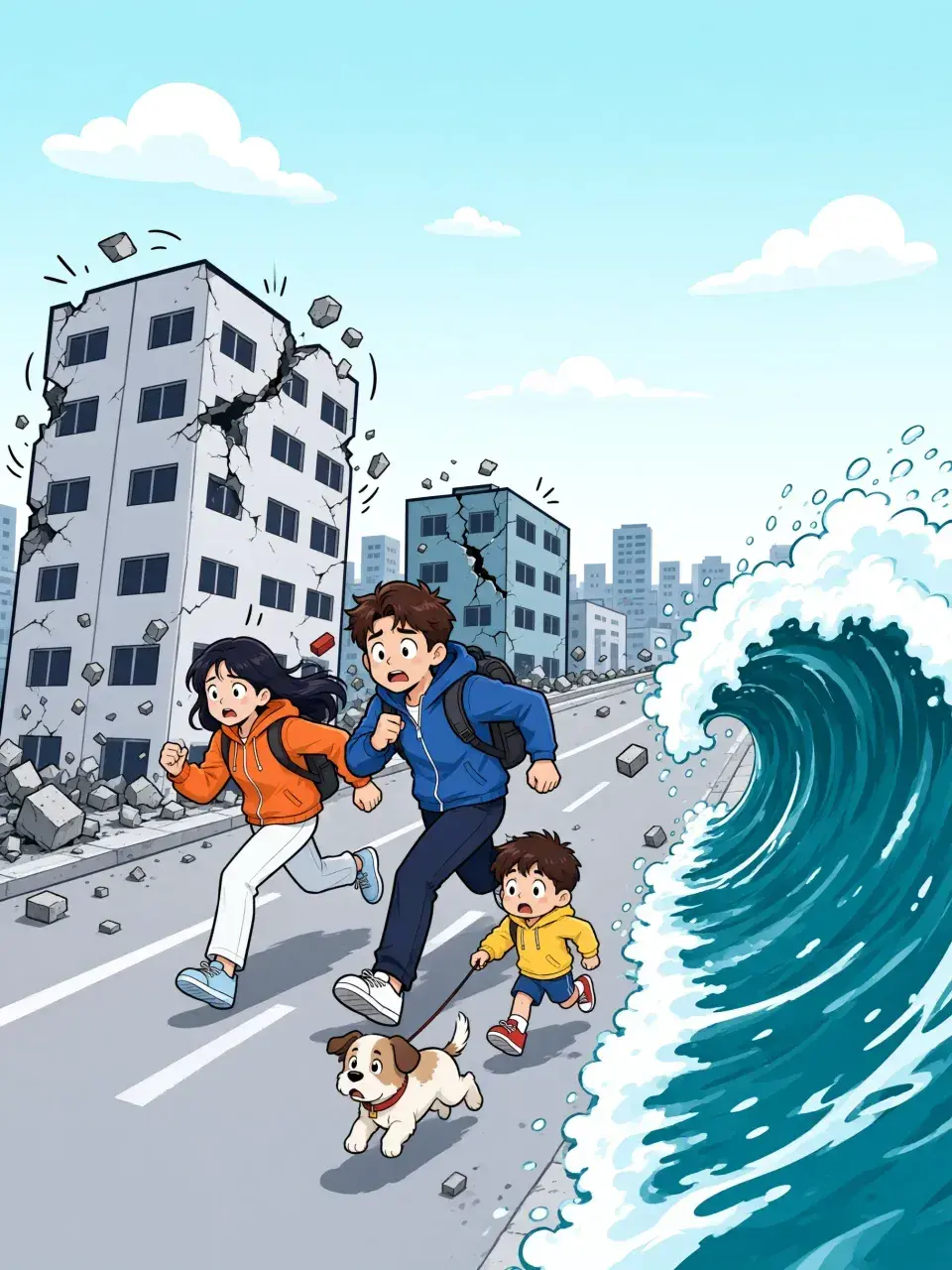
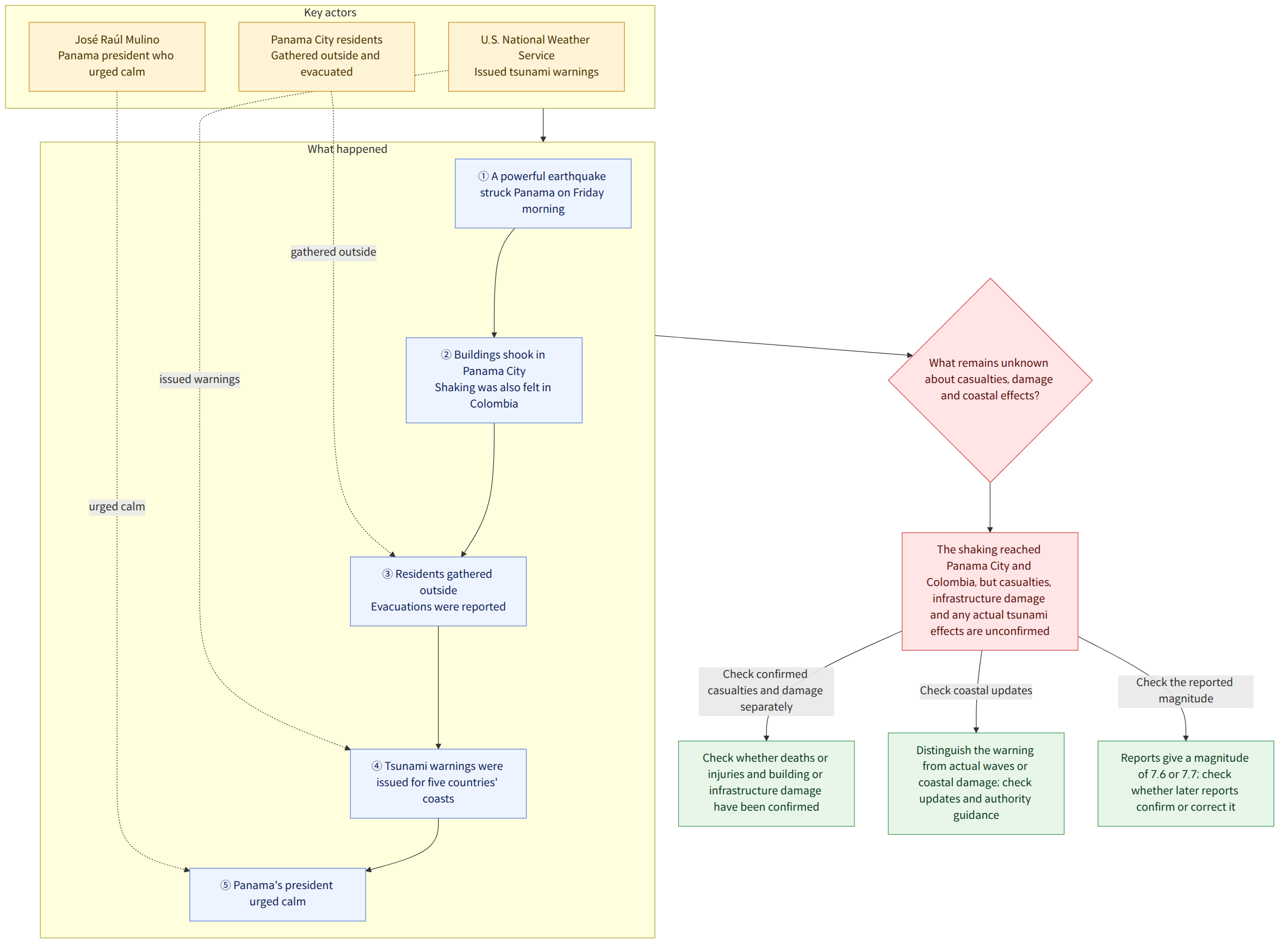
A powerful earthquake struck Panama on Friday morning, shaking buildings in the capital, Panama City, as residents gathered outside, waiting for news of damage. The shaking was also felt in Colombia, and the U.S. National Weather Service (미국 기상청) issued tsunami warnings for the coasts of several countries, including Panama. However, the numbers of people killed or injured, damage to buildings, and whether the warnings led to actual waves or coastal damage have not been confirmed.
Background and context
The earthquake was 10 km deep. Reports differ on its magnitude, giving it as 7.7 or 7.6.
The quake shook buildings in the capital, and aftershocks—shaking that follows a major earthquake—continued to rattle the streets soon after it struck. Residents of Panama City gathered outside while waiting for information about the damage, and the original report said evacuations took place. This shows that the shaking was felt in the capital, but the extent or duration of the evacuations is not known.
This account describes one resident’s experience and is not evidence of the extent of damage across the area.
What this news means
The earthquake was not felt only in Panama. Buildings in the capital shook, and the tremors were also felt in Colombia, showing that the effects of the quake reached across the border. That does not mean damage to buildings in neighboring countries can be assumed. What has been confirmed is that the shaking was detected.
A tsunami warning is a precaution issued when there may be a risk to coastal areas. The U.S. National Weather Service issued warnings for the coasts of Panama, Colombia, Ecuador, Nicaragua and Guatemala, but the original report does not say whether the warnings led to actual waves or damage. It is therefore important to distinguish between the issuance of a warning and actual coastal damage.
For example, someone on the Panamanian coast who hears about the news should not conclude that a tsunami has occurred simply because a warning was issued; they should check for updates on the warning and guidance from authorities. Panama’s president, José Raúl Mulino, urged calm on Friday.
What is confirmed and what is still unknown
Confirmed facts
- An earthquake struck Panama on Friday morning, with reports giving its magnitude as either 7.6 or 7.7.
- The epicenter was about 10 km southwest of Pitaloza Arriba in Herrera Province, and the quake was 10 km deep.
- Buildings in Panama City shook, and residents gathered outside. The shaking was also felt in Colombia.
- The U.S. National Weather Service issued tsunami warnings for the coasts of Panama, Colombia, Ecuador, Nicaragua and Guatemala.
What is still unknown
- How many people were killed or injured in the earthquake.
- The extent of damage to buildings and infrastructure.
- Whether the tsunami warnings led to actual waves or coastal damage.
- Which of the different magnitude figures reported for the earthquake will ultimately be confirmed.
What readers should check
- To assess the extent of damage, readers should separately check whether casualties and damage to buildings and infrastructure have each been confirmed.
- For coastal areas, readers should distinguish between the fact that a tsunami warning was issued and whether there were actual waves or damage.
- Reports give the earthquake’s magnitude as either 7.6 or 7.7, so readers should check whether later reports have corrected or confirmed the figure.
References
- Other coverage consulted: koreatimes.co.kr