Introduction: Real Estate Transfers in Divorce
When a marriage ends, assets are often divided or given as alimony (consollation money). In some cases, this includes the rights to an apartment that has been purchased but not yet officially registered. A common question for foreigners in Korea is whether they can register such a property directly in their name to save time and costs.
The Core Rule: Sequential Registration
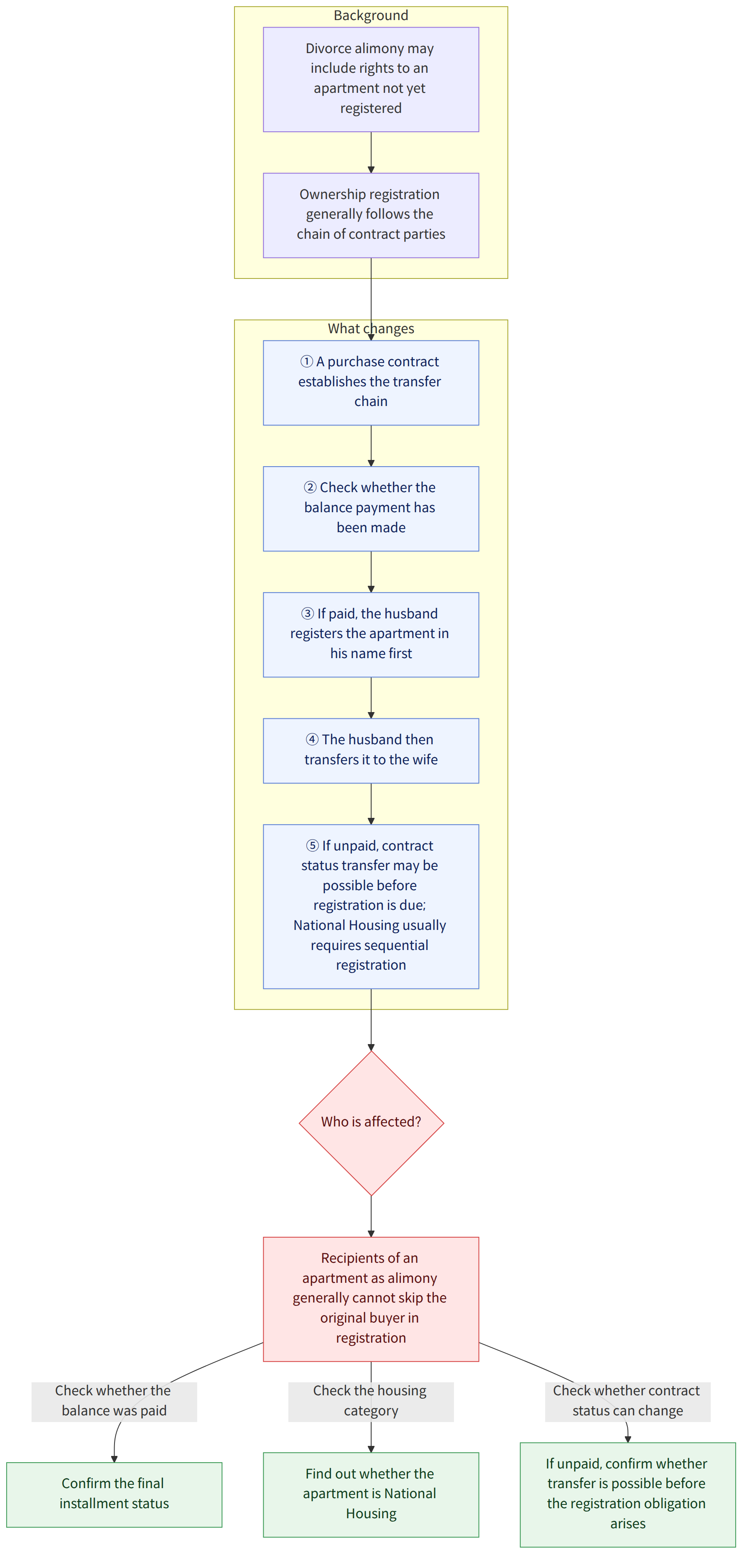
Under the Special Measures Act on Real Estate Registration, Korea maintains a strict rule for the chain of ownership. If a contract for the transfer of ownership is signed, the registration must follow the sequence of the contract parties.
Why can't I register it directly?
Skipping a person in the registration chain (known as "middle-omitted registration") is generally prohibited to ensure tax transparency and legal clarity.
Important Warning: If you try to skip the original buyer's name and register the property directly to the alimony recipient, you may be violating registration laws. This is especially true if the "balance payment" (final installment) has already been paid.
The Role of the Balance Payment
The timing of the transfer agreement is critical:
- If the balance has been paid: The original buyer (the husband) must first register the property in his name, and then transfer it to the wife.
- If the balance has NOT been paid: In some specific cases, it may be possible to change the name on the purchase contract itself (status transfer) before the registration obligation arises. However, for National Housing as alimony, sequential registration is almost always required.
Specific Case: National Housing
For apartments categorized as National Housing, legal precedents clearly state that if an occupant is selected and then transfers that status to a spouse as alimony, the ownership must move sequentially:
- From the Construction Company/Seller to the Husband.
- From the Husband to the Wife.
Summary for Foreign Residents
If your former spouse has already paid the full price for the apartment, you cannot register it directly to your name. You must ensure the property is first registered to your husband and then transferred to you. While this involves two sets of registration fees, it is the legally required process to ensure your ownership is fully protected.
Stay informed with the latest legal tips for foreigners in Korea on our platform.