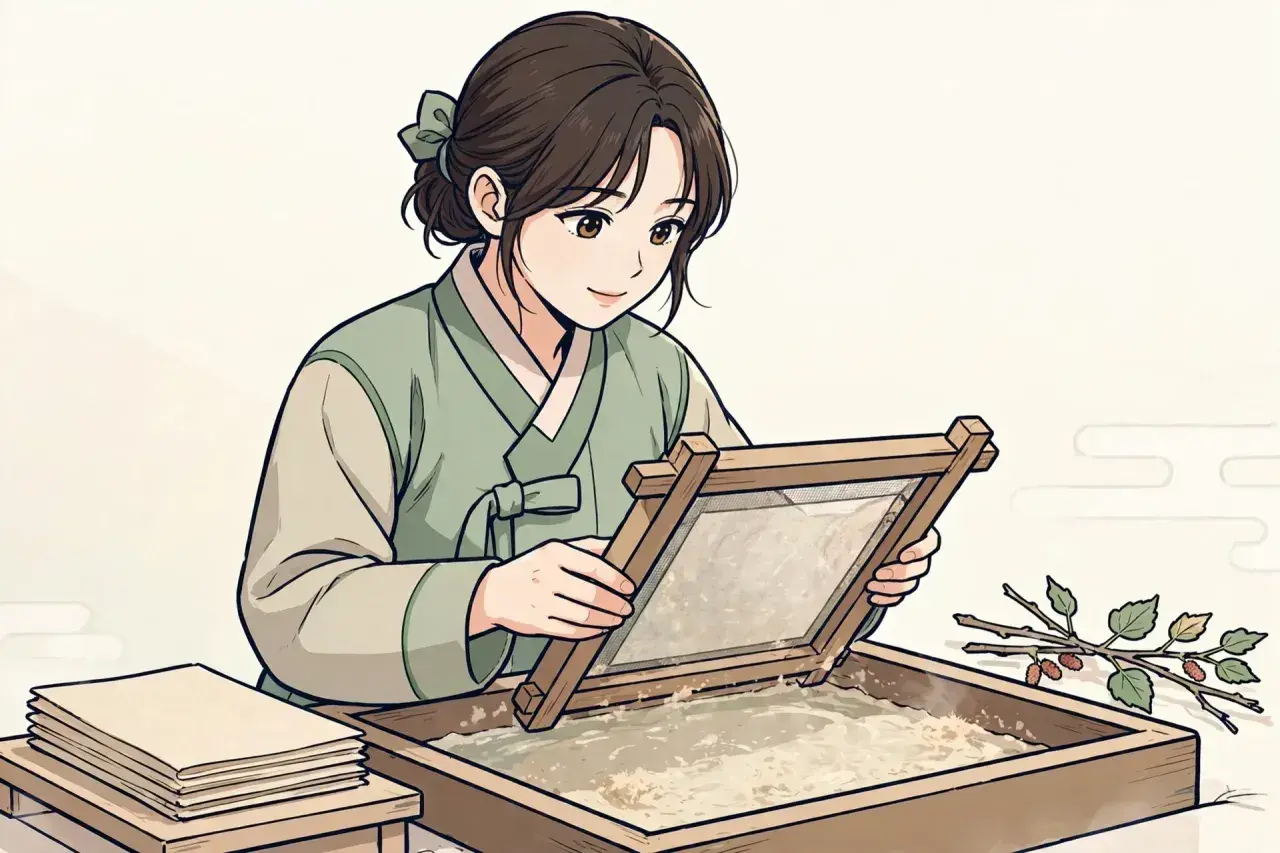
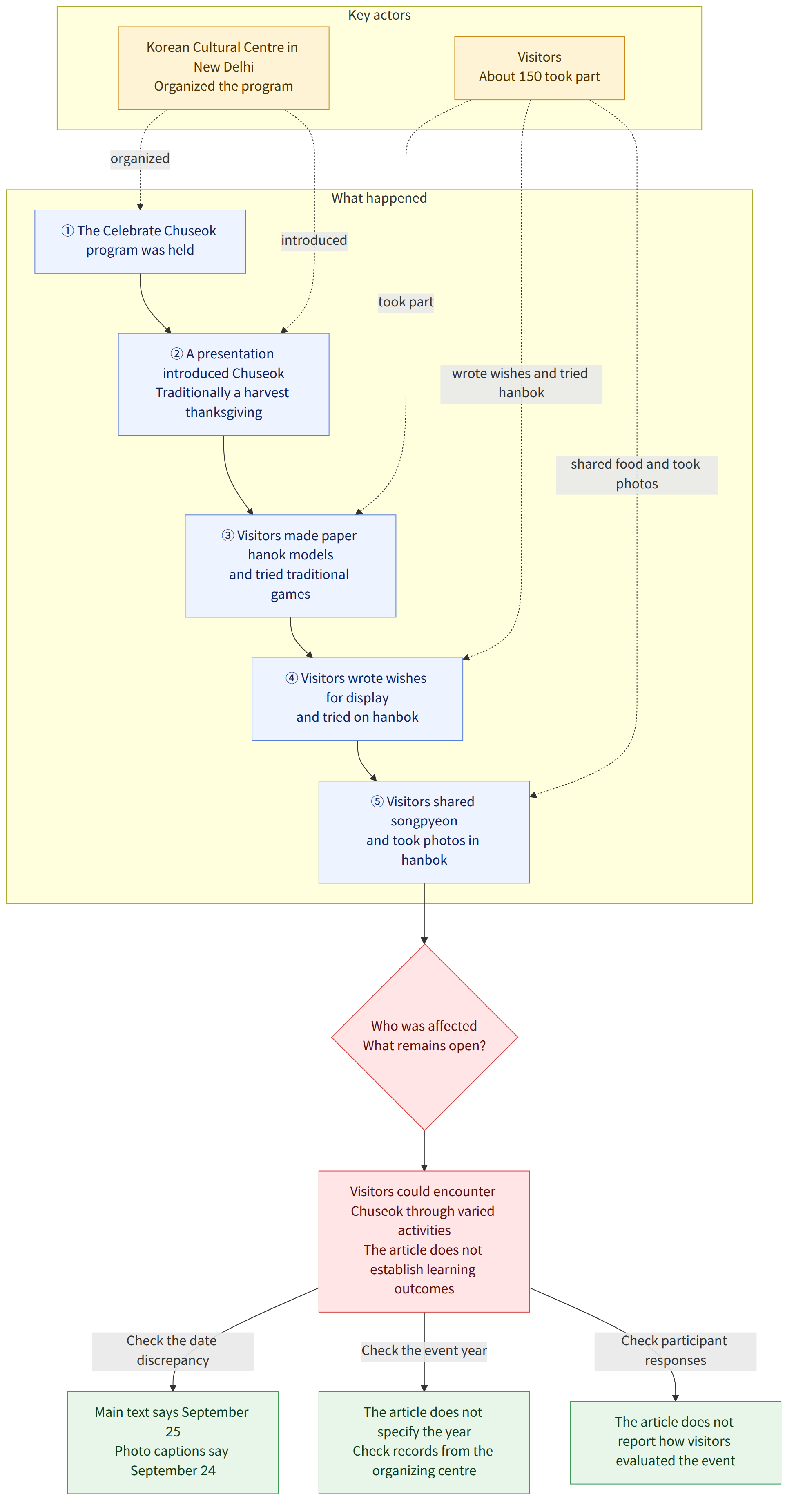
The Korean Cultural Centre in New Delhi (뉴델리 주재 한국문화원; KCC) held a “Celebrate Chuseok” program on September 25, introducing Chuseok to about 150 visitors and offering cultural activities. Participants colored and assembled hanok models, tried gonggi, tuho and jegichagi, and tried on hanbok. They wrote Chuseok wishes in several languages for display and shared songpyeon, a holiday food.
Background and context
The article describes Chuseok as one of Korea’s two biggest holidays. It also notes that traditionally, it was a day to give thanks for the autumn harvest. The program went beyond explaining the holiday’s meaning in a presentation: participants could make things, play games, dress up and sample food.
Hanok refers to traditional Korean architecture. Using templates, participants colored and assembled paper hanok models. They also wrote Chuseok wishes in Korean, English or another language, which were displayed at the cultural centre alongside other participants’ messages. The traditional games included gonggi, tuho and jegichagi.
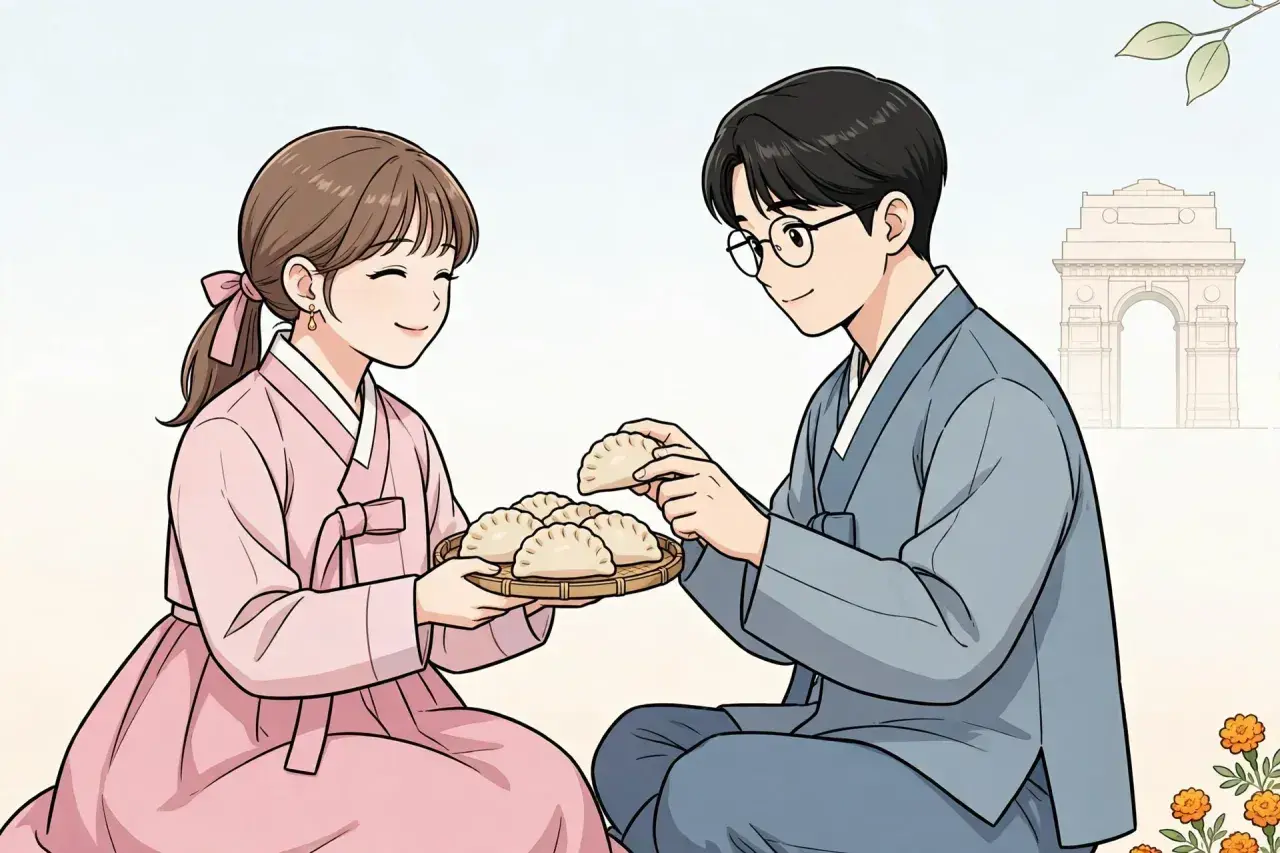
Participants wearing hanbok took photos against the backdrop of exhibits at the cultural centre and shared songpyeon, half-moon-shaped rice cakes traditionally eaten during Chuseok. The event can therefore be seen as an example of connecting information about Chuseok with a range of experiences involving crafts, games, clothing and food.
What this news means
One notable feature of this event is that visitors did not simply observe a Korean holiday; they took part in the activities. Hands-on experiences such as making hanok models and playing traditional games were offered alongside trying on hanbok and sharing songpyeon, giving visitors the chance to encounter Chuseok culture in different ways. However, the article describes the activities and the number of participants; it does not establish what impressions participants took away or how the activities affected their understanding.
For example, visitors encountering Korean culture for the first time could listen to a presentation about Chuseok, try traditional games and taste songpyeon, experiencing the holiday through several senses. This describes a possible experience as a hypothetical; the article does not report participants’ reactions or learning outcomes.
Confirmed facts and what remains unknown
Confirmed facts
- The Korean Cultural Centre in New Delhi held a “Celebrate Chuseok” program.
- The main text gives September 25 as the event date and reports that about 150 visitors took part.
- The program included a presentation introducing Chuseok, hanok model-making, a display of Chuseok wishes, and opportunities to try gonggi, tuho and jegichagi.
- Participants wore hanbok and took photos, and shared half-moon-shaped songpyeon.
What remains unknown
- The article does not specify the year in which the program was held.
- The main text gives September 25 as the event date, but the photo captions for hanok-making, a jegichagi demonstration and wearing hanbok each give September 24. The article does not explain why the dates differ.
- The article alone does not establish how participants evaluated the event or whether the program continued afterward.
What readers should check
- If citing the event date or photo dates, distinguish between the date given in the main text and those in the photo captions.
- If you need to know the year the program was held, note that the article does not give it and check relevant event records or information from the organizing institution separately.