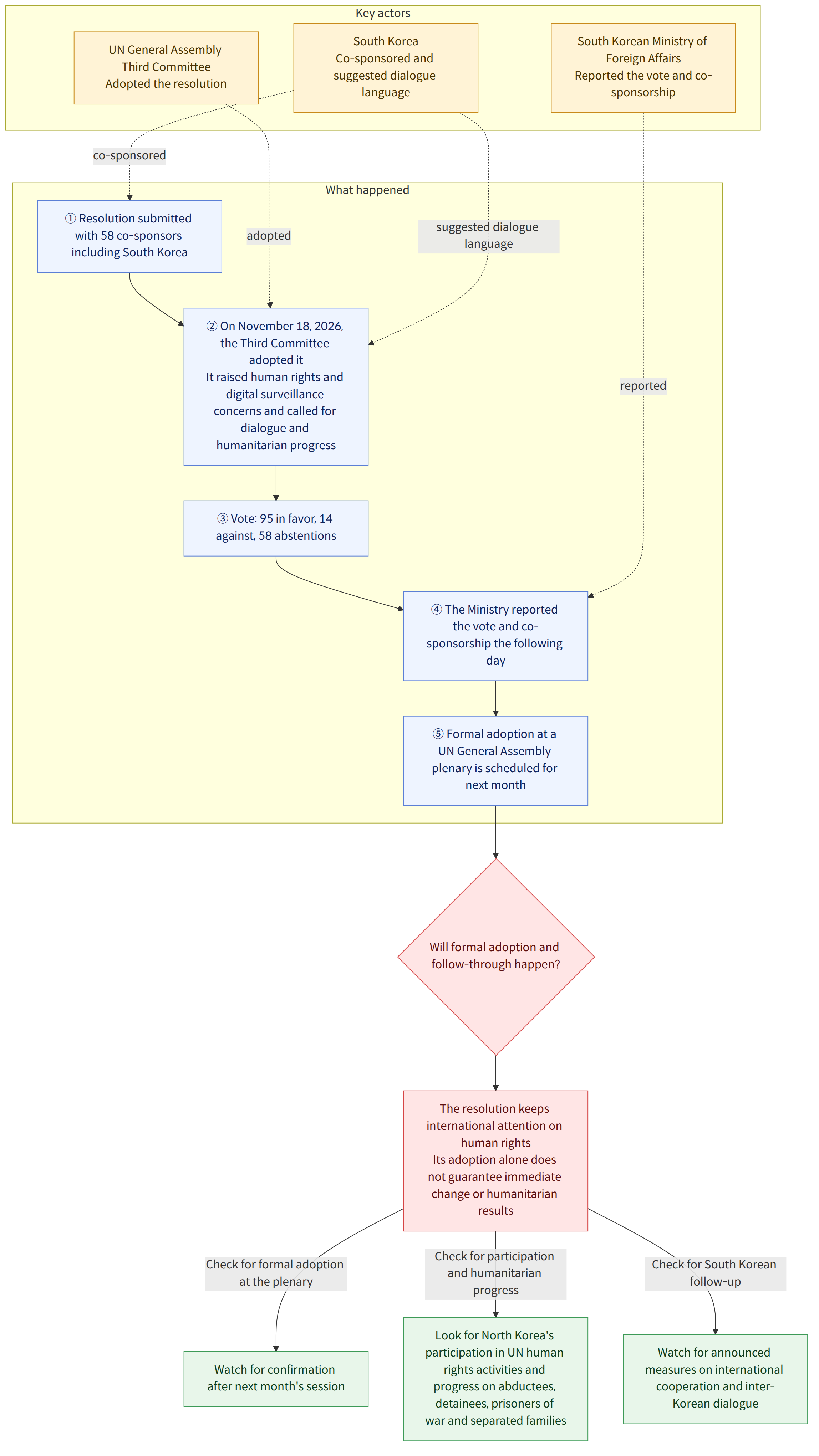
On November 18, 2026, the UN General Assembly Third Committee (유엔총회 제3위원회) adopted a resolution on human rights in North Korea in New York. The South Korean Ministry of Foreign Affairs (한국 외교부) said the following day that the resolution had been submitted with 58 countries, including South Korea, as co-sponsors and passed with 95 votes in favor, 14 against and 58 abstentions. It is scheduled for formal adoption at a plenary session of the UN General Assembly next month.
Along with expressing concern over the human rights situation in North Korea, the resolution calls for dialogue with North Korea and progress on humanitarian issues, including those concerning abductees and separated families. A key feature of the resolution is that it does not stop at pointing to human rights concerns, but also emphasizes the need for dialogue and engagement.
Background and context
The resolution raised particular concern over digital surveillance and repression through technology. Digital surveillance refers to the use of information technology to monitor people’s activities or information.
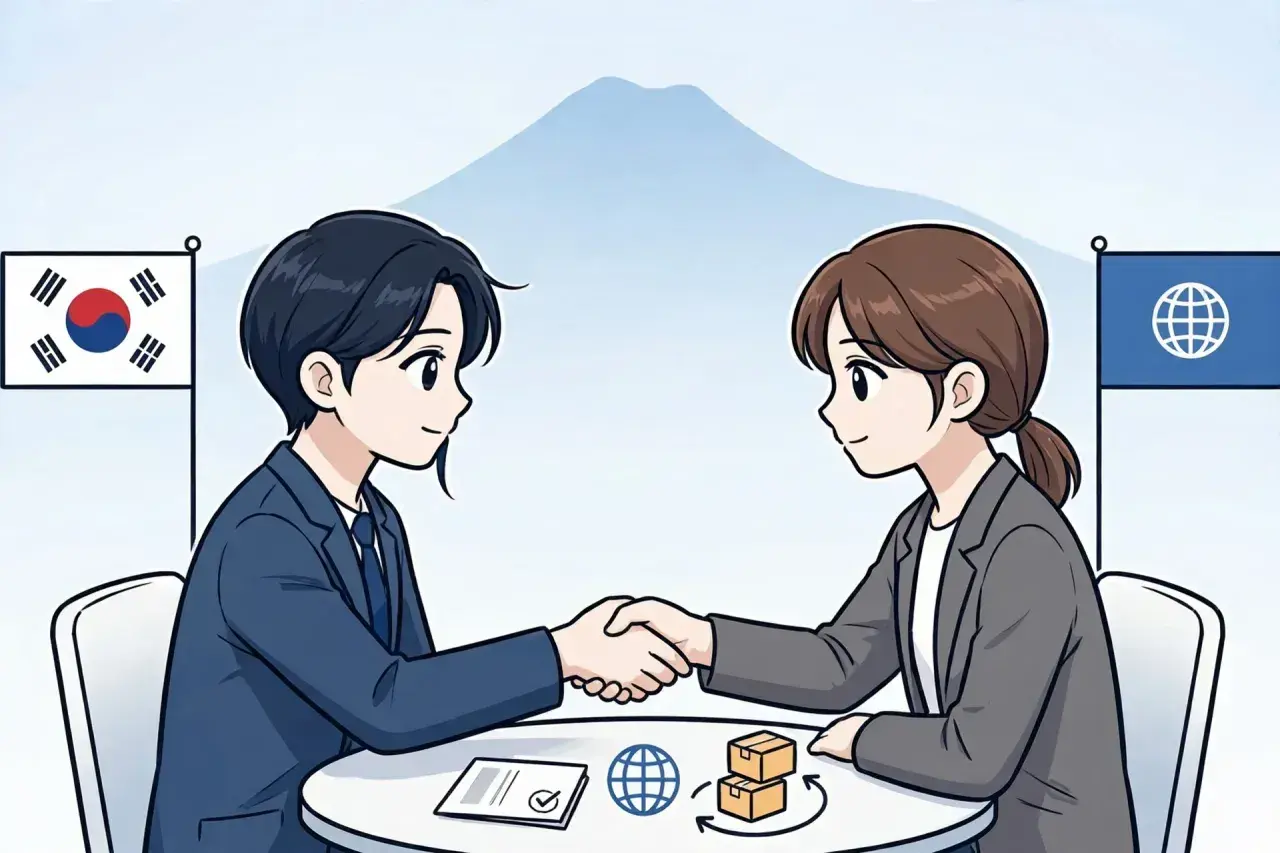
At South Korea’s suggestion, the resolution also included language on the need for dialogue and engagement with North Korea. This explicitly included dialogue between North and South Korea. It also called for progress on humanitarian issues involving abductees, detainees, prisoners of war and separated families, and included a provision encouraging North Korea to participate in UN human rights activities.
The vote confirmed support, while also showing that views were not unanimous. The resolution received the most votes in favor, but there were also votes against and abstentions. The information provided, however, does not show why individual countries voted in favor, against or abstained.
What this news means
For North Korean residents, the resolution may signal that the international community continues to address human rights issues. There is no basis, however, to conclude that adopting the resolution will immediately change residents’ lives or rights. It remains to be seen whether the provision encouraging North Korea to participate in UN human rights activities will lead to actual participation.
For example, separated family members may note that the resolution addresses their issue, but this alone does not mean that family reunions have been arranged or that a specific timeline for a solution has been set.
The South Korean government faces the diplomatic task of pursuing both the raising of human rights concerns and the need for inter-Korean dialogue. Neither approach alone guarantees results, and how the two will translate into action remains to be seen.
What is confirmed and what remains unknown
Confirmed facts
- The Third Committee adopted a resolution on North Korean human rights on November 18, 2026.
- The South Korean Ministry of Foreign Affairs said that 58 countries, including South Korea, co-sponsored it.
- The vote was 95 in favor, 14 against and 58 abstentions.
- The resolution included both concerns over the deteriorating human rights situation and digital surveillance, and calls for dialogue and progress on humanitarian issues.
- The resolution is scheduled for formal adoption at a plenary session of the UN General Assembly next month.
What remains unknown
- The information provided does not list the 58 co-sponsoring countries by name.
- It has not yet been confirmed whether the resolution will be formally adopted at the plenary session.
- It is not known whether the resolution’s calls will lead to North Korea’s participation in UN activities or to the resolution of humanitarian issues, or when and how that might happen.
- The information does not give the specific reasons behind each country’s voting position.
What readers should check
- Check whether the resolution is formally adopted after next month’s plenary session. The information presents the Third Committee’s adoption and formal adoption by the plenary session as separate steps.
- Along with whether it is formally adopted, watch for evidence of North Korea’s participation in UN human rights activities and progress on issues involving abductees, detainees, prisoners of war and separated families.
- Also watch for what follow-up measures the South Korean government announces regarding cooperation with the international community and efforts to advance inter-Korean dialogue.
References
- Other coverage consulted: en.yna.co.kr
- Other coverage consulted: m.koreaherald.com