


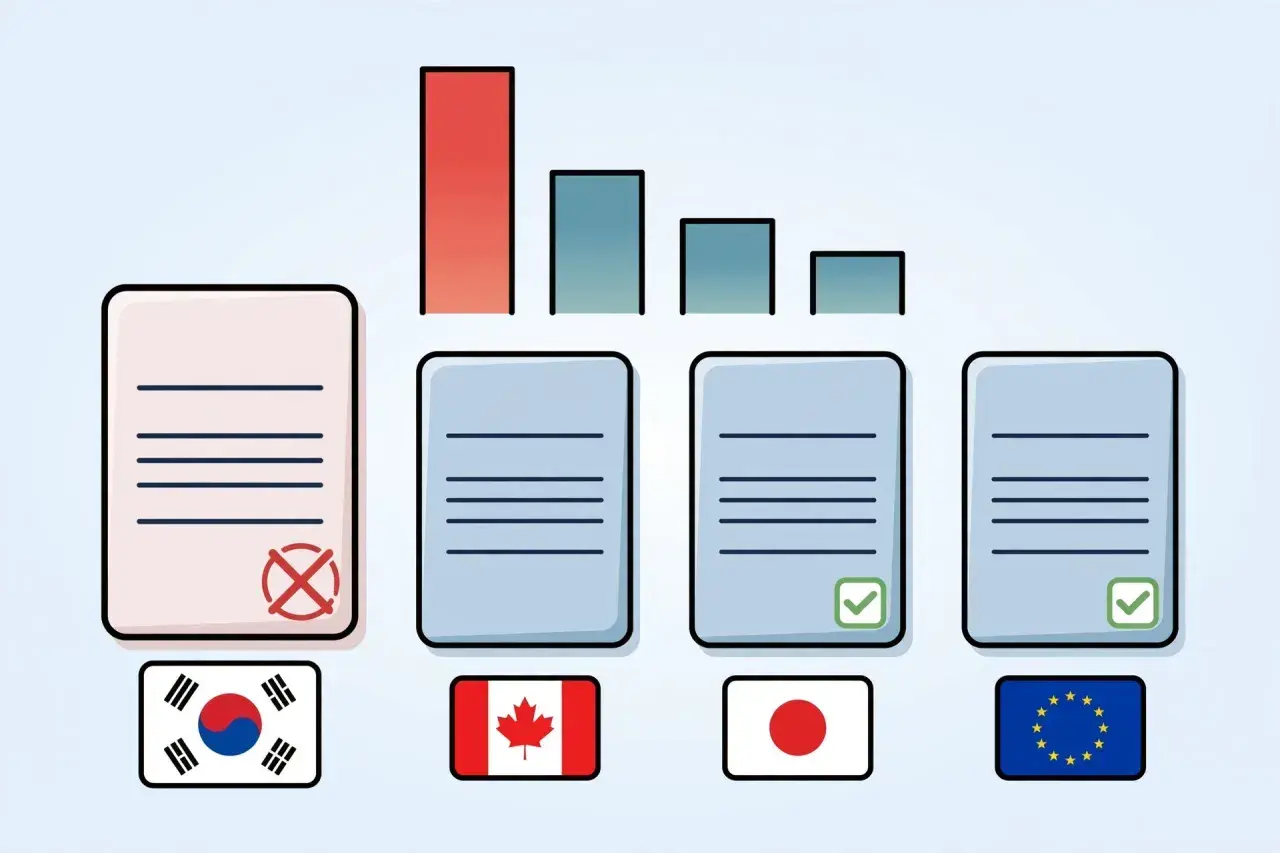
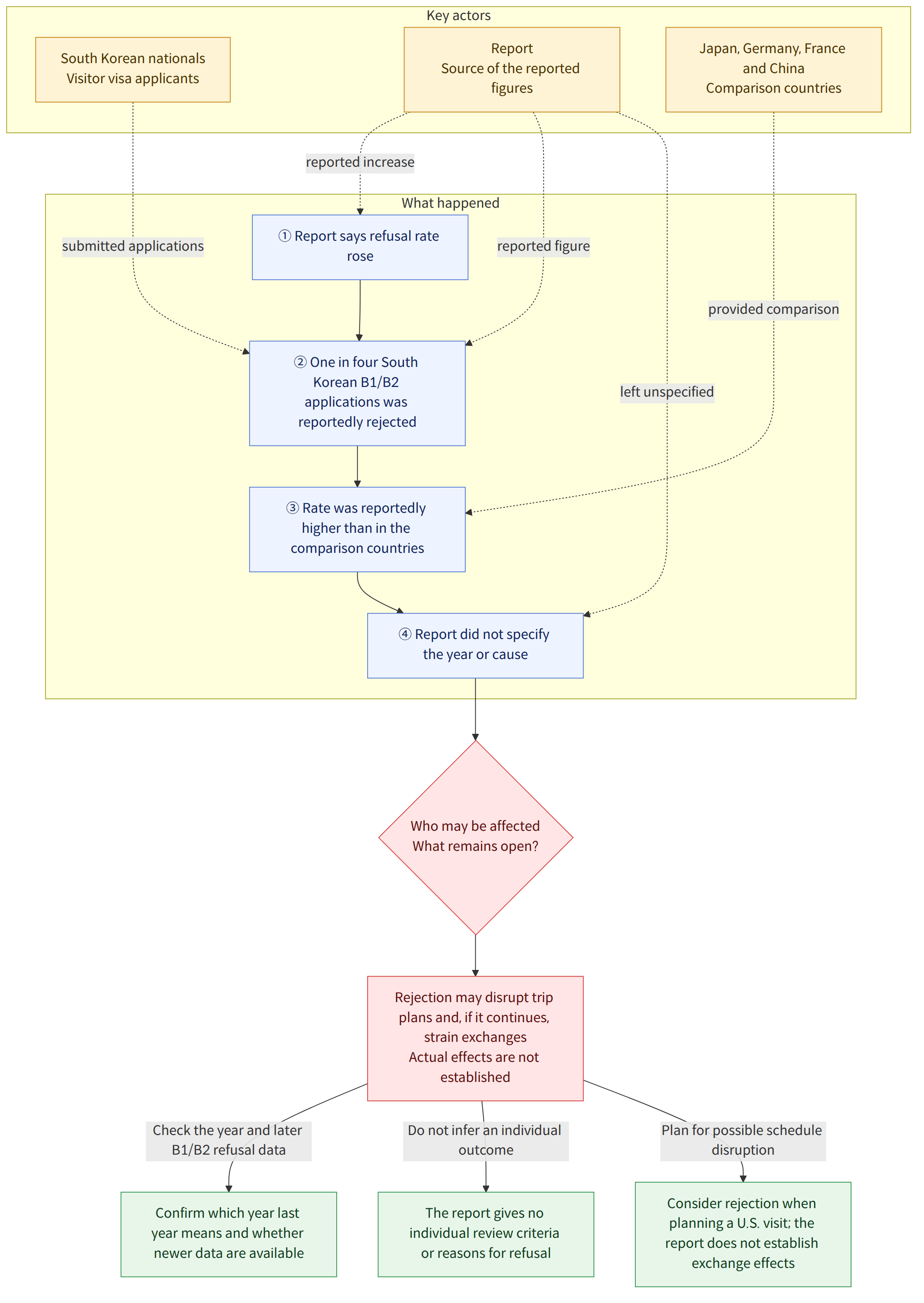
One in four U.S. visitor visa (B1/B2) applications by South Korean nationals was reportedly rejected last year. According to the report, South Korea’s refusal rate was higher than those for Japan, Germany, and France, and also higher than that for China, which the United States classifies as a hostile country. However, the report did not specify which year “last year” refers to.
Background and context
The key points of this report are that the U.S. visitor visa refusal rate for South Korean nationals was reported to have risen and that it was higher than the rates for several other countries. The figure of one in four indicates that a substantial share of applicants were rejected, but no supporting figures for the total number of applications or actual rejections were made public.
The comparison by country is useful in showing that South Korea’s refusal rate was relatively high. However, the report does not explain why the gap exists, as it does not provide information on the number of applications from each country, the makeup of their visa applicants, or the reasons for refusal.
What this news means
This may signal to people applying for a U.S. visitor visa that the possibility of rejection should not be taken lightly. But the overall rejection rate does not directly predict an individual’s outcome. The report does not include information on individual review criteria or anything that would help determine a particular applicant’s chances of approval.
The news also draws attention to the potential impact on people-to-people exchanges. If visitor visa refusals continue, they could disrupt the schedules or exchange plans of individuals planning to visit the United States. If such cases increase, they could also place a strain on people-to-people exchanges between South Korea and the United States. However, this report alone does not establish how much such exchanges have actually changed.
For example, someone planning a trip to the United States could take the possibility of rejection into account when making schedules and plans, rather than interpreting this report to mean that their personal chance of being rejected has definitively increased. This is a hypothetical illustration of a possible impact, not a prediction of any particular applicant’s outcome.
Confirmed facts and what remains unknown
Confirmed facts
- The report said that the U.S. visitor visa (B1/B2) refusal rate for South Korean nationals surged last year.
- The report said that one in four applications by South Korean nationals was rejected.
- South Korea’s refusal rate was reportedly higher than those for Japan, Germany, and France, and also higher than China’s.
What remains unknown
- It is not known which specific year “last year” refers to.
- The number of applications by South Korean nationals and the number of rejections were not provided.
- The report did not include the cause of the increase in the refusal rate or the reasons for individual visa rejections.
- It has not been confirmed whether this refusal rate will continue or what effect it has had on people-to-people exchanges.
What readers should check
- It is worth checking which year the report means by “last year” and whether data on the refusal rate have been released since then.
- Readers can avoid drawing conclusions about their own application based solely on the one-in-four figure, while bearing in mind that the report did not provide individual review criteria or reasons for refusal.
- When making plans to visit the United States, it is important to consider factors that could affect the schedule in case of a rejection, without using this report alone to judge whether an individual will be approved.

















