


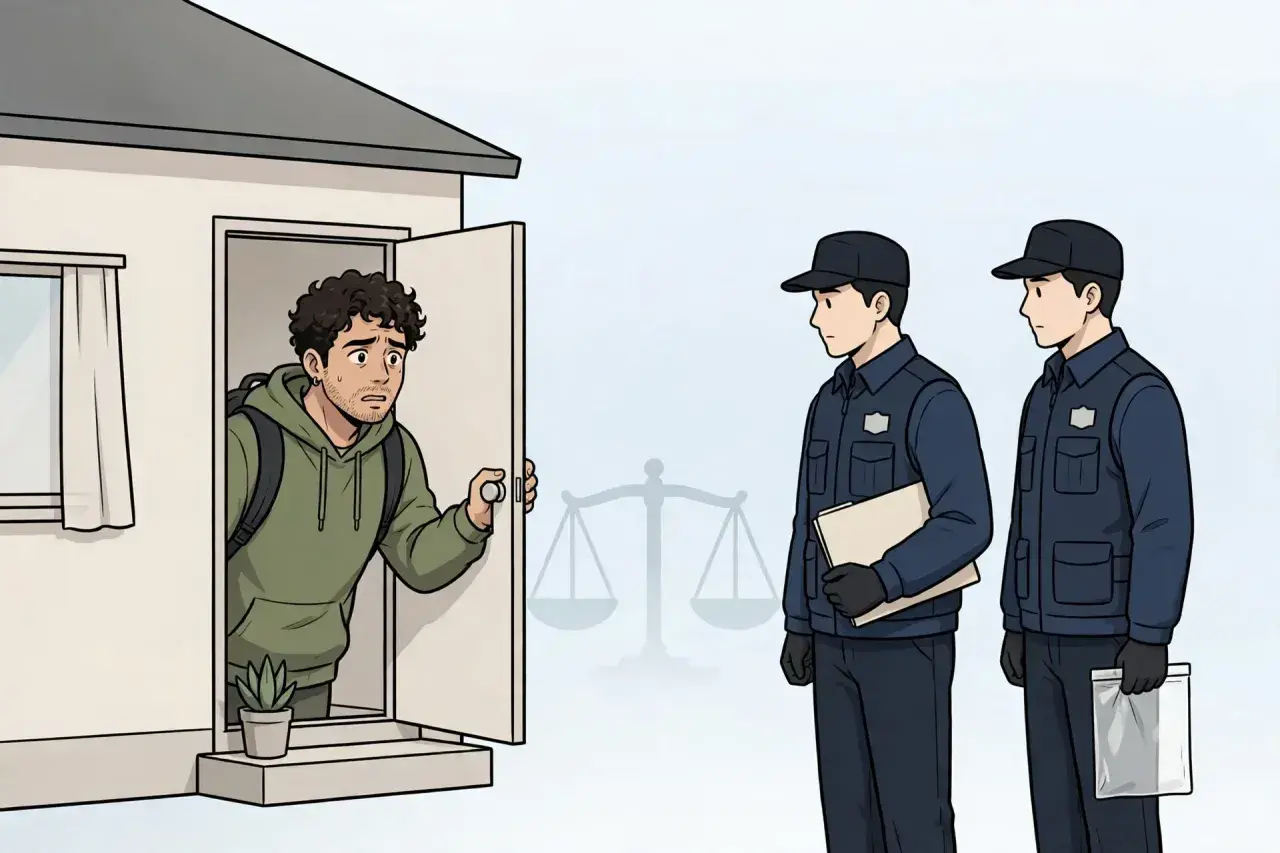
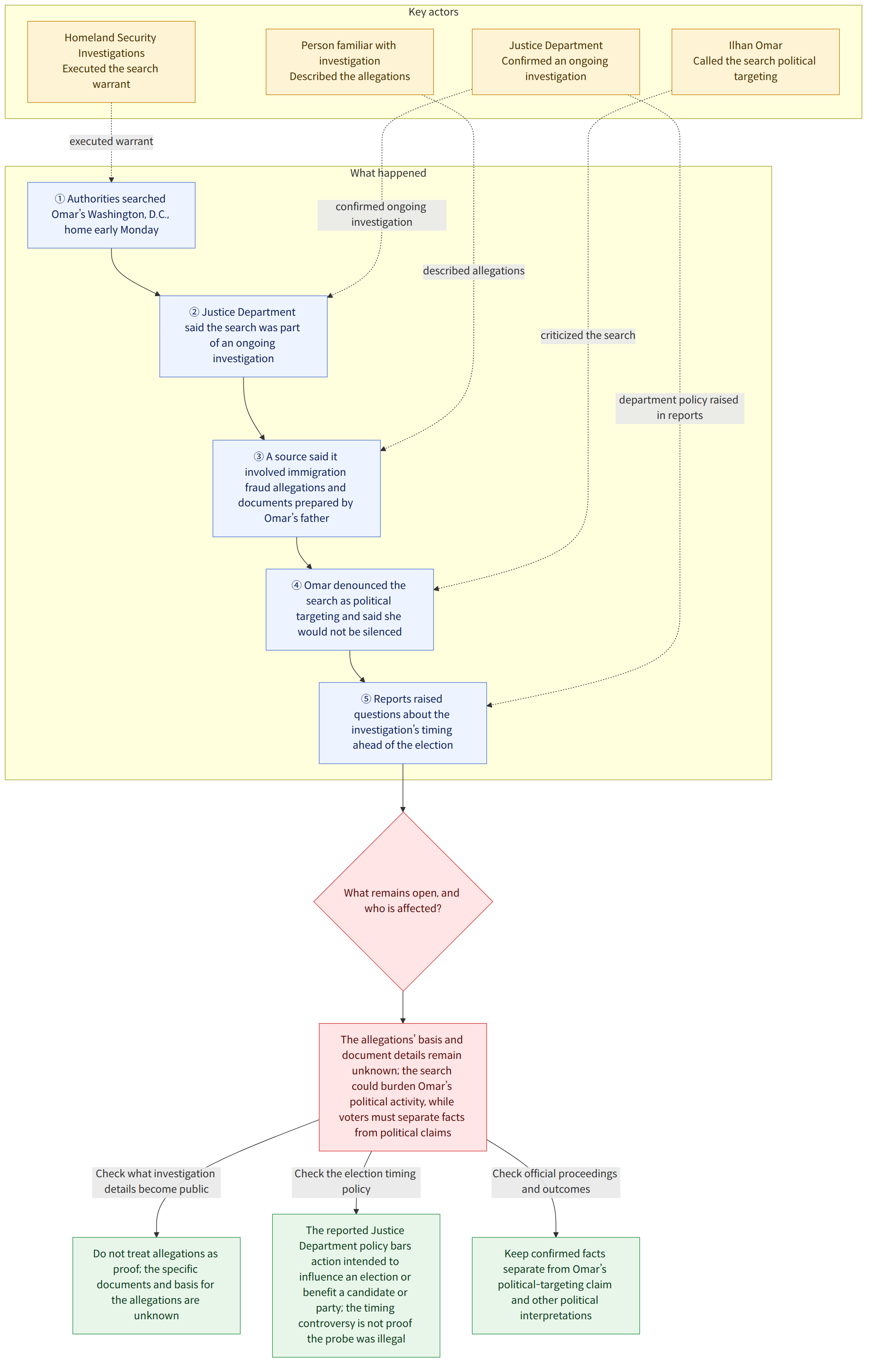
U.S. authorities searched the Washington, D.C., home of Democratic Rep. Ilhan Omar early Monday. The U.S. Department of Justice said the action was part of an ongoing investigation. A person familiar with the investigation said it concerned allegations of immigration fraud and that investigators were also examining immigration documents prepared by Omar’s father, who died when she was young.
Omar criticized the government for being weaponized to target the president’s political enemies. She called the search the latest escalation in a campaign of political threats against her and said she would not be silenced.
Background and context
Reports citing a Justice Department spokesperson said Homeland Security Investigations (HSI) executed a search warrant obtained by the Justice Department and approved by a court. HSI is an investigative agency within U.S. Immigration and Customs Enforcement (ICE). The Justice Department confirmed that an investigation is underway but did not disclose what, specifically, is being investigated.
The link between the allegations of immigration fraud and Omar’s childhood immigration documents was described by a person familiar with the investigation. It should therefore not be treated as established wrongdoing or as proof that Omar is guilty. Based on what has been made public so far, the specific contents of the documents in question and the basis for the allegations are unknown.
The political interpretation of the search has also emerged against the backdrop of Omar’s long-running clashes with President Trump. Omar claimed that Trump had targeted her for 10 years with baseless lies and smears, and other Democrats also accused Trump and his administration of abusing their power. These are assessments by the people involved and should be considered separately from the facts of the investigation.
Reports also raised questions about the timing of the investigation and law enforcement action in relation to the election. The Justice Department’s policy was described as prohibiting law enforcement action at a time intended to influence an election outcome or benefit a particular candidate or party. It was also reported that the department has traditionally refrained from investigative steps targeting candidates in the roughly 60 days before Election Day. However, a former federal public corruption prosecutor said the search differed from past practice while noting that there was no way to enforce the policy. This discussion of the policy is not a finding that the investigation was illegal; it shows why the timing of an investigation ahead of an election is controversial.
Omar represents Minnesota in the House of Representatives, is 44 years old, and is seeking a fifth term in the November 3 midterm elections. One report said the search took place just over three weeks before the election. With the investigation unfolding during the election campaign, attention is focused on the possibility that the substance of the investigation and its political repercussions could affect each other.
What this news means
Two distinct questions are at issue here. One is whether there is a basis for investigating the allegations related to immigration documents; the other is how an investigative action ahead of an election affects political impartiality and public trust. The information made public so far is not specific enough to answer the first question, and Omar’s claim that she is being politically targeted does not, by itself, establish the investigation’s motive.
The search of Omar’s home and the allegations could place a burden on her political activity, while voters face the task of distinguishing the facts of the investigation from political interpretations. For example, voters can avoid treating the mere existence of allegations as proof of wrongdoing and instead separately examine any details of the investigation that are made public and the outcome of official proceedings.
It is also important that law enforcement actions can become a subject of political dispute ahead of an election. But controversy over the timing of an investigation cannot establish whether the allegations are true or false. Until specific details of the investigation and any further actions are made public, it is important to maintain a distinction between the claims on both sides and the facts that have been confirmed.
Confirmed facts and what remains unknown
Confirmed facts
- U.S. authorities searched Rep. Omar’s home in Washington, D.C., early Monday.
- The Justice Department said the search was part of an ongoing investigation.
- A person familiar with the investigation said it involved allegations of immigration fraud and Omar’s childhood immigration documents.
- Omar criticized the action as a political threat and is seeking a fifth term in the November 3 midterm elections.
What remains unknown
- What, specifically, are authorities investigating in connection with the allegations of immigration fraud?
- Do authorities plan to charge Omar or take further action?
- What items, if any, were seized during the search?
- Why did the search take place ahead of the election, and what motivated the investigation?
What readers should watch for
- If further details of the investigation are made public, distinguish who is making the allegations from what the Justice Department has officially confirmed.
- Check whether charges or further action against Omar are announced, and what basis those steps provide for the ongoing investigation.
- In considering the timing of the investigation in relation to the election, distinguish explanations of the Justice Department’s policy from political assessments, and do not treat either as a confirmed outcome of the investigation.
References
- Other coverage consulted: hani.co.kr

















