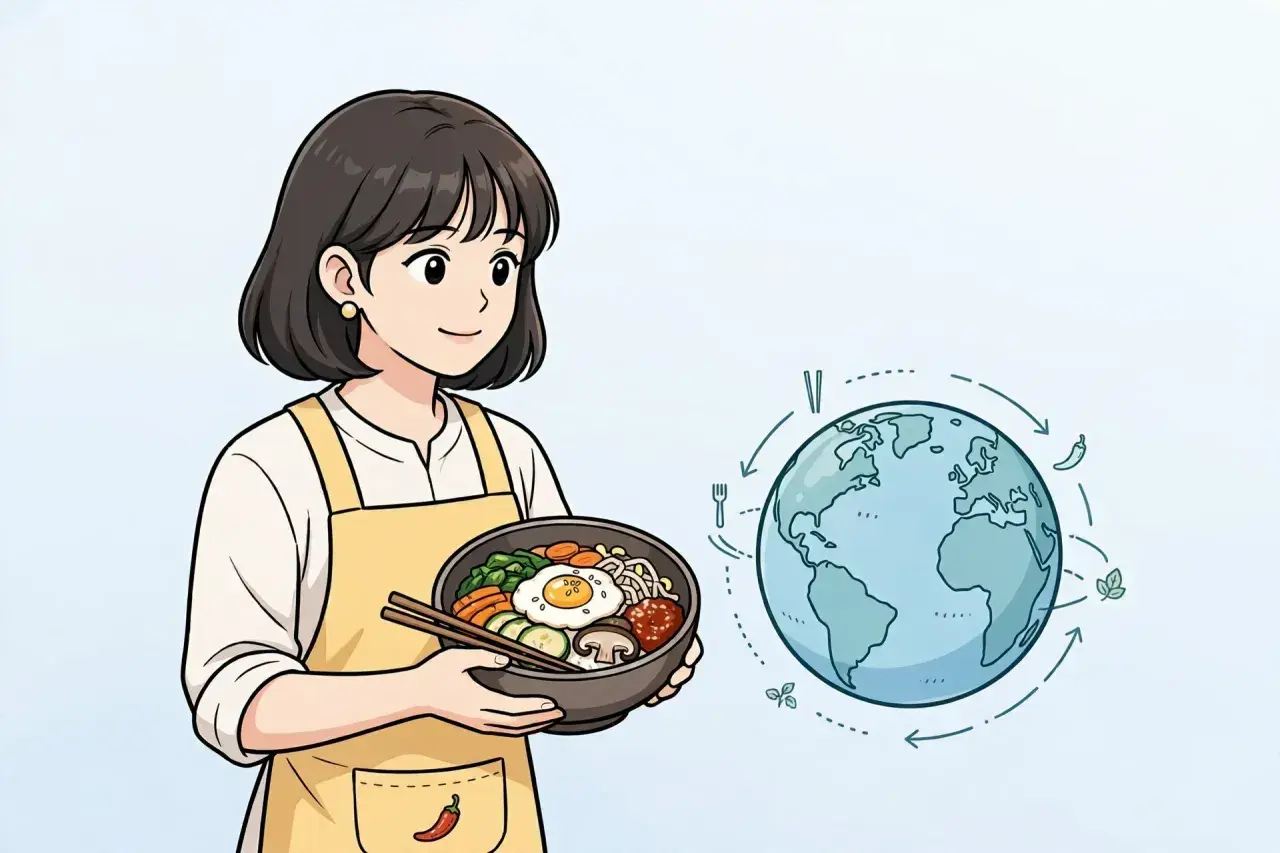
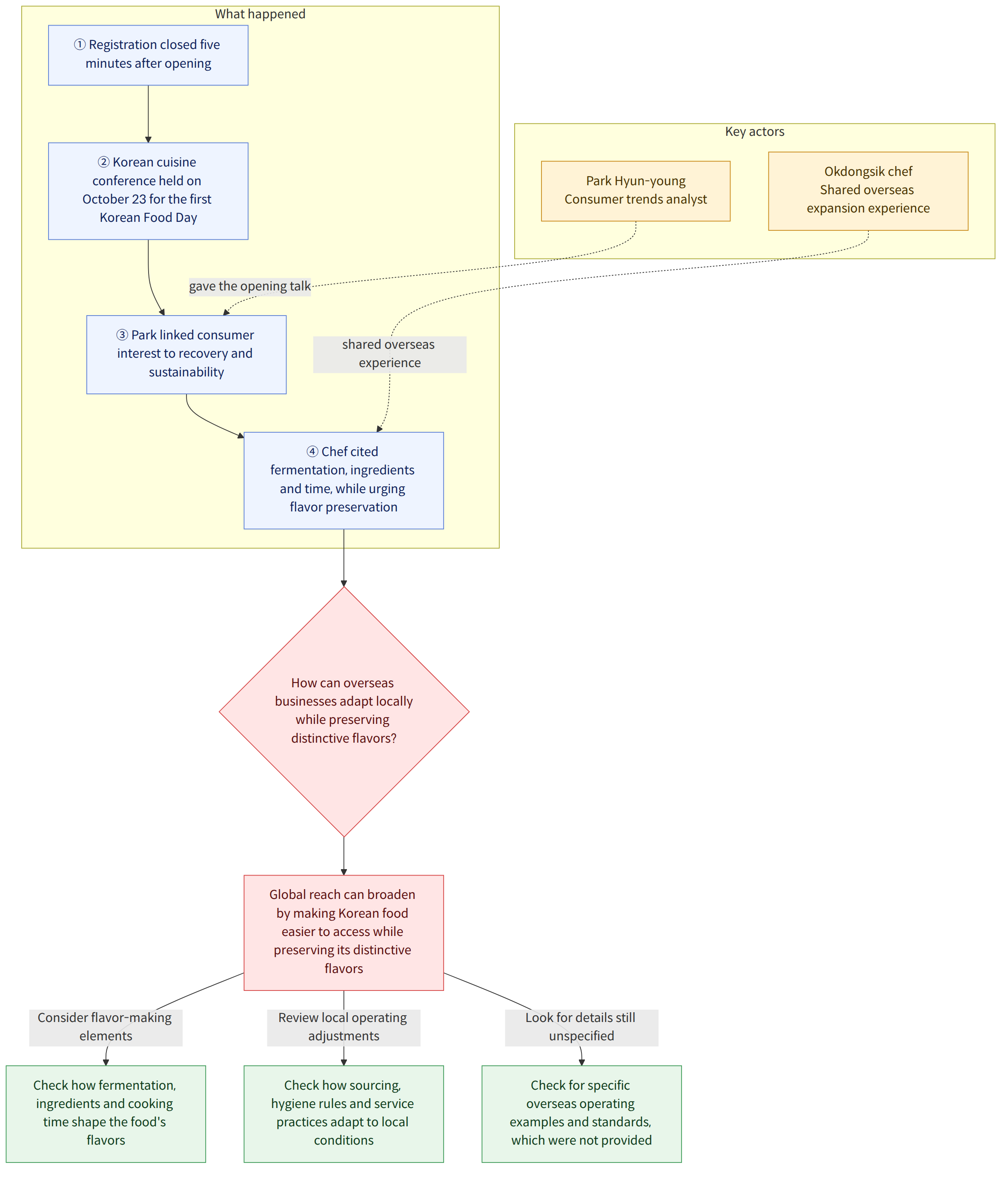
A conference on Korean cuisine’s recognition and competitiveness overseas was held on October 23 at YONG Theater (극장 용) at the National Museum of Korea (국립중앙박물관) in Seoul’s Yongsan District, marking the first Korean Food Day (한국 음식의 날). The event drew such interest that registration closed just five minutes after it opened. However, the year in which the conference took place and the number of people who actually attended are not confirmed in the publicly available information.
Background and context
The conference’s opening talk was given by Park Hyun-young, head of Vibe Company’s Life Change Observatory (바이브컴퍼니 라이프체인지옵저버토리) and a consumer trends analyst. Her topic was changing consumer trends in the age of artificial intelligence (AI). Park explained that whereas consumers once sought glamorous and unusual experiences, they now place greater value on consumption that offers stability and healing in everyday life.
Park said this trend is aligned with consumer interest in recovery and sustainability. In this view, Korean cuisine’s competitive strength is not limited to its flavors or distinctive dishes, but is also connected to the values people experience through a meal.
Next, the chef of Okdongsik, a restaurant brand specializing in pork broth soup, shared his experience expanding overseas. Okdongsik has been listed in the Michelin Guide’s Bib Gourmand selection since 2018 and has locations in New York, Tokyo and Paris. The chef described fermentation, ingredients and time as three sources of Korean cuisine’s competitiveness.
He explained that Korean cuisine’s strengths include the depth of flavor created by microorganisms and time in fermented pastes and kimchi; ingredients that reflect the characteristics of the seasons and regions; and the care and effort invested in long cooking processes. Overseas, sourcing ingredients, complying with hygiene regulations and service practices can be handled more flexibly, but he stressed that the essence of Korean cuisine and the characteristics of its flavors must still be preserved.
What this news means
The two presentations suggest that globalizing Korean cuisine is not simply a matter of choosing between “exporting it unchanged” and “altering it to suit local tastes.” Park proposed “rare universality”: preserving what makes Korean cuisine distinctive while making it easier for more people to encounter and enjoy. Chef Ok Dong-sik’s remarks likewise emphasized flexibility in local operations while preserving the elements that shape the food’s flavors.
This distinction may be especially important for Korean food businesses preparing to expand overseas. Where ingredients are sourced and how hygiene regulations and service practices are applied can be adjusted to local conditions. But changing the flavor characteristics that come from fermentation and cooking time could weaken Korean cuisine’s distinctive appeal. Which elements to adjust and which to preserve may vary depending on the food and business environment, however, and the conference alone does not provide specific operating standards.
For consumers, too, this discussion broadens the way they might consider Korean cuisine’s appeal, beyond familiar dishes or strong flavors. For example, when looking for a Korean restaurant overseas, they could consider not only whether the menu is designed to be accessible locally, but also how fermentation, cooking processes and ingredients contribute to the flavors. This is one perspective for understanding Korean cuisine’s characteristics, not a standard for judging the quality of any particular restaurant.
Confirmed facts and what remains unknown
Confirmed facts
- The Korean cuisine conference marking the first Korean Food Day (한국 음식의 날) was held on October 23 at YONG Theater at the National Museum of Korea.
- Registration for the event closed five minutes after it opened.
- Park Hyun-young said that Korean cuisine’s richness, refinement, healthfulness and care align with consumer trends that emphasize recovery and sustainability.
- Chef Ok Dong-sik identified fermentation, ingredients and time as elements of Korean cuisine’s competitiveness, and stressed that its essence and flavor characteristics should be preserved overseas.
What remains unknown
- The publicly available information does not specify the year in which the conference took place.
- The number of people who actually attended after registration closed is not confirmed.
- No specific examples were provided of how “rare universality” could be applied through particular menu items or operating practices in overseas businesses.
What readers can check
- When reading about Korean cuisine’s expansion overseas, readers can look for whether coverage distinguishes between aspects that have been localized and efforts to preserve the characteristics that shape the flavors, such as fermentation, ingredients and cooking time.
- When reading analyses of Korean food consumption trends, readers can better understand the argument by checking how Park Hyun-young connects stability and healing in everyday life, recovery and sustainability to specific characteristics of Korean cuisine.
- When assessing the event’s scale or success, readers should bear in mind that how quickly registration filled up and the number of people who actually attended are different pieces of information. The publicly available account does not include the actual attendance figure.