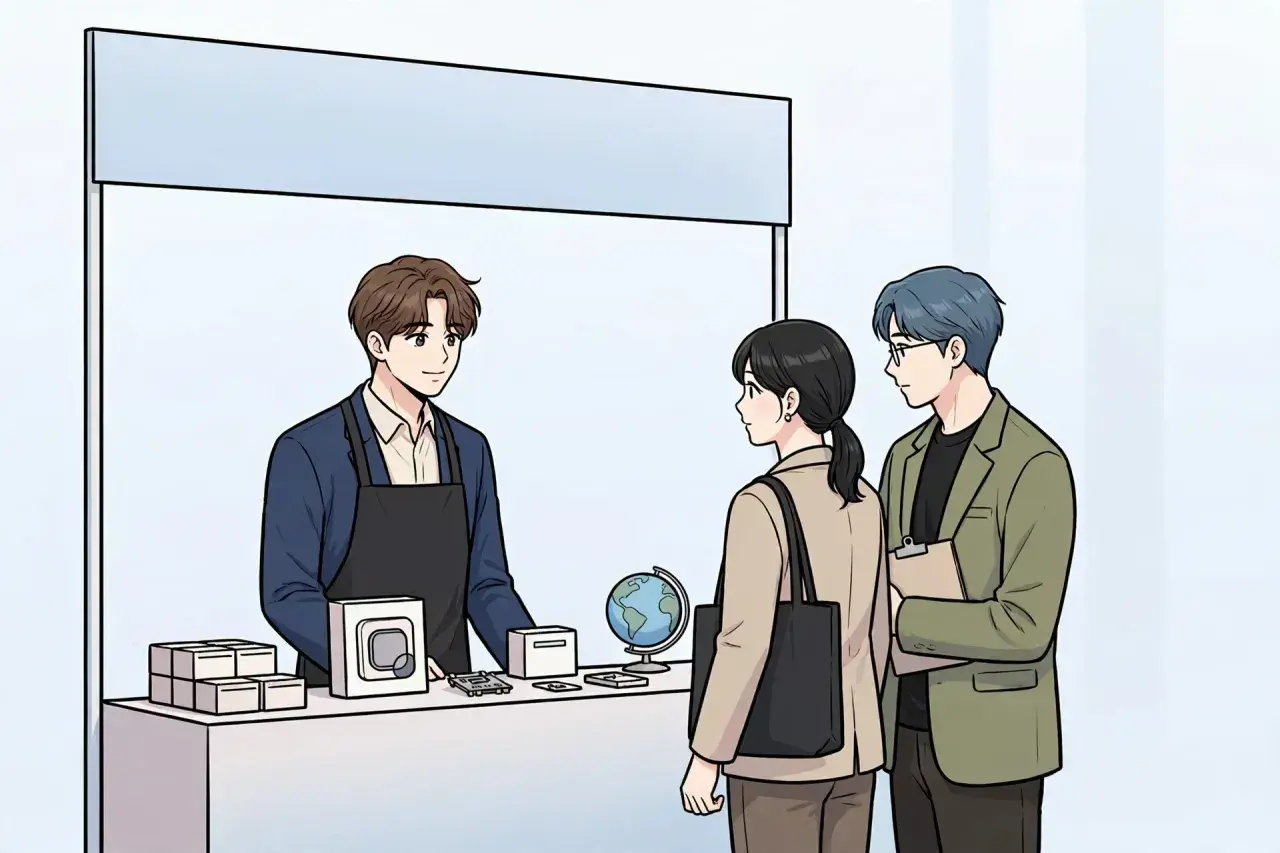
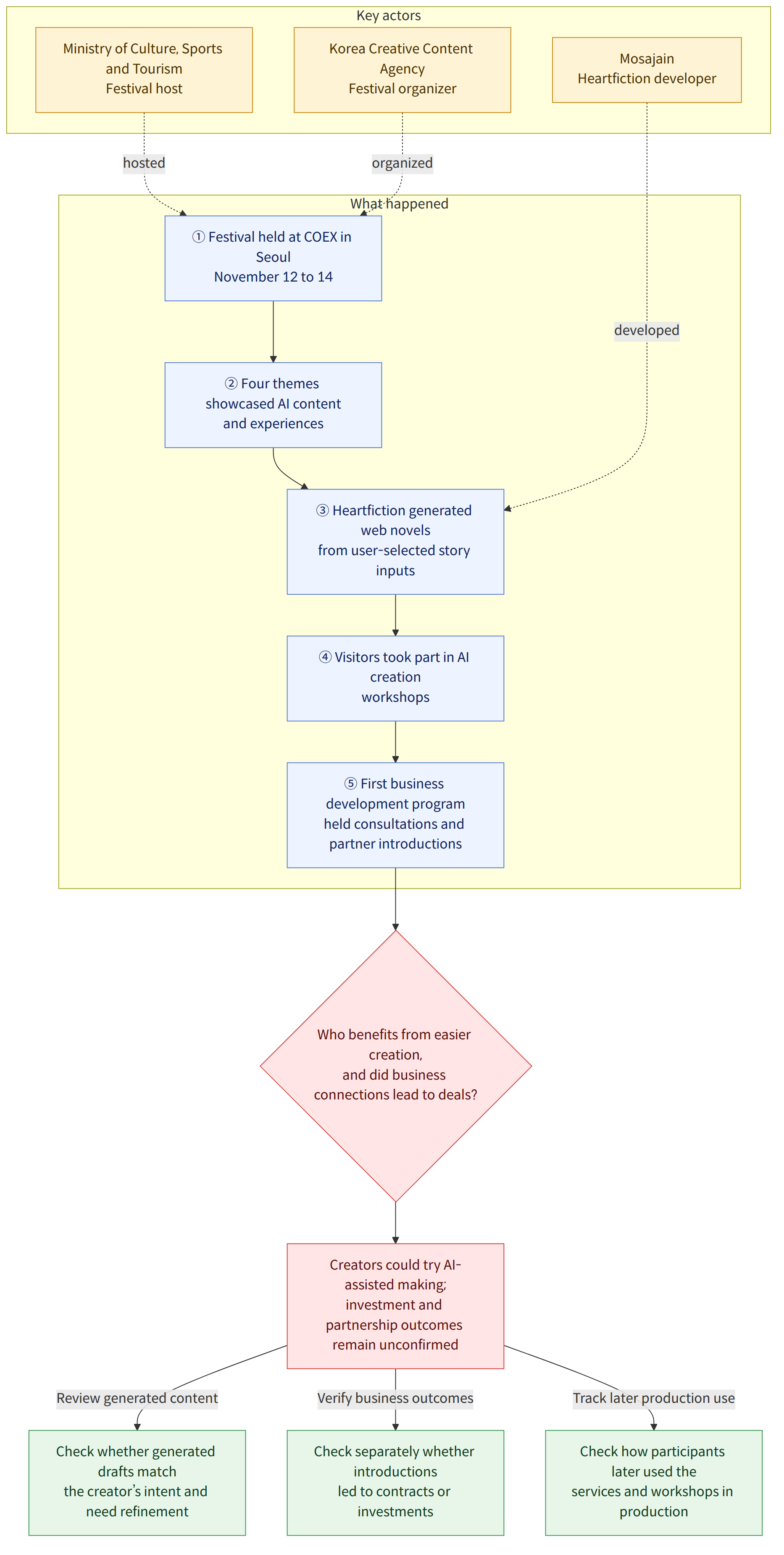
The AI Content Festival (AI 콘텐츠 페스티벌) opened on November 12 at COEX in Seoul’s Gangnam District and ran for three days, through November 14. Hosted by the Ministry of Culture, Sports and Tourism (문화체육관광부) and organized by the Korea Creative Content Agency (한국콘텐츠진흥원), the event was designed not just for viewing AI-generated content, but also for trying it out, creating it firsthand, and exploring potential partnerships between businesses.
Background and context
The festival featured four themes: “Story,” for viewing content; “Play,” for experiencing it; “Make,” for creating it; and “Cross,” for exploring the convergence of AI with other industries. Visitors watched and listened to AI-generated videos and music, interacted with digital humans, and experienced content based on virtual and extended reality.
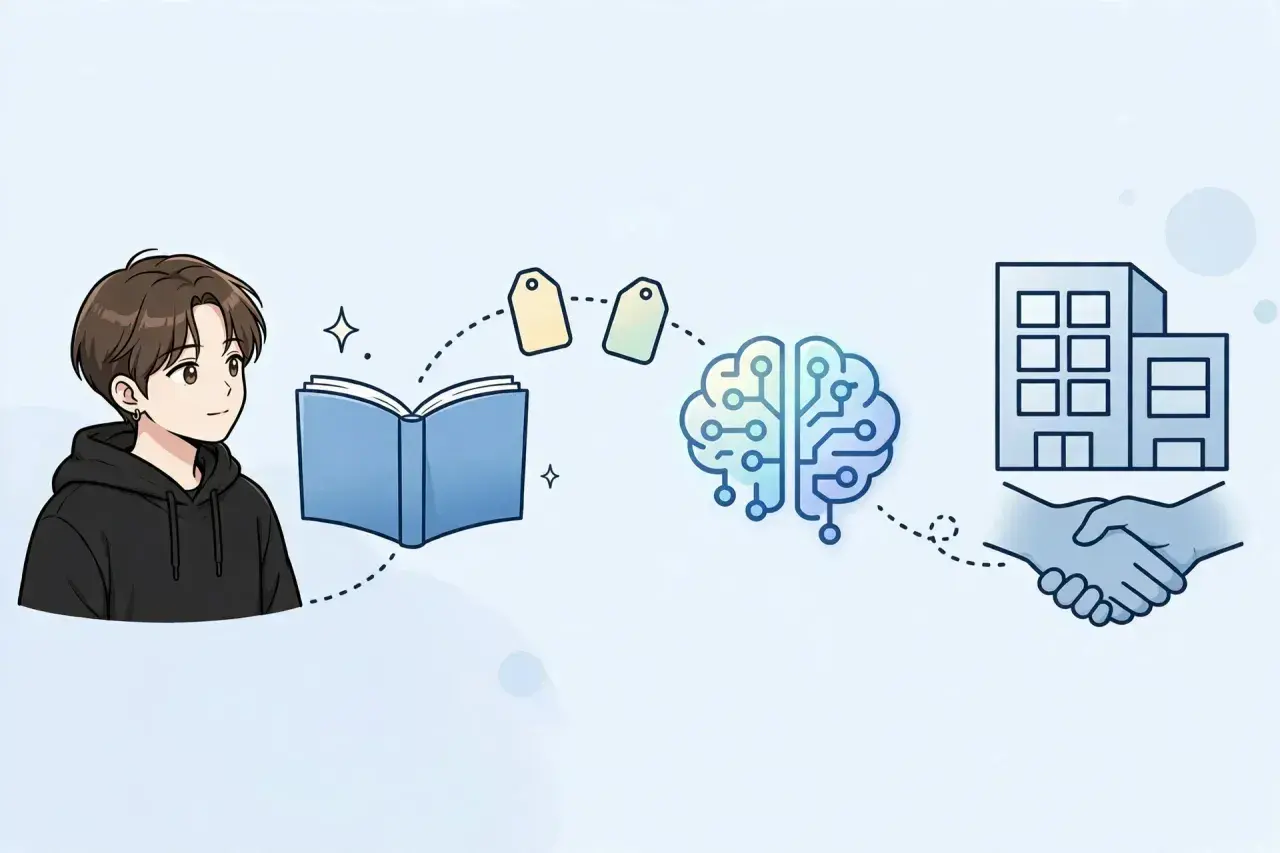
One example of lowering barriers to creation was Heartfiction, an AI-powered novel-writing service. Users can create web novels by entering keywords, tags, characters, and story elements. According to the article, the service can generate a complete story of up to 20 episodes at a time. Compared with writing a story from scratch or continuing an ongoing conversation with a character, it offers another way to quickly turn an idea into a story.
Choi Eun-jung, head of AI content development at Mosajain, the company behind Heartfiction, said the service was developed in response to users of character-chat platforms becoming fatigued by having to keep a story going. The event also featured hands-on workshops on drama planning and production, as well as virtual idol production. Through its experiential and educational programs, the festival demonstrated that AI creation can extend beyond writing into digital content such as video, music, and games.
What this news means
For content creators, one key point is that AI can help turn ideas into drafts or other forms of output. A process in which users choose input elements and generate results could give people with limited writing or editing skills more opportunities to try creating content. But the ease of generating content does not, by itself, mean that the output will be polished or that creators’ roles will disappear. Deciding what to make and reviewing the results remain important, so AI can be one option for how to create rather than a replacement for creation.
For example, someone who wants to create a story but finds it difficult to develop a long narrative could try generating a web novel by choosing keywords and characters. Even then, they may need to check and refine the generated content to make sure it matches their intentions. This example is a hypothetical illustration of the service’s features and does not guarantee any particular results in actual use.
For industry professionals, another point of interest is the business development program, introduced for the first time this year. Its aim was to help AI content companies move beyond demonstrating their technology and ideas to find investment and partnership opportunities. During the event, businesses and investors took part in one-on-one consultations, content and technology presentations, and business networking. The organizers also connected companies that expressed demand for production or technology partnerships with suitable partners. This was a meaningful effort to help bring demonstrated technologies into actual production or partnerships, but whether those connections led to contracts or investments needs to be verified separately.
What is confirmed and what remains unknown
Confirmed facts
- The festival was held at COEX in Seoul from November 12 to 14.
- The event was organized around four themes—Story, Play, Make, and Cross—and included opportunities to experience AI content and take part in hands-on creation workshops.
- Heartfiction was presented as a service that generates web novels from keywords, tags, characters, and story elements, and can create up to 20 episodes at a time.
- A business development program for businesses and investors was introduced for the first time this year, with consultations, presentations, networking, and partner introductions.
What remains unknown
- The publicly available information does not state how many visitors, businesses, or investors took part in the event.
- It has not been confirmed whether the business development program resulted in any actual investments or partnerships.
- It is not known how participants subsequently used the featured services and hands-on programs in actual production settings.
What readers can check
- Creators considering AI content services can explore which input methods suit the type of content they want to make, review the generated results, and consider the work involved in checking and revising the output.
- Businesses and investors should distinguish between partner introductions made at the event and any actual investment or production partnerships, and check whether follow-up information on outcomes has been published.
- The festival combined creative experiences with business-to-business connections. When considering similar events or services, people can look beyond demonstrations to see whether hands-on opportunities and partnership introductions are actually offered.