CNN has highlighted the advanced technology and passenger-friendly environment of the Seoul subway in an article about major subway systems around the world. According to a report published on October 20, 2026, by Korea.net, the official website of the Korean government, CNN described Seoul’s underground connectivity, onboard amenities, cleanliness, efficiency and safety. The CNN article is titled “18 of the world's best metro systems.”
Background and context
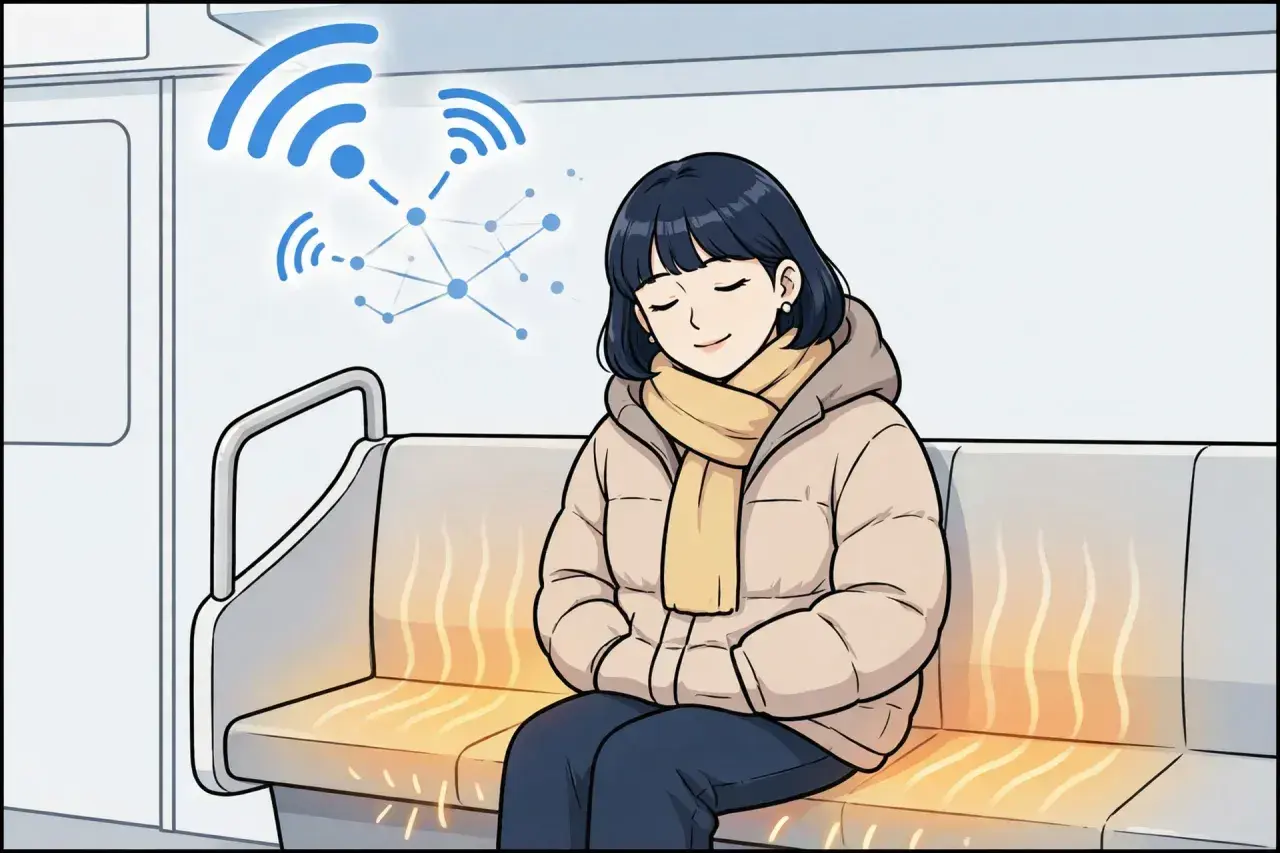
CNN reported that Seoul subway riders were among the first people in the world to be able to make phone calls and browse the internet underground without losing their connection, or watch TV on screens inside trains. It also noted that trains have heating and cooling systems, as well as heated seats to make travel more comfortable in winter. In doing so, the article looked beyond the performance of the transport system to the environment passengers actually experience while traveling.
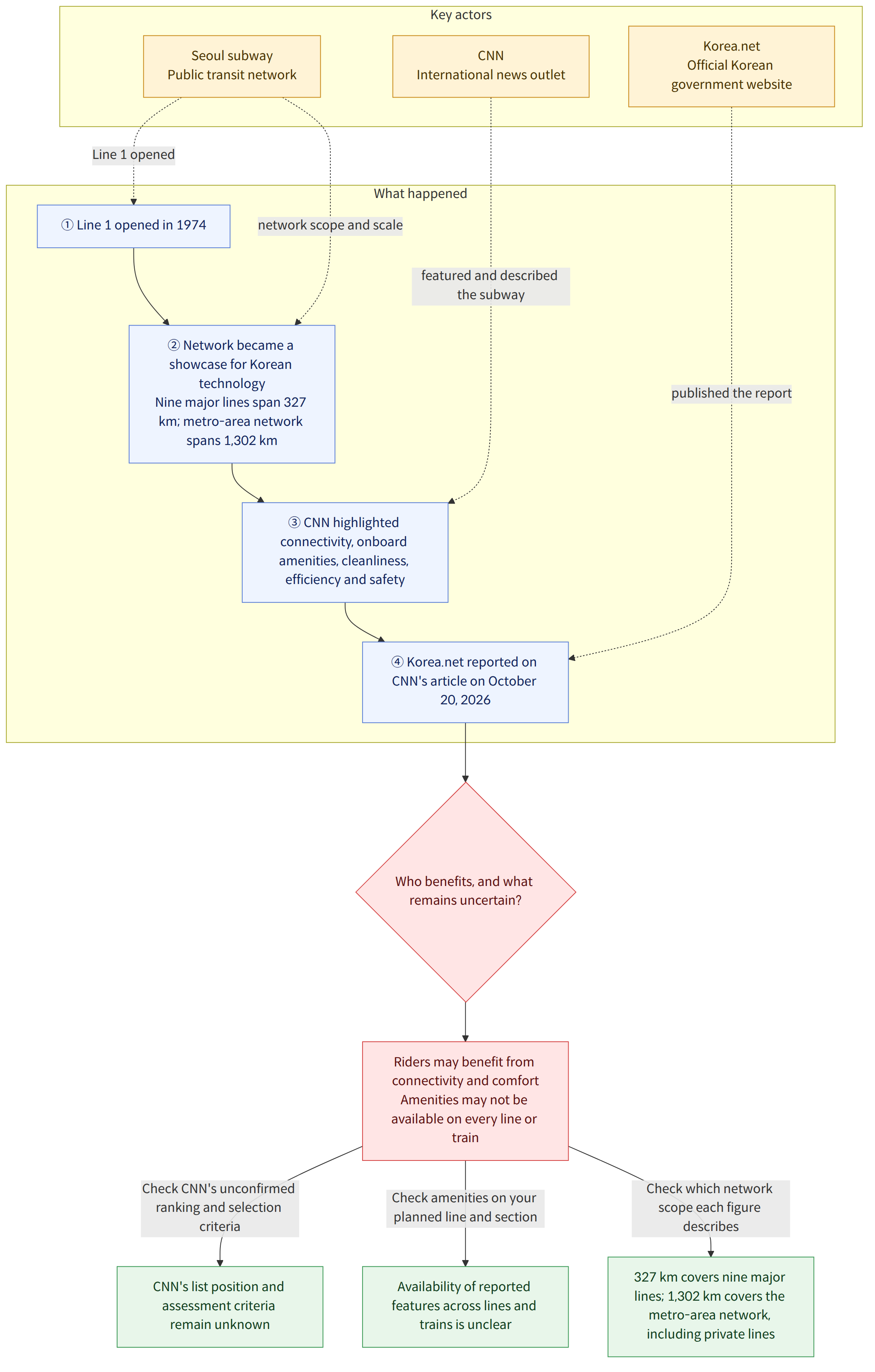
The scale of the Seoul subway is also notable. Its nine major lines span a total of 327 km, while the metropolitan-area network, including lines operated by private companies, extends 1,302 km. The network is estimated to carry about 7 million passengers a day. However, the two distance figures refer to different scopes, so the 327 km figure should not be read as the length of the entire metropolitan-area subway network.
CNN reported that since Line 1 opened in 1974, the Seoul subway has become a showcase for Korean technology and attracted the attention of transport planners in cities around the world. The article can be read as an example of how a large-scale public transit network combines technology with the passenger experience, going beyond individual features such as connectivity or heating and cooling.
What this news means
For subway riders, connectivity can make it easier to find information or stay in touch while traveling. Train heating, cooling and heated seats can affect the environment passengers experience during their journey. CNN’s description of cleanliness, efficiency and safety as strengths suggests that a subway’s competitiveness is difficult to explain through speed or network size alone.
For example, a passenger traveling by subway in winter might find that heated seats and the heating system make the journey more comfortable. However, this is an illustration of how the facilities described by CNN could affect the passenger experience; it does not mean that the same experience is guaranteed on every train or in every situation.
CNN described the Seoul subway as clean, efficient and safe, and reported that many experts consider it one of the best in the world. However, the article’s ranking of the Seoul subway and the criteria used in its assessment have not been confirmed.
Confirmed facts and what remains unknown
Confirmed facts
- CNN featured the Seoul subway in an article about major subway systems around the world.
- CNN mentioned underground connectivity, TVs inside trains, heating and cooling systems, and heated seats.
- Seoul’s nine major lines span a total of 327 km, while the metropolitan-area network, including privately operated lines, covers 1,302 km.
- The metropolitan-area network is estimated to carry about 7 million passengers a day.
- It was reported that the Seoul subway has been a showcase for Korean technology since Line 1 opened in 1974.
What remains unknown
- It has not been confirmed where the Seoul subway appeared in CNN’s list.
- The original article does not explain the criteria or sources CNN used to select the subway systems.
- The available information does not show to what extent the reported amenities are available across different lines and trains.
What readers should check
- Before traveling, it is a good idea to check whether the connectivity and amenities you need are available on the line and section you plan to use. The strengths described in the article cannot be assumed to apply equally in every situation.
- When comparing network length or ridership, check whether the figures refer to the nine major lines or to the metropolitan-area network, which includes privately operated lines.