Korean underwater archaeology marks its 50th anniversary since it began in 1976 off the coast of Sinan County, South Jeolla Province. To commemorate the occasion, the Taean Maritime Relics Exhibition Hall (태안해양유물전시관) in Taean County, South Chungcheong Province, is holding an exhibition, “The Time of the Sea, the Records of Humanity: A Thousand Years of History Encountered in the Yellow Sea” (바다의 시간, 인류의 기록: 황해에서 만난 천년의 역사), from November 26 through May 2 of the following year. The exhibition presents traces of trade and daily life preserved in shipwrecks through major underwater archaeological finds and related artifacts recovered from the central Yellow Sea.
Background and context
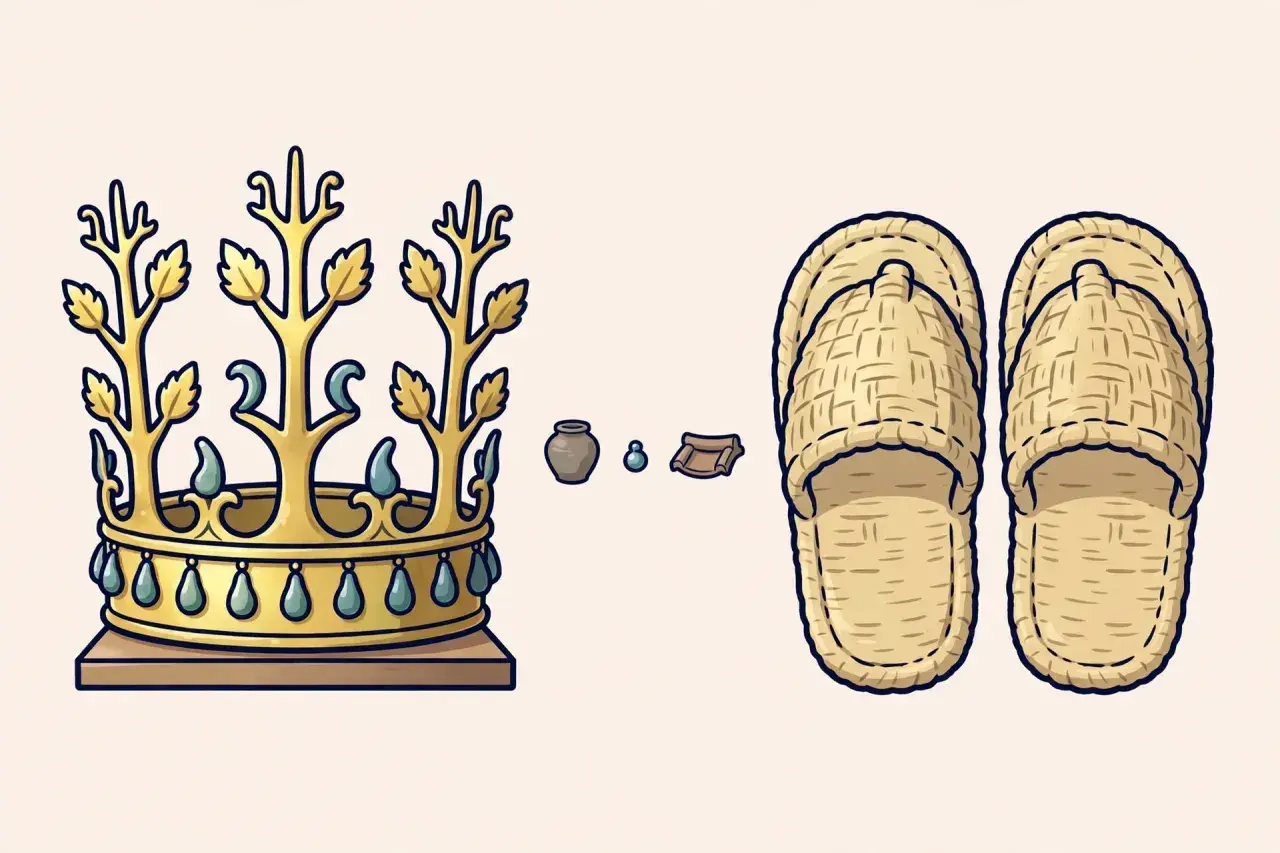
The exhibition centers on artifacts recovered from ships that sank off Taean County and Ansan, Gyeonggi Province, during the Goryeo and Joseon periods. Alongside traces of Goryeo celadon, it presents doenjang, mussels, persimmon seeds and grains stored in jars. By displaying not only valuable ceramics but also food ingredients and evidence of storage, the exhibition offers a look at both the goods carried along sea routes and people’s daily lives at the time.
Ceramics bearing ink inscriptions and jars with handles, made in China during the Song and Yuan dynasties, are also on display. The exhibition presents these artifacts as materials that show the characteristics and reach of maritime trade in East Asia at the time. Considered together, the places where the artifacts were made and the waters where the ships sank, the shipwrecks can be read as archival spaces preserving, in one place, the traces of goods and exchanges carried across the sea.
Of particular interest are 28 wooden and bamboo slips discovered in the shipwrecks. Wooden and bamboo slips are records written on wood or bamboo. These items were tags inscribed with shipping information such as the place of origin, recipient, type of cargo and quantity. The fact that shipping records have survived as actual artifacts allows the exhibition to bring the logistics of sea routes into concrete focus.
What this news means
Shipwreck artifacts do more than show objects from the past. Tags listing the type and quantity of goods offer clues to how items were sorted and transported, while traces of doenjang and grain show how the objects of trade were connected to daily life. The significance of the exhibition, then, lies not in making claims about the scale of maritime trade, but in offering a chance to look at movement and daily life at the time through the records and objects that remain.
Visitors can also see how underwater excavations are carried out, not just the artifacts themselves. The Taean exhibition hall has a space displaying excavation equipment and a model of Nurian (누리안호), an underwater archaeological survey vessel, to show the excavation process.
For example, after seeing the shipping tags on the wooden and bamboo slips, visitors can follow the places of origin, recipients and cargo information inscribed on them and imagine the movement of goods carried on a shipwreck. However, the exhibition materials alone do not establish the full routes taken by individual cargoes or the scale of trade at the time.
What is confirmed and what remains unknown
Confirmed facts
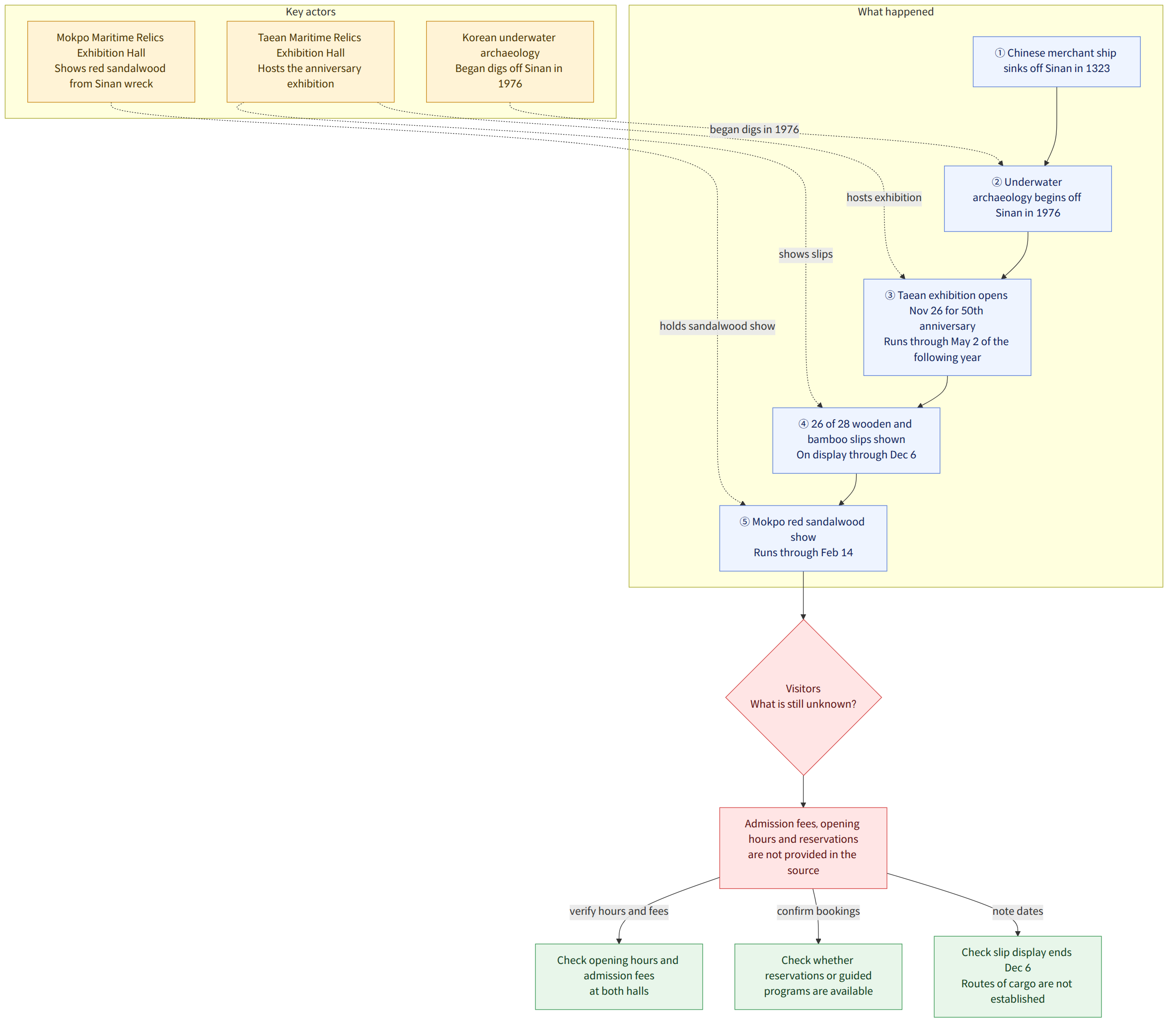
- Korean underwater archaeology began in 1976 off the coast of Sinan County, and the source describes this year as its 50th anniversary.
- The Taean exhibition runs from November 26 through May 2 of the following year and focuses on artifacts from ships that sank off Taean and Ansan during the Goryeo and Joseon periods.
- There are 28 wooden and bamboo slips from the shipwrecks. Of these, 26 that have completed conservation treatment will be on display through December 6.
- The Mokpo Maritime Relics Exhibition Hall is holding an exhibition of red sandalwood recovered from the Sinan shipwreck through February 14. The Sinan shipwreck is the remains of a Chinese merchant ship from the Goryeo period that sank off the coast of Sinan County in 1323.
What remains unknown
- Admission fees and opening hours for the Taean and Mokpo exhibitions have not been provided.
- The source does not confirm whether visitors need to make reservations or whether separate guided programs are available.
- The specific inscriptions on the wooden and bamboo slips on display and the routes taken by each cargo are not provided.
What readers should check
- Before visiting, check the opening hours and admission fees at the Taean Maritime Relics Exhibition Hall and the Mokpo Maritime Relics Exhibition Hall.
- Check whether reservations or guided programs are available. If you want to see the wooden and bamboo slips, also note that they are on display through December 6.
- The red sandalwood exhibition is listed as running through February 14, so check whether your planned visit falls within the exhibition period.