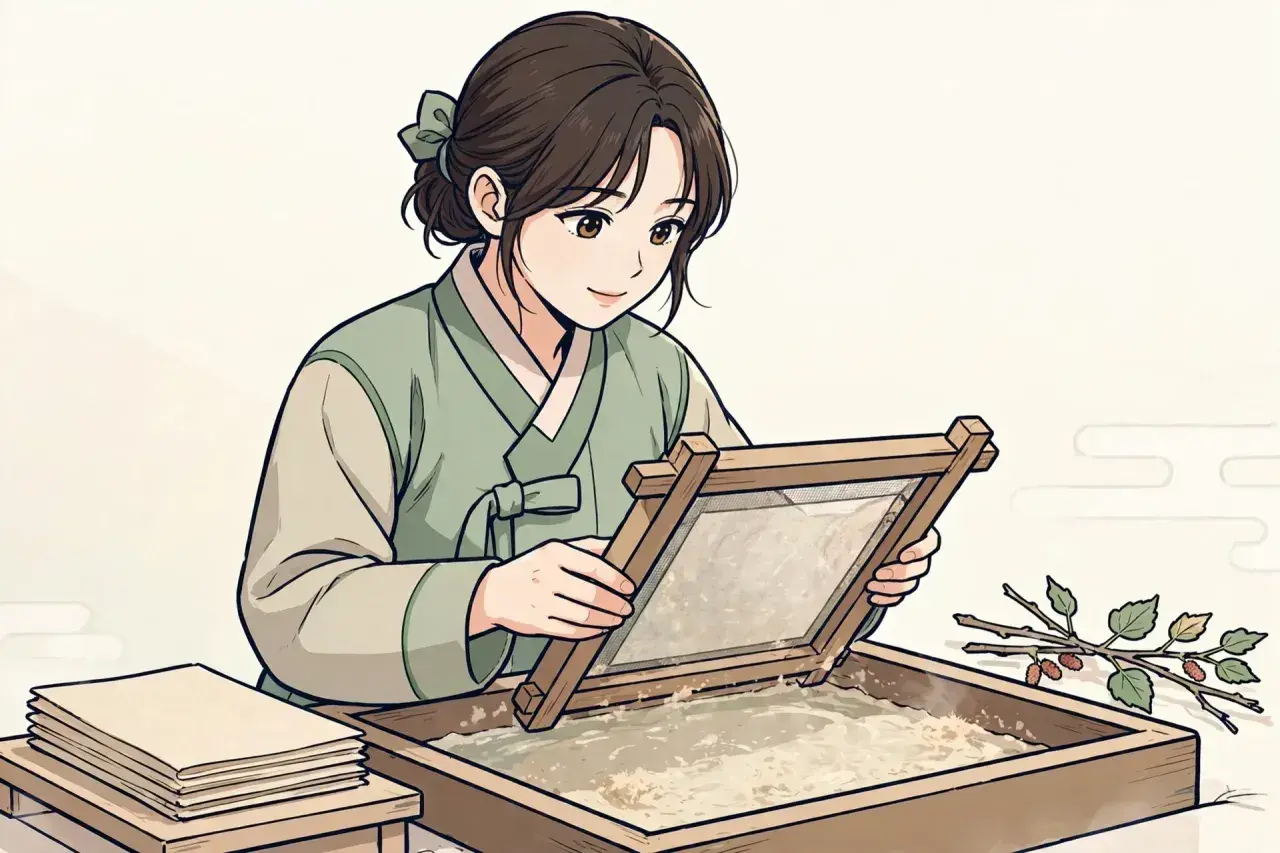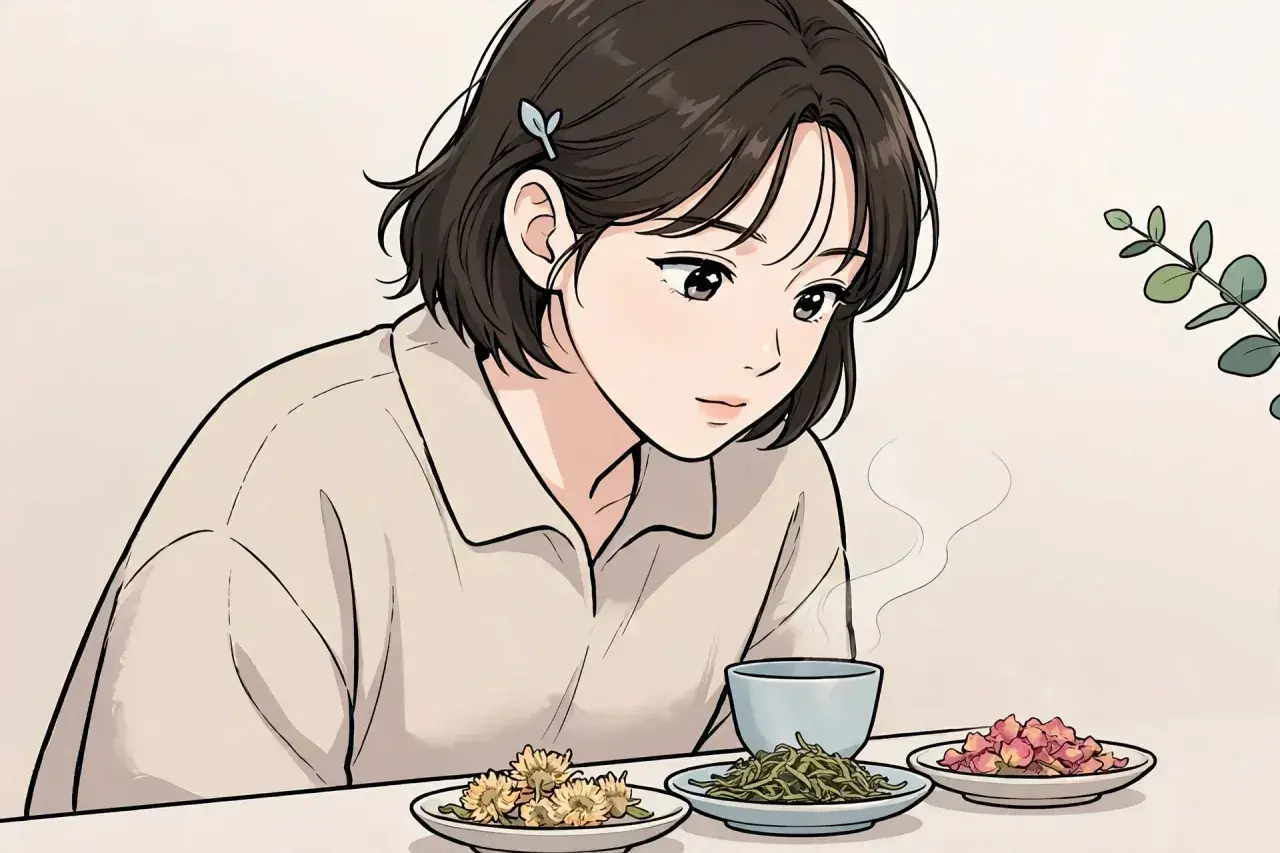
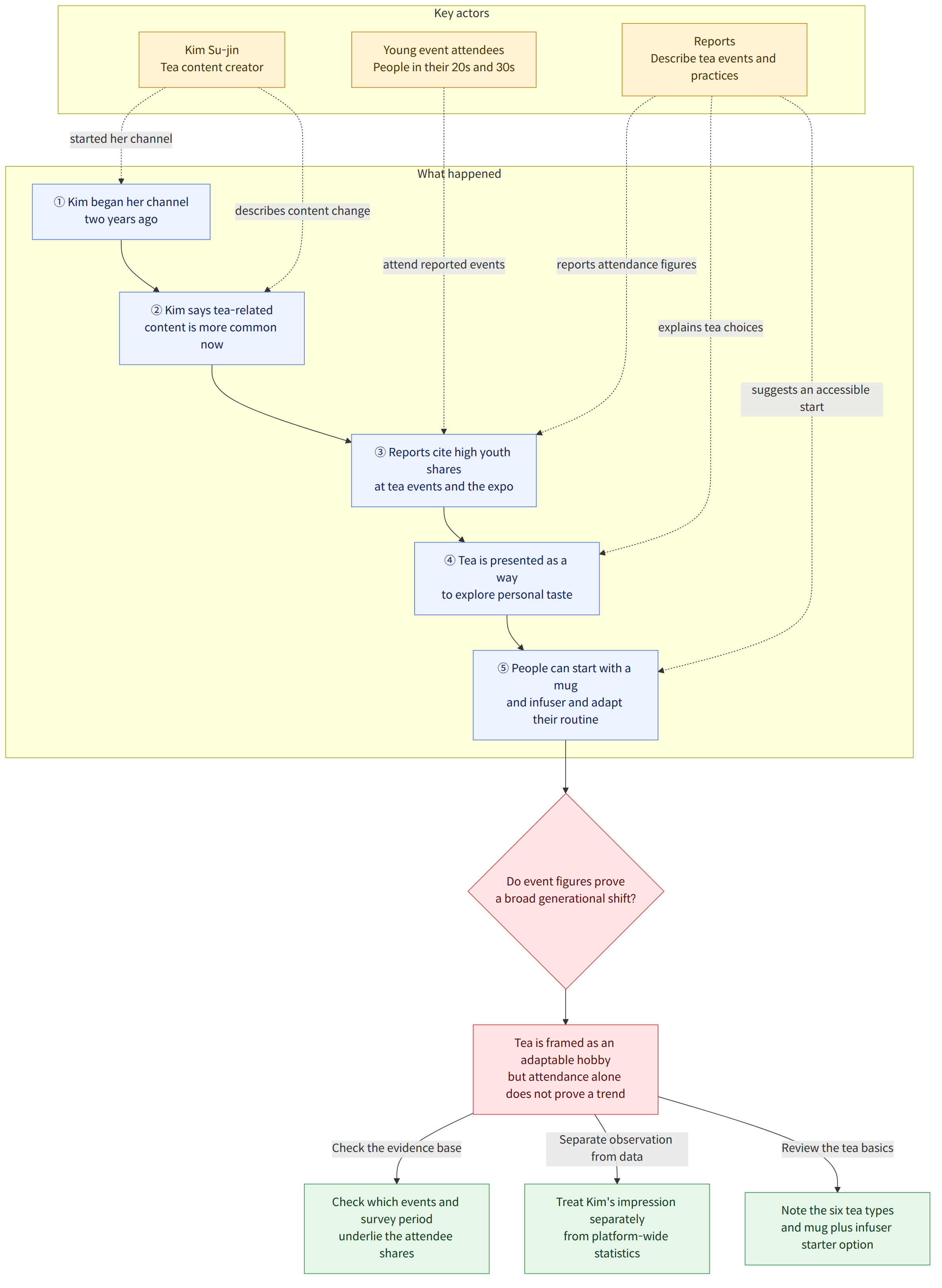
Tea drinking is being presented as a hobby that fits the tastes and everyday lives of young people. According to reports, people in their 20s and 30s account for more than 70% of attendees at offline events such as tea gatherings at tea houses, tea classes and tea utensil exhibitions. At the International Tea Culture Expo (국제차문화대전), held at COEX in Seoul for four days starting June 4, more than half of the attendees were also young people. Reports have also said that online content related to tea, including daily-life vlogs and travel videos about drinking tea, has increased.
However, these figures show the makeup of attendees at the events covered in the reports. It is difficult to extrapolate from them to conclude that people in their 20s and 30s in general enjoy tea ceremony, or that it has become a mainstream hobby among young people.
Background and context
Tea ceremony refers to the ways and culture of drinking tea. Rather than treating it only as an activity that requires formality and rules, the reports describe it as a hobby in which people discover their preferences by choosing and drinking teas made from leaves of different origins and prepared using different pan-firing methods. The idea is that, much like choosing coffee based on the beans and how they are roasted, people can select tea to suit their mood and how they feel that day.
Tea is broadly classified into six types: green, white, yellow, blue (oolong), black and dark (pu’er). Reports note that even the same tea can taste different depending on the season and weather. Because a tea’s flavor and aroma can vary according to its origin and how it is made, tea lends itself to trying different varieties and discovering personal preferences, rather than enjoying it in just one prescribed way.
Changes in online content offer one example of how this hobby is taking shape. Kim Su-jin, who posts tea-related content on YouTube, blogs and Instagram under the name Ochaku (오차쿠), said there is more related content now—including daily-life vlogs and travel videos about drinking tea—than when she started her channel two years ago. This is one content creator’s impression of a change, however, and should be distinguished from data that statistically confirms growth across the platforms as a whole or the scale of young people’s participation.
What this news means
The change highlighted in the reports is the way tea ceremony is becoming more accessible. Rather than assuming that people must first buy expensive equipment or learn set procedures to enjoy tea, the guidance is that they can start with a mug and tea infuser they already have at home. If their interest grows, they can add a teapot, a fairness cup (a vessel for holding brewed tea), teacups and other items. Knowing that they may already have what they need to get started can make trying tea ceremony less daunting.
The time and place for drinking tea are not fixed, either. The reports describe drinking tea after yoga or by a window while enjoying the sunlight, as well as keeping a tea journal by adding notes about one’s mood that day to observations on a tea’s taste and aroma. This suggests that tea ceremony may be embraced as a hobby that people can adapt to the time and style they prefer, rather than an activity limited to a particular formal approach.
For example, someone who is interested in tea ceremony but unsure about buying dedicated utensils could first try drinking tea with a mug and tea infuser they have at home, and make notes on the tea’s taste and aroma. This is an example of a way to start suggested in the reports; it does not mean that everyone will enjoy tea ceremony in the same way.
The share of young people among event attendees is a clue to their interest, but that figure alone cannot be taken as representative of the hobbies of an entire generation.
What is confirmed and what remains unknown
What is confirmed
- Reports said that people in their 20s and 30s account for more than 70% of attendees at offline tea-related events, including tea gatherings at tea houses, tea classes and tea utensil exhibitions.
- Reports said that more than half of the attendees at the International Tea Culture Expo (국제차문화대전), held at COEX in Seoul for four days starting June 4, were young people.
- Kim Su-jin, who creates content under the name Ochaku (오차쿠), said there is more tea-related content now, including daily-life vlogs and travel videos, than when she started her YouTube channel two years ago.
- The reports classify tea into six types and explain that people can begin tea ceremony with a mug and tea infuser.
What remains unknown
- The reports do not specify which events or survey period were used to calculate the figure that people in their 20s and 30s account for more than 70% of offline event attendees.
- It is difficult to know how accurately the share of event attendees reflects the number of people in their 20s and 30s who actually enjoy tea as an everyday hobby.
What readers can check
- If you are trying tea for the first time, you can use a mug or tea infuser you already have at home before buying separate tea utensils, and see whether tea suits you.
- If you want to compare the taste and aroma of teas by type, origin and pan-firing method, you could try the tea first and then choose any utensils you need, rather than buying several items at once.
- If you are considering visiting a tea house, you can refer to information about Samo (사모) in Wonseo-dong, Jongno-gu, Seoul; Gojjeon Culture (고전문화) in Insadong; and Siwoo Tea House (시우티하우스) in Anyang, Gyeonggi Province, as introduced in the reports. Be sure to check in advance whether reservations are required and when visits are available.