


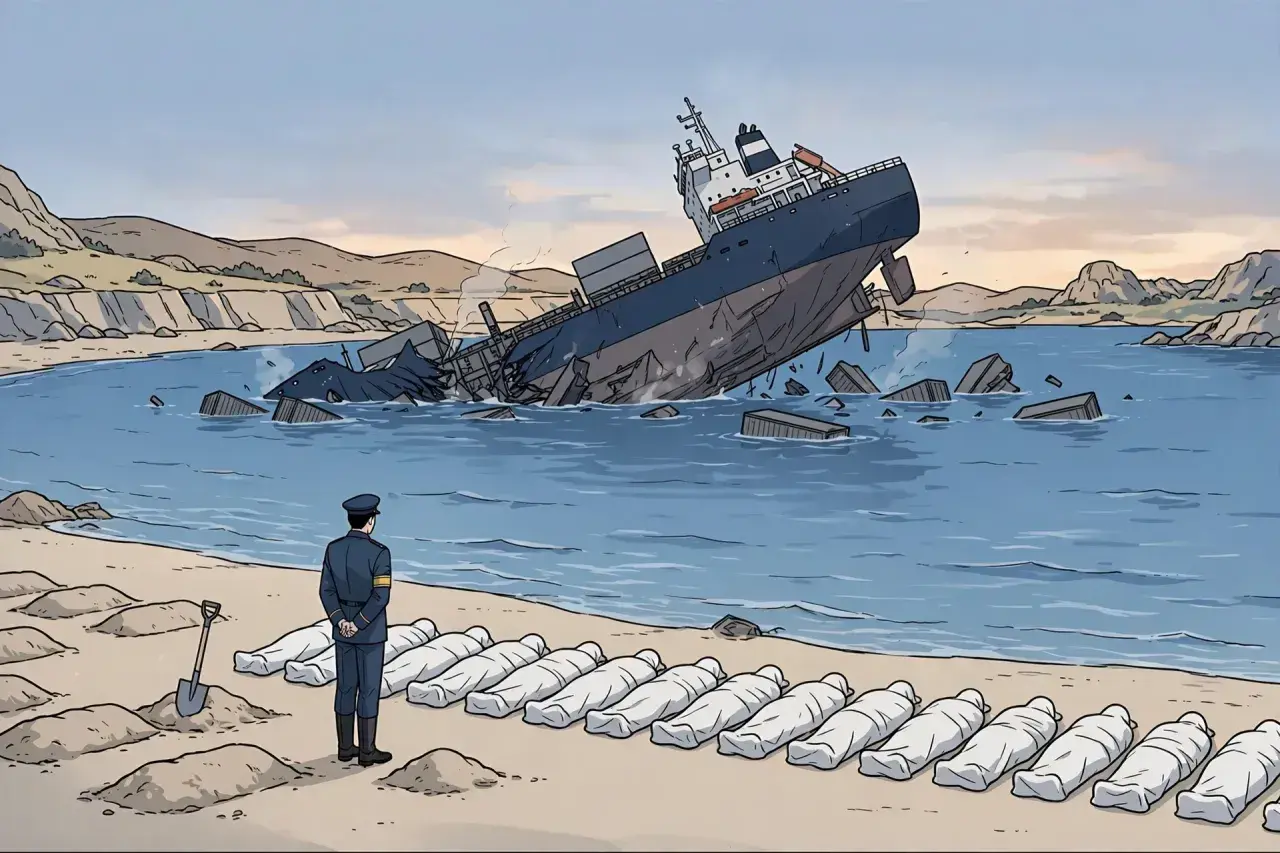
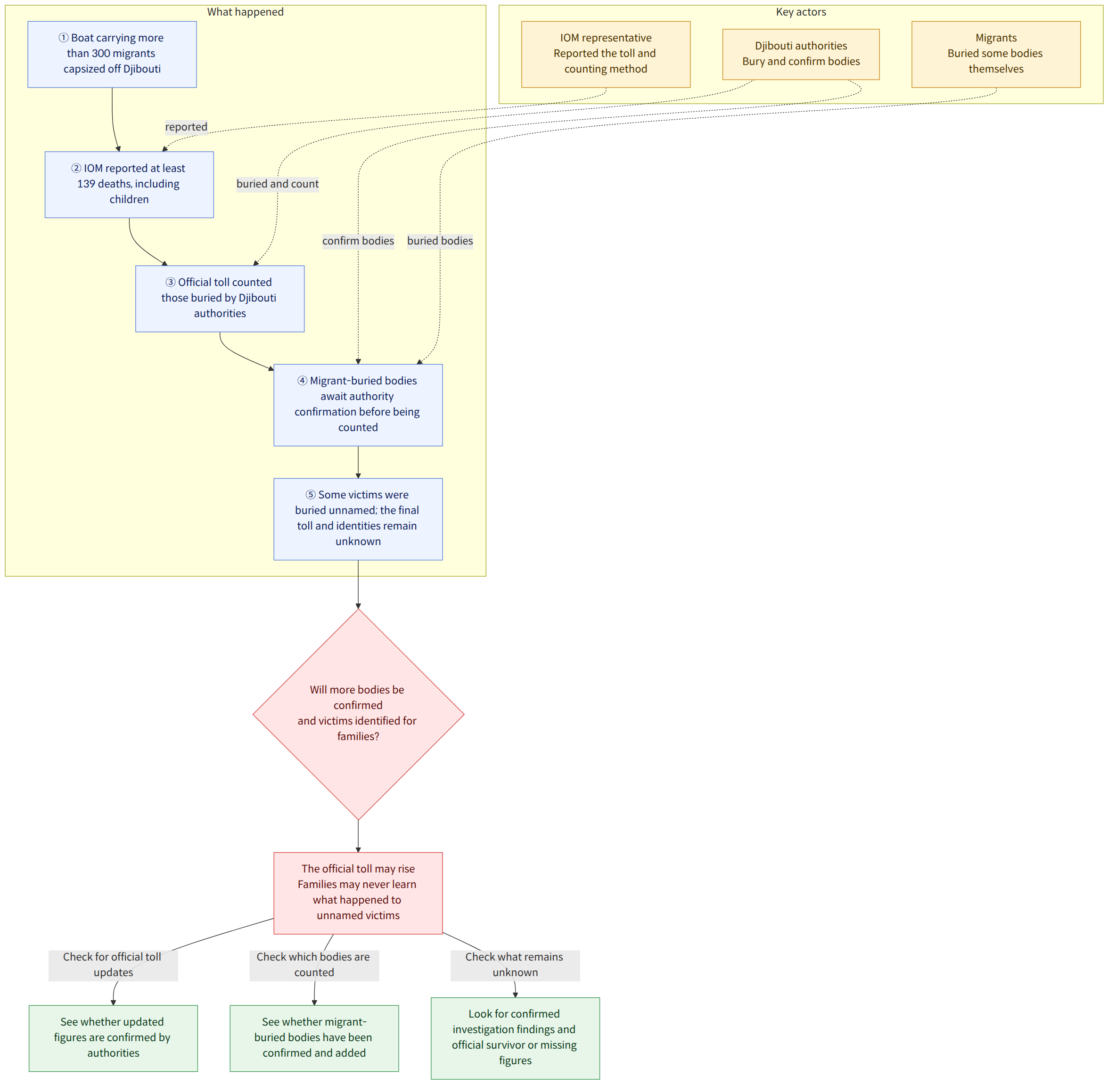
The International Organization for Migration (국제이주기구; IOM) said Sunday that a boat carrying more than 300 migrants capsized off the coast of the East African nation of Djibouti, killing at least 139 people. Children were among the dead. However, that figure counts only those buried by Djibouti authorities. Bodies buried by migrants themselves are not included in the official death toll until the authorities confirm them.
Alexandre Kouasak, the IOM representative in Djibouti, described the counting method and situation to the Associated Press. Therefore, the current figure of “at least 139” is an official number based on confirmed cases, not necessarily the final death toll from the disaster.
Background and context
To understand the scale of the disaster, it is important to distinguish between the confirmed death toll and bodies still awaiting confirmation. Those buried by the authorities are included in the official count, while bodies buried by migrants are added only after authorities confirm them. In other words, the counting criteria are tied to the confirmation process.
Kouasak said those who died in the disaster were buried without names in a communal cemetery. He said that they had families, who might never find out what happened. His remarks show that, separate from counting the dead, identifying them and informing their families about the circumstances of the disaster remain outstanding tasks.
This account of the disaster comes from the IOM’s representative in Djibouti. The reporting provided does not include any separate findings on the cause of the accident or details of an investigation.
What this news means
The official figure in this report is an important measure of the scale of the loss, but it may not equal the total number of deaths, including bodies that have yet to be confirmed. The official count could change as authorities complete their confirmations. However, based on the current reporting, it is not known how many additional bodies are awaiting confirmation or what the final figure will be.
This distinction may matter both to readers trying to understand the disaster and to families who have lost contact with those who died. For example, if a family tries to determine whether a missing relative is alive based only on the official death toll, it should also consider that bodies must be confirmed by the authorities before they are included in the count. That does not mean, however, that all unconfirmed bodies are victims of this disaster.
The death toll and the identification of the dead are related, but they are not the same process. According to the report, some bodies were buried without names in a communal cemetery. So even if the official figure is updated, whether each victim has been identified and what information has been shared with their family are separate matters to consider.
What is confirmed and what remains unknown
What is confirmed
- A boat carrying more than 300 migrants capsized off the coast of Djibouti in East Africa.
- The IOM said Sunday that at least 139 people, including children, had died.
- The current official death toll includes only those buried by Djibouti authorities.
- Bodies buried by migrants themselves are not added to the official count until the authorities confirm them.
- Kouasak said overcrowding was the main cause of the boat sinking.
What remains unknown
- What the final findings of an investigation into the cause of the capsizing will be.
- How many survivors and missing people there were at the time of the accident.
- How many bodies have yet to be confirmed by the authorities.
- What the final death toll will be and how the victims’ identities will be confirmed.
What readers should look for
- If the death toll is updated in follow-up reports, check whether the new figure is an official count confirmed by the authorities.
- Check whether the official count includes only those buried by the authorities, and whether additional bodies have been confirmed.
- The current reporting does not answer questions about the cause of the accident or the number of survivors and missing people. Readers will need to check separately for confirmed investigation findings or official figures.
References
- Other coverage consulted: koreatimes.co.kr

















