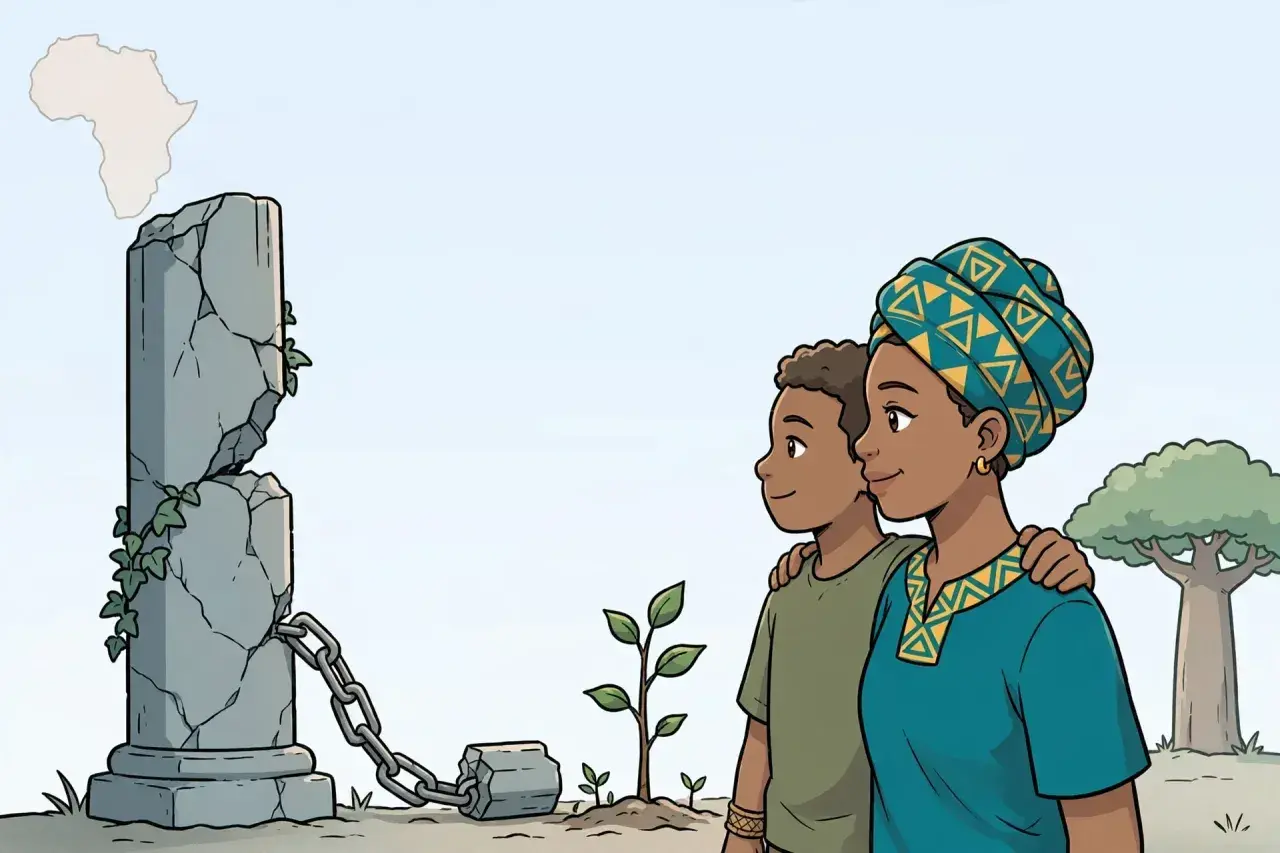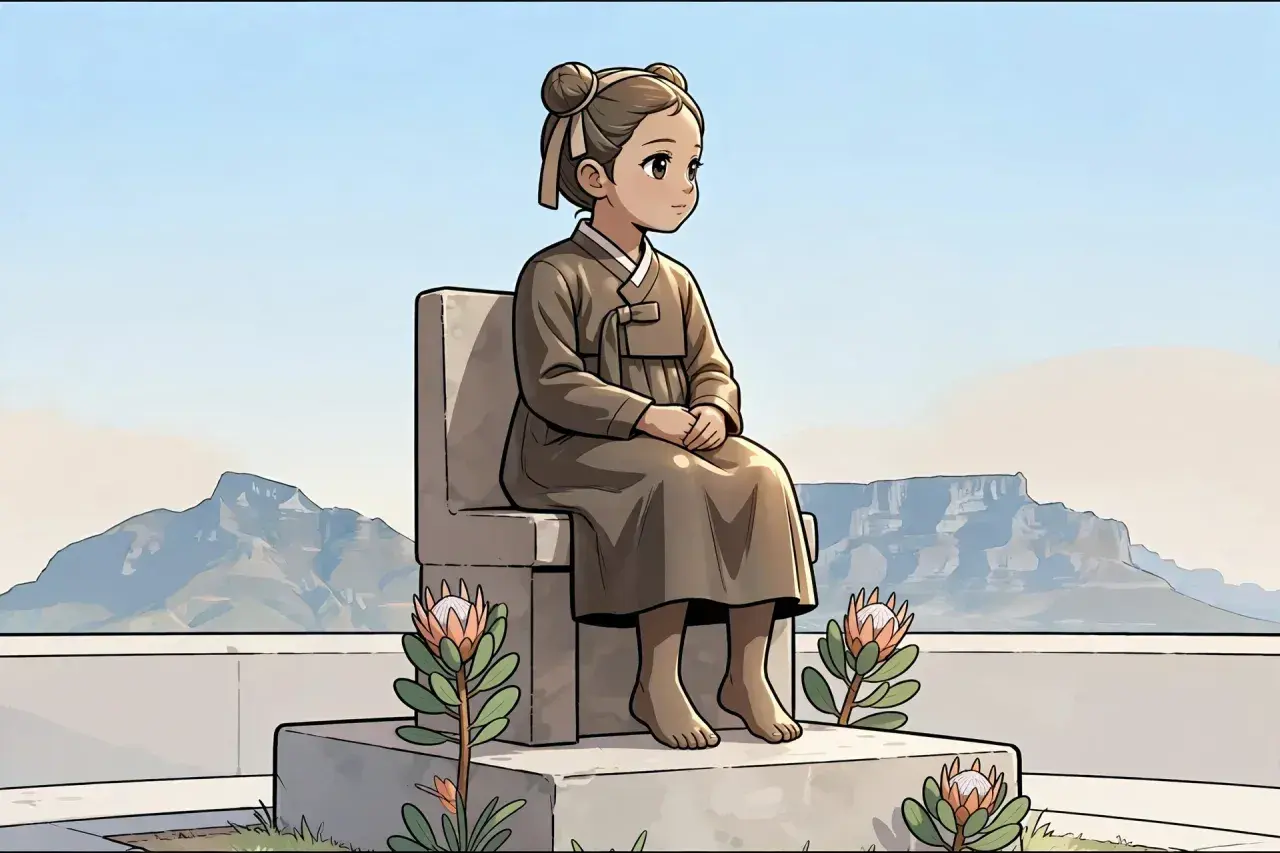
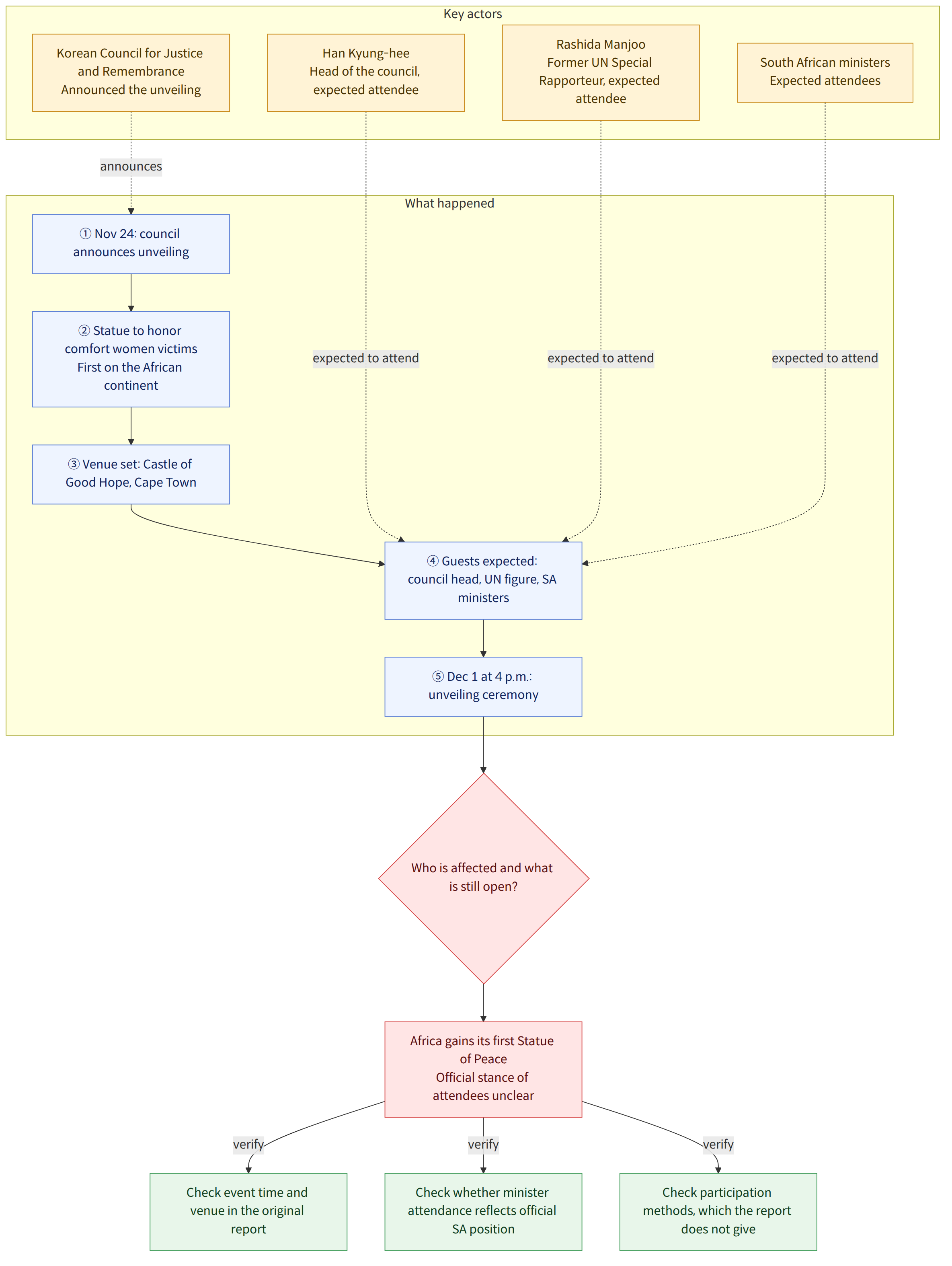
For the first time on the African continent, a Statue of Peace (평화의 소녀상) honoring victims of the "comfort women" system will be erected. The Korean group Korean Council for Justice and Remembrance for the Issues of Military Sexual Slavery by Japan (일본군 성노예제 문제 해결을 위한 정의기억연대) announced on November 24 that the unveiling ceremony will be held at 4 p.m. on December 1 at the Castle of Good Hope in Cape Town, South Africa.
Background and Context
The Statue of Peace commemorates the reality of victims of Japanese military "comfort women" and serves as a monument calling for an end to wartime sexual violence around the world and for the promotion of peace. According to reports, "comfort women" refers to women who suffered sexual slavery at the hands of the Japanese military before and during the Second World War.
The origin of this statue lies in Seoul. The world's first Statue of Peace was erected on December 14, 2011, in front of the Japanese Embassy in Seoul's Jongno District. It was set up to mark the 1,000th Wednesday Demonstration.
This statue in South Africa is significant in that the movement is spreading across a continent. It was reported that there are 158 memorials and peace monuments in Korea and more than 35 overseas. The first installation in Africa adds the African region to this list of overseas sites.
What This News Means
This unveiling can be read as an example of how international awareness around historical memory and wartime sexual violence is widening regionally. The inclusion of international human rights figures and a South African government minister among the attendees is also notable in this context. However, whether the attendee list reflects the official position of the South African government cannot be determined from the original report alone.
For example, if Korean residents abroad or local students are looking for educational materials on wartime sexual violence and human rights, this news can be used as information that a public event addressing this topic is taking place in the African region. This is a hypothetical example, and the detailed schedule or participation methods of the event are not provided in the original report.
The unveiling ceremony is expected to be attended by Han Kyung-hee, head of the council; Rashida Manjoo, former UN Special Rapporteur on violence against women; Tembi Csele Mhlanga... [see note below]