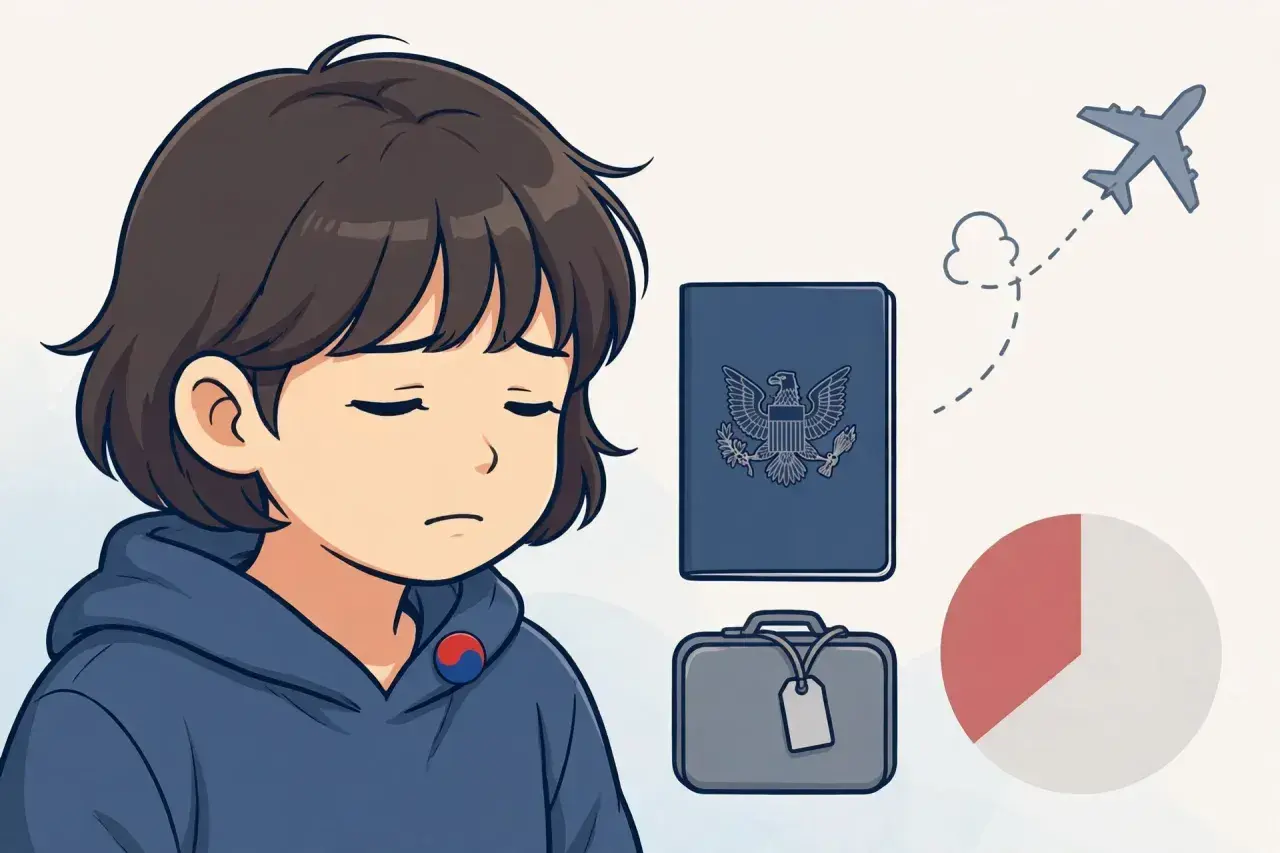
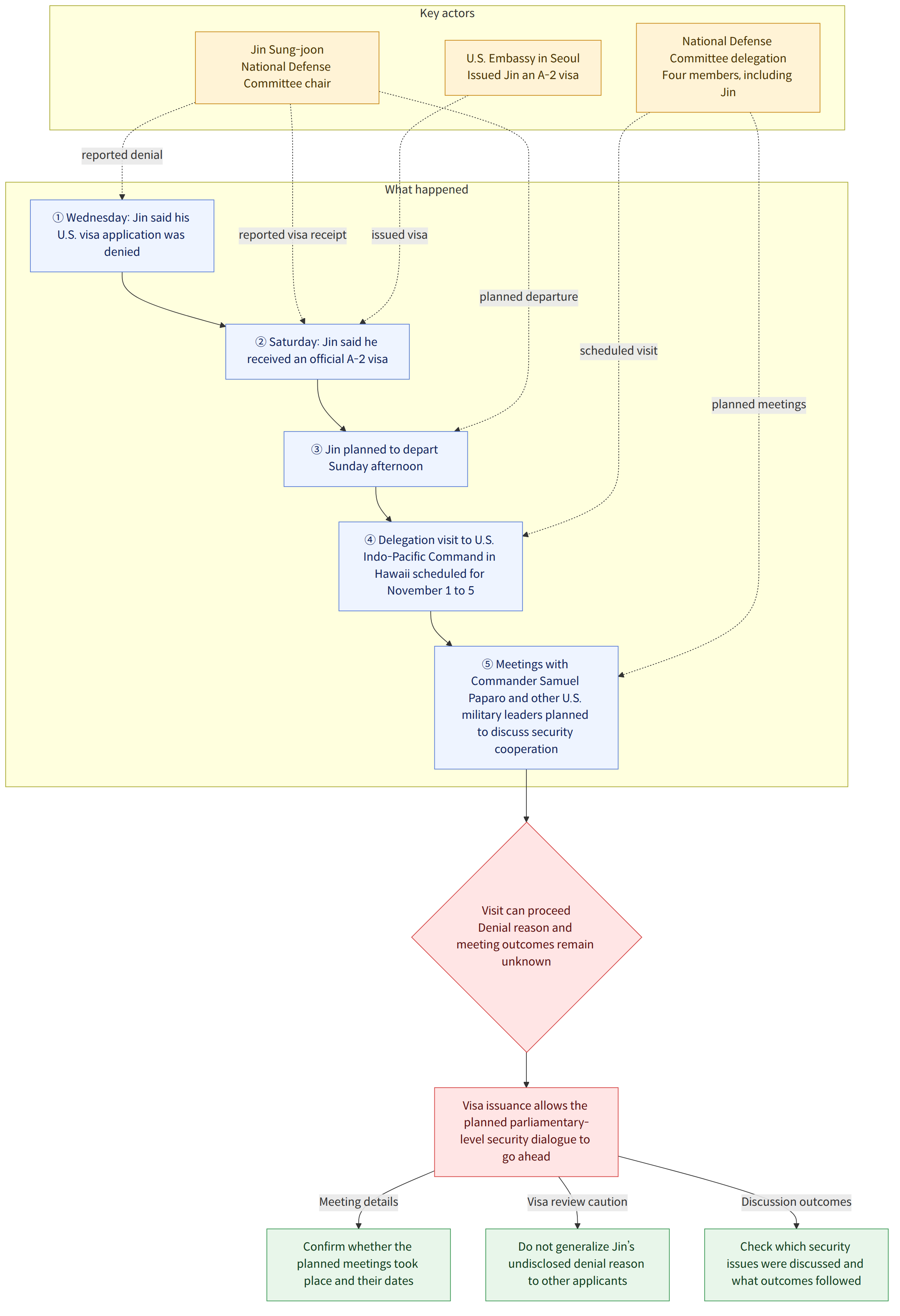
Jin Sung-joon, chair of the National Assembly’s National Defense Committee (국회 국방위원회), said his U.S. visa application had been denied, but later received an official U.S. A-2 visa and will proceed with his visit as scheduled. Jin said on Facebook that he received the visa at the U.S. Embassy in Seoul on Saturday and plans to depart Sunday afternoon. The purpose of the visit is to discuss ways to strengthen security cooperation between the two countries and develop their alliance with U.S. military leaders.
Background and context
Jin said Wednesday that his visa application had been denied and shared on Facebook what appeared to be a document showing the denial. He said he found the denial difficult to understand, noting that he had visited a U.S. command in 2014 as a member of a National Assembly committee, and expressed strong regret.
The visa was subsequently issued, allowing the U.S. visit itself to go ahead. However, the fact that it was issued does not reveal why it was initially denied. According to related reports, the reason remains unclear.
The U.S. State Department was previously reported to have said that it does not comment on specific applications and reviews all visa applications on a case-by-case basis. This was an explanation of its general review policy, not a response confirming the specific reason Jin’s application was initially denied.
What this news means
This case shows that visa review outcomes can affect the National Assembly’s schedule for security exchanges. Jin said that, as chair of the National Defense Committee, he plans to meet with the commander of U.S. Indo-Pacific Command and other U.S. military leaders to discuss security cooperation. The visa’s issuance therefore means more than just resolving an individual’s travel issue: it allows the planned parliamentary-level dialogue to proceed.
However, the issuance of a visa does not establish what was discussed about U.S.-South Korea security issues or indicate any change in relations between the two countries. The purpose of the visit and the planned meetings have been reported, but the discussions and their outcomes will need to be confirmed after the visit takes place.
For example, if a National Assembly delegation plans to visit a foreign military institution to discuss cooperation, whether visas are issued can affect not only the delegation’s departure but also whether the planned meetings can take place. But because the reason for the denial in this case has not been disclosed, it cannot be generalized as a standard review criterion or used to draw conclusions about other applicants’ outcomes.
What is confirmed and what remains unknown
Confirmed facts
- After saying that his visa application had been denied, Jin said he received an official A-2 visa at the U.S. Embassy in Seoul.
- Jin said he plans to depart Sunday afternoon.
- The National Assembly’s National Defense Committee is reported to be scheduled to visit U.S. Indo-Pacific Command in Hawaii from November 1 to 5.
- The visiting delegation consists of four people, including Jin and the ruling and opposition parties’ floor committee members, and is scheduled to meet with Indo-Pacific Commander Samuel Paparo and others.
What remains unknown
- The specific reason Jin’s visa application was initially denied has not been disclosed.
- Reports have not specified the exact dates during the visit to Indo-Pacific Command when meetings with the commander and other U.S. military leaders will take place.
- It has not been confirmed which security issues will be discussed or what outcomes will result from the planned discussions.
What readers should check
- The visit is reported to be scheduled for November 1 to 5, but the dates and details of individual meetings need to be confirmed separately.
- This visa issuance concerns Jin’s individual application. It is important not to speculate about the undisclosed reason for the denial and apply it to the review outcomes of other applicants.
- Future reports confirming whether the meetings took place and what security cooperation measures the two sides discussed will help clarify the significance of the visa issuance.
References
- Other coverage consulted: en.yna.co.kr
- Other coverage consulted: hani.co.kr