


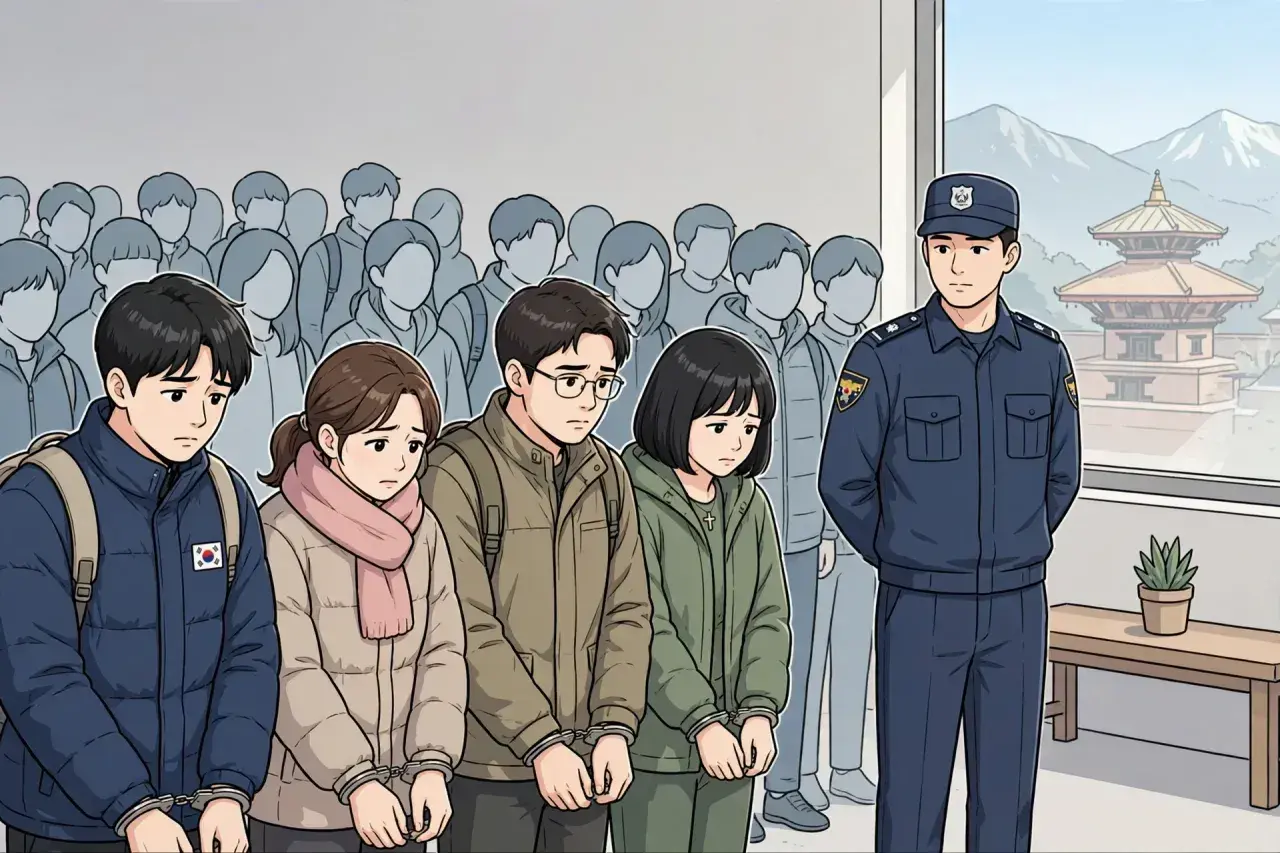
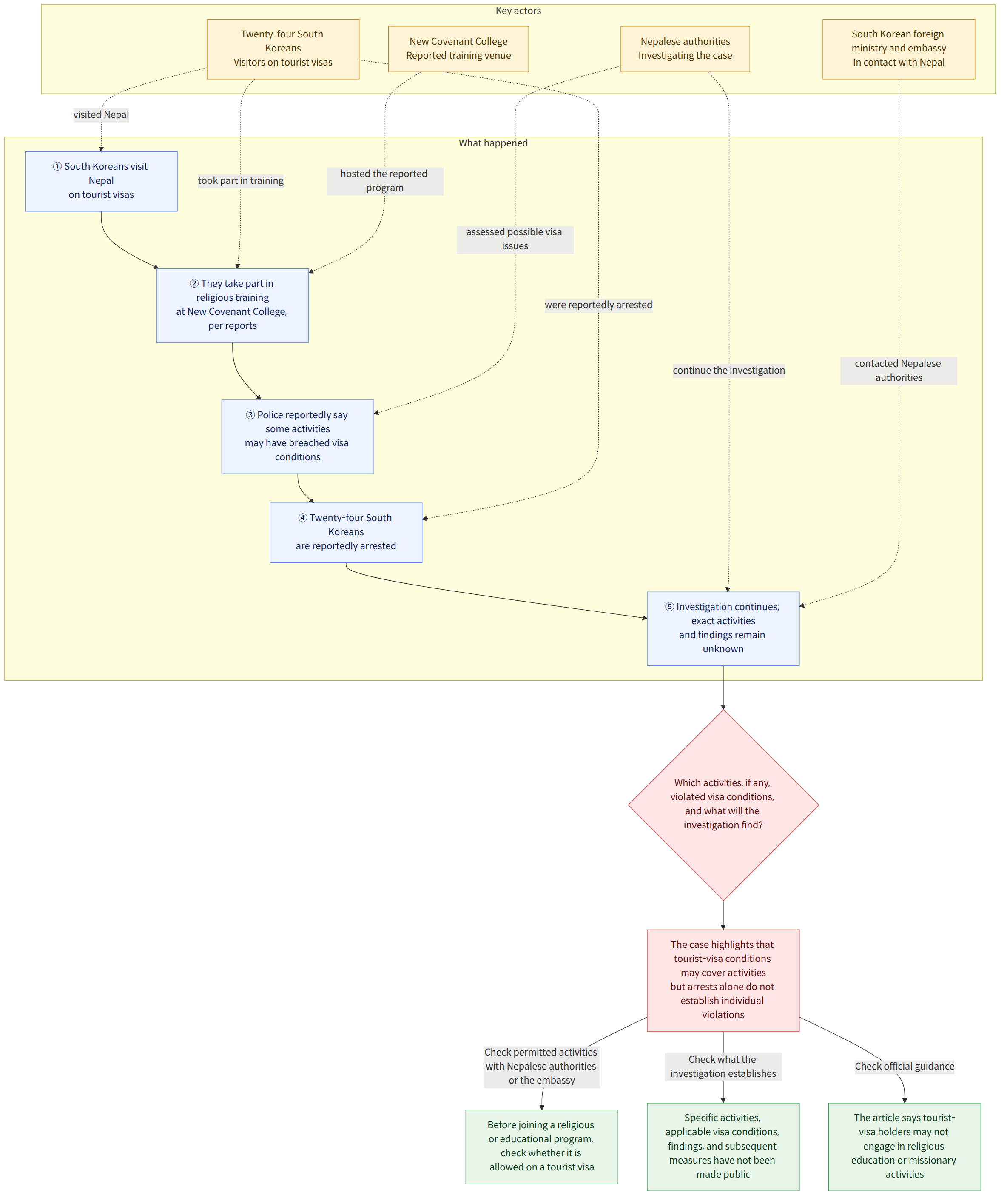
Twenty-four South Koreans were reportedly arrested after visiting Nepal on tourist visas and taking part in a religious program, according to reports on October 12, 2026. According to the Nepalese online outlet Ratopati, they recently took part in a religious training program at New Covenant College in Morang District, Koshi Province, in eastern Nepal. Nepalese police reportedly determined that some of their activities may have violated the conditions of their tourist visas.
The arrests have been reported, but it has not yet been confirmed which activities violated the visa conditions or what the investigation found.
South Korea’s Ministry of Foreign Affairs said it was aware of the case and had been in close contact with Nepalese authorities through the Embassy of the Republic of Korea in Nepal (주네팔 한국대사관) since learning of it. The ministry declined to release further details, citing the ongoing investigation by Nepalese authorities and the need to protect the individuals’ privacy.
Background and context
According to local reports, New Covenant College is a Christian educational institution that operates with support from a Christian missionary organization based in South Korea and offers religious studies and education. Reports of the arrests focus not on the nature of the institution itself, but on what activities the visitors who entered on tourist visas took part in and whether those activities complied with the visa conditions.
According to the article, foreign nationals entering Nepal on tourist visas may not engage in religious education or missionary activities. However, reports have not specified which activities Nepalese authorities took issue with in this case or which parts of the training program they considered to be violations of the conditions. Therefore, the fact of the arrests alone does not establish what each of the 24 people did or whether any violations occurred.
What this news means
For visitors abroad, visa conditions may relate not only to the purpose of entry but also to the activities permitted during their stay. This case illustrates that even a program held at a religious institution may raise questions about whether the activities of people taking part on tourist visas are consistent with local regulations. However, the specifics can be determined only after Nepalese authorities complete their investigation.
For example, someone visiting Nepal on a tourist visa who plans to take part in an educational program at a religious institution may need to check in advance whether the program’s content and their manner of participation are permitted under the tourist visa. This is a hypothetical example and does not describe the individual activities of those arrested in this case.
South Korea’s Ministry of Foreign Affairs has said it is in contact with Nepalese authorities through the embassy, but the information made public does not reveal the individuals’ circumstances, the investigation’s timeline, or any subsequent measures.
What is confirmed and what remains unknown
Confirmed
- Twenty-four South Koreans were reportedly arrested after taking part in a religious program while visiting Nepal on tourist visas.
- According to Ratopati, the program took place at New Covenant College in Morang District, Koshi Province.
- According to local reports, the college is a Christian educational institution that operates with support from a Christian missionary organization based in South Korea.
- Nepalese police reportedly determined that some activities may have violated the conditions of the tourist visas.
- South Korea’s Ministry of Foreign Affairs said it was in contact with Nepalese authorities and declined to release further details, citing the ongoing investigation and the need to protect privacy.
What remains unknown
- The identities of the 24 people arrested and their specific activities have not been disclosed.
- It has not been confirmed whether Nepalese authorities have specified which visa conditions they applied to which activities.
- The investigation’s findings and any subsequent measures concerning those arrested have not yet been made public.
What readers should check
- Anyone planning to take part in an educational or religious program while visiting Nepal should check with Nepalese authorities or the Embassy of the Republic of Korea in Nepal to confirm whether the activity is permitted under the conditions of a tourist visa.
- People already in Nepal should consider whether their activities comply with their visa conditions and can contact the embassy if they have questions.
- In relation to this case, it is important to refer to official guidance confirmed through the Ministry of Foreign Affairs or the embassy, as well as updates on the Nepalese authorities’ investigation, and not to present unreported details about individuals as fact.

















